22. Riding through rural Poland: Warsaw to Krakow – 366km

By Dennis

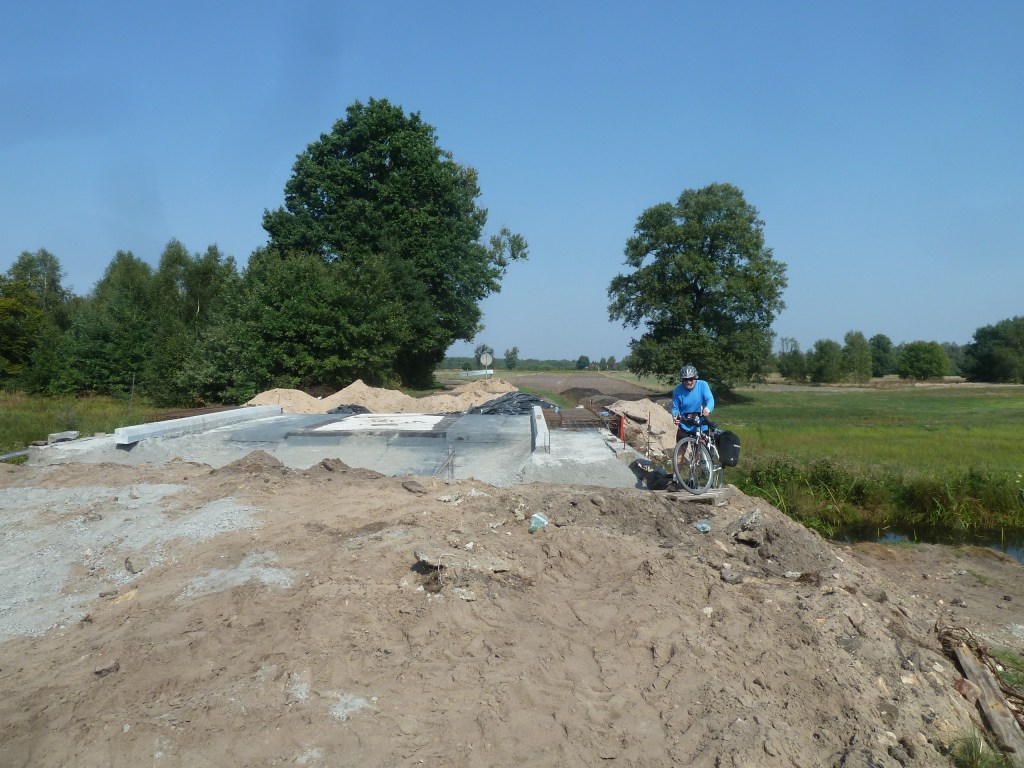
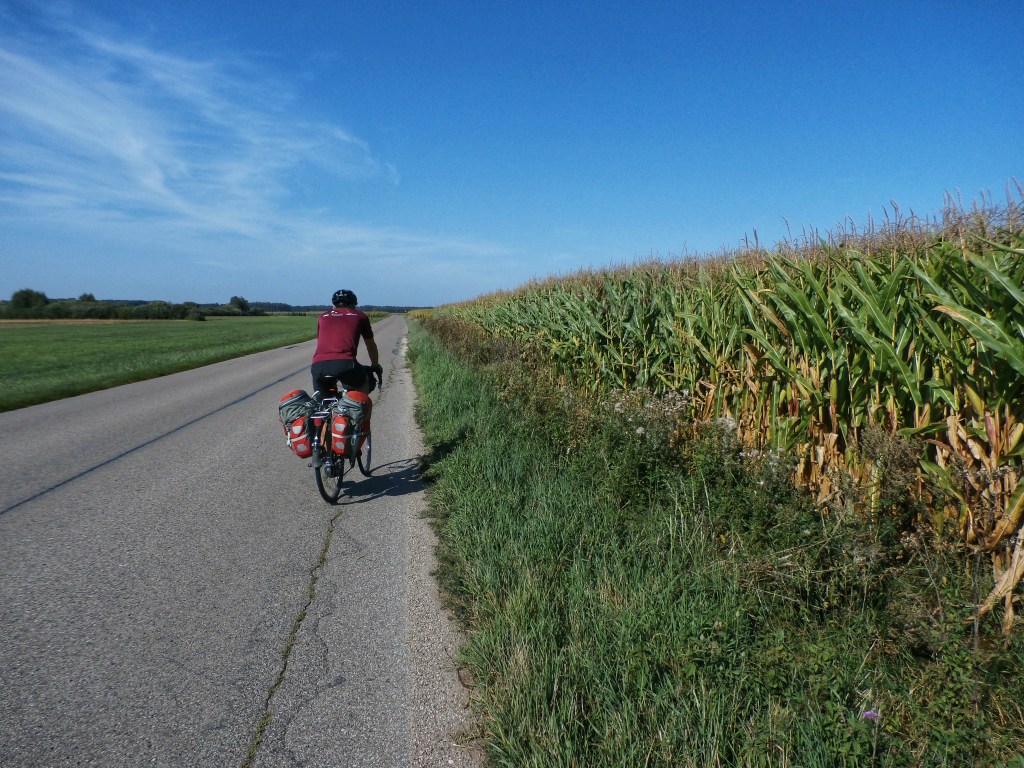
The temperature has been consistently hot at 32 degrees for the last 4 days and promises to be the same for the next leg of our journey from Warsaw to Krakow via the Pilica River “bike path”. The route is a network of what was until a couple of years ago, sandy and small stony country roads, but has now apparently been newly paved with the smooth asphalt roads and minimal traffic. We shall see…

Warsaw to Warka – 64km Avg 15.3 km/hr

Getting out of Warsaw was a breeze, with the 20km of paved bike paths a joy to ride on. I could not help thinking of Victoria’s biking infrastructure, especially Pandora and Fort streets with a bike lane separate from the sidewalks and streets. Why did they not save themselves a lot of money and just make the sidewalks 2 metres wider? Oh no you might say, not pedestrians and cyclists on the same path, someone could get killed! But after riding through the city of Warsaw for 3 days and not seeing a single incident between cyclists and pedestrians and cars, I do not believe it would be an issue in Victoria to have shared paths through the metropolitan areas.

Once out of greater Warsaw, it was a pleasant ride through forests and small villages, despite a few kilometres of unpaved surfaces.
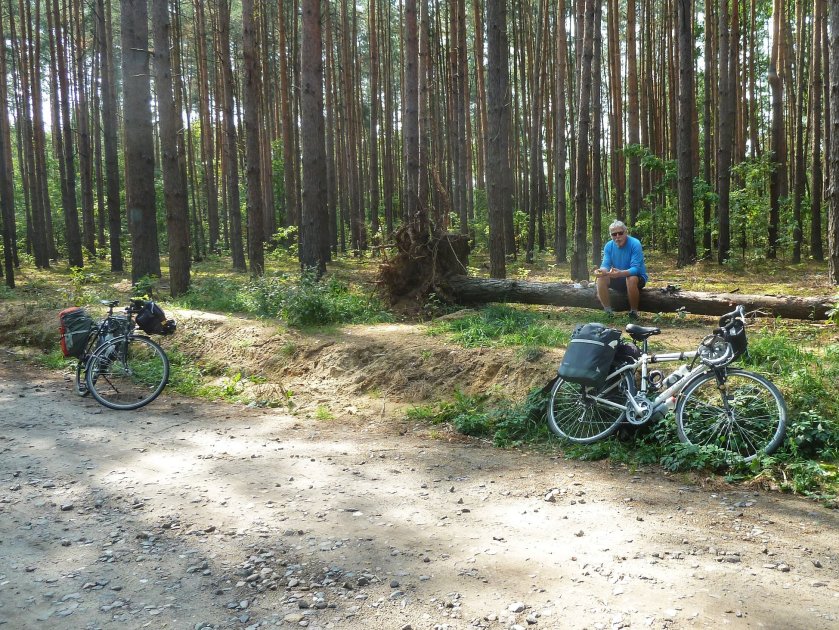
Lunch time!
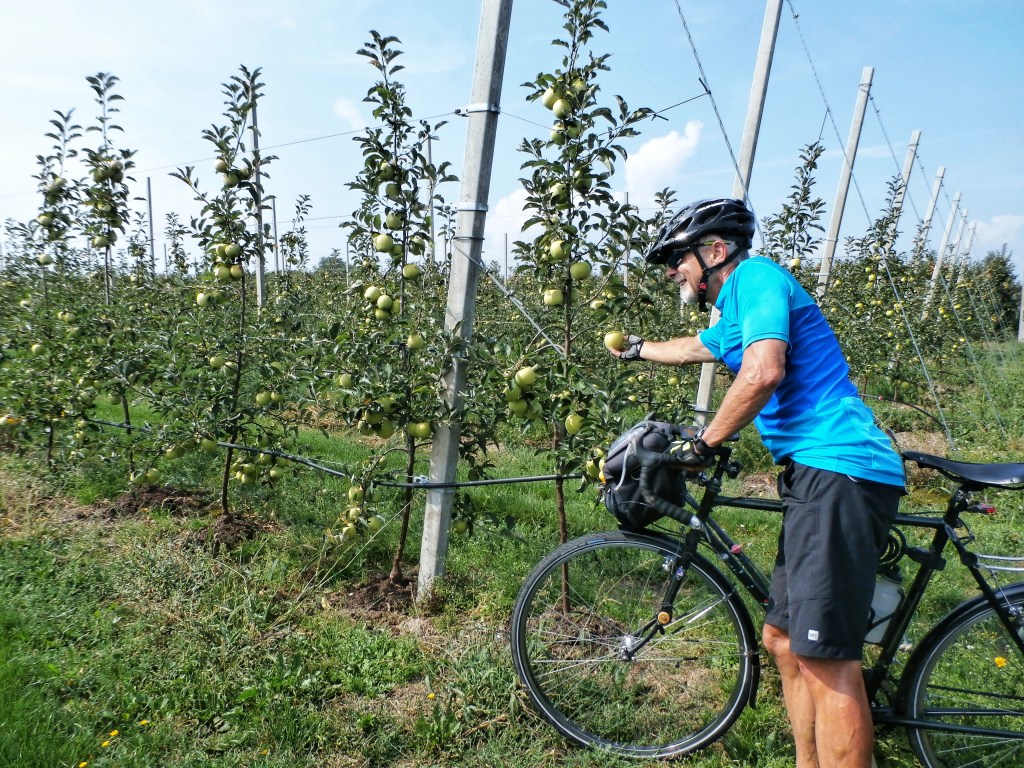
We rode through many kilometres of land planted with apple orchards and Don was tempted to sample the fruit. “Don, don’t pick that apple. We are in a very Catholic country and you remember what happened to Eve!”

Warka to Drzewiczka – 79km Avg 20.0 km/hr

Today’s ride was a mix of paved and unpaved roads in 30 degrees, but no headwinds. The route followed the scenic Pilica river which starts just north of Krakow and flows into the Vistula river just south of Warsaw.
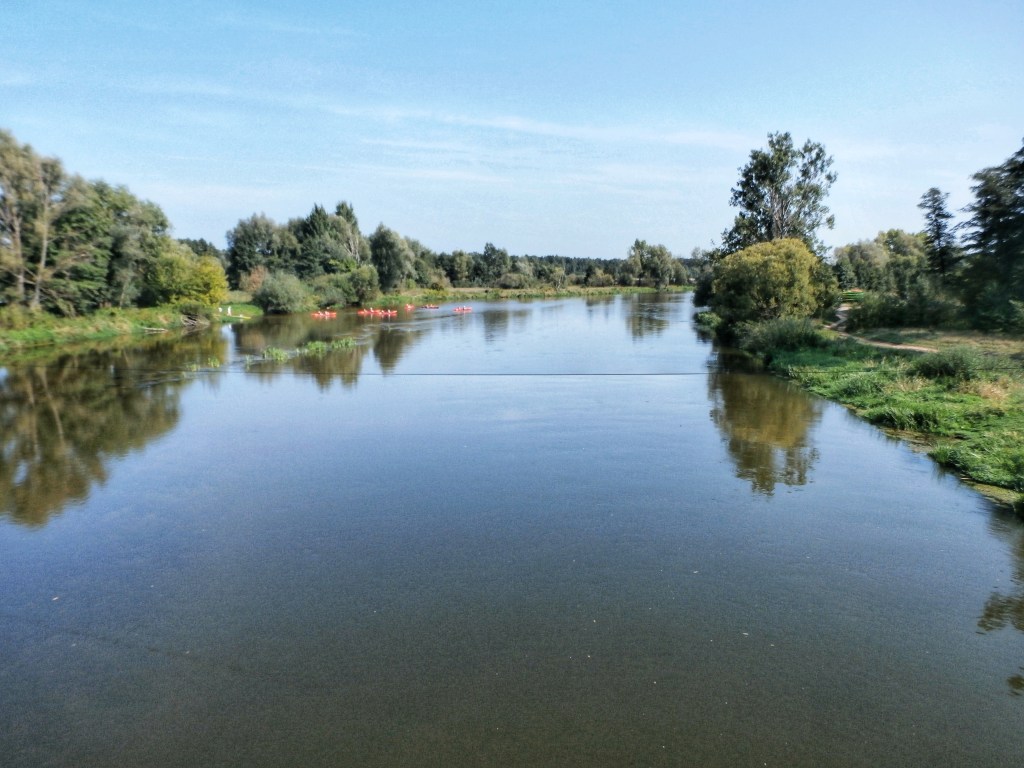
Kayakers on the Pilica river
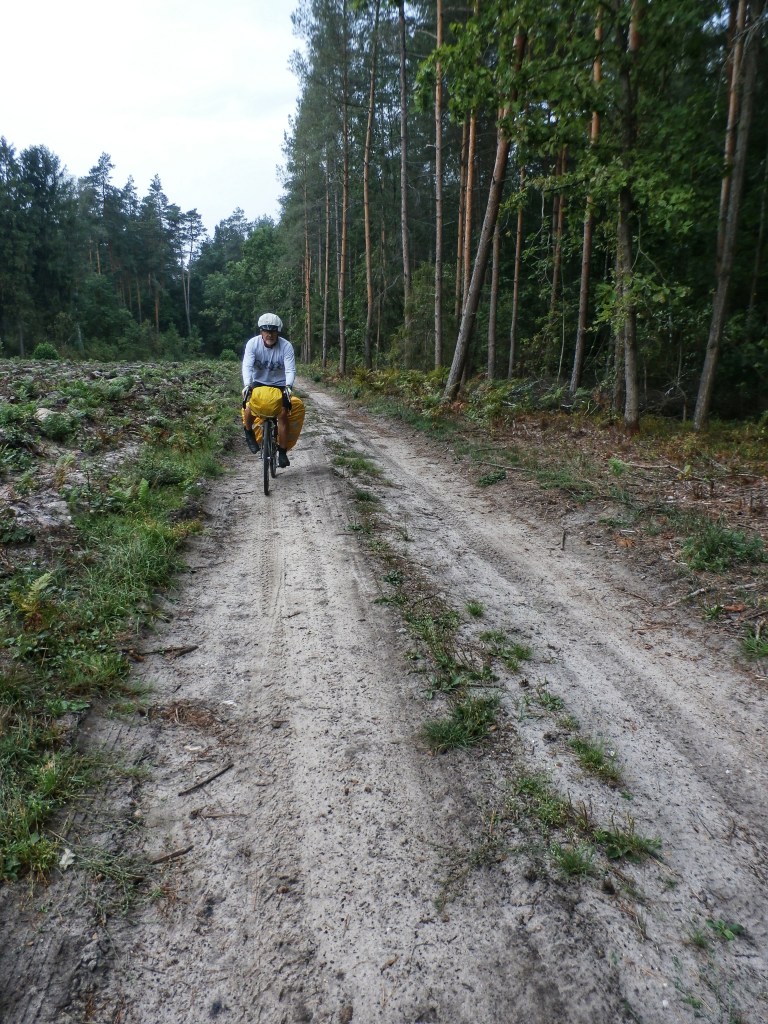
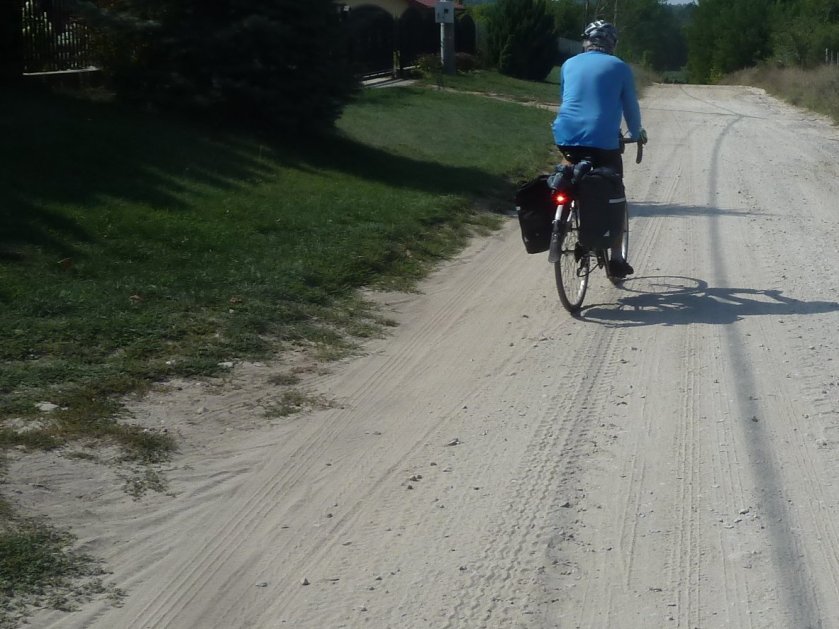
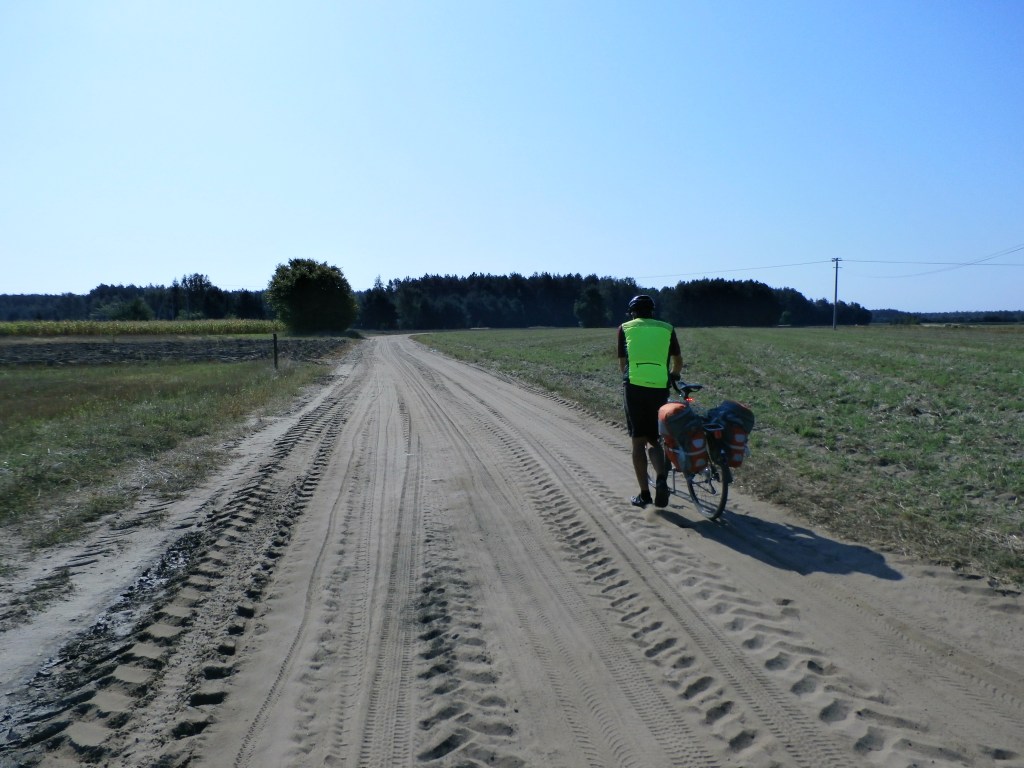
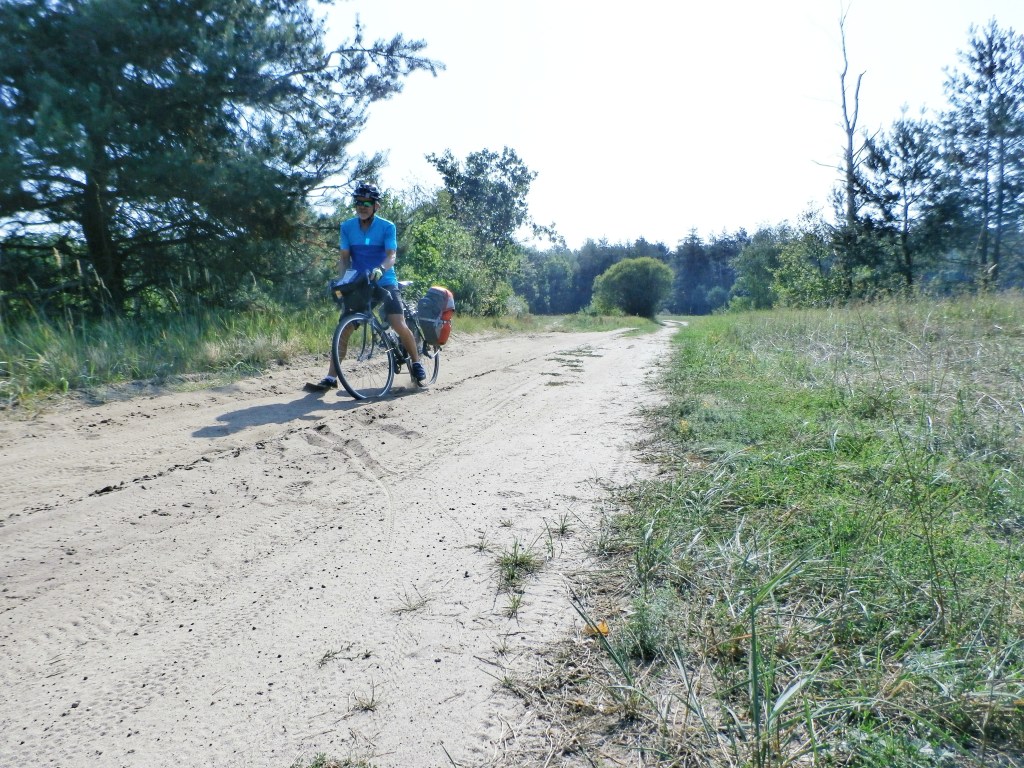
Some unpaved roads are nothing but soft sand, others are hard-packed gravel
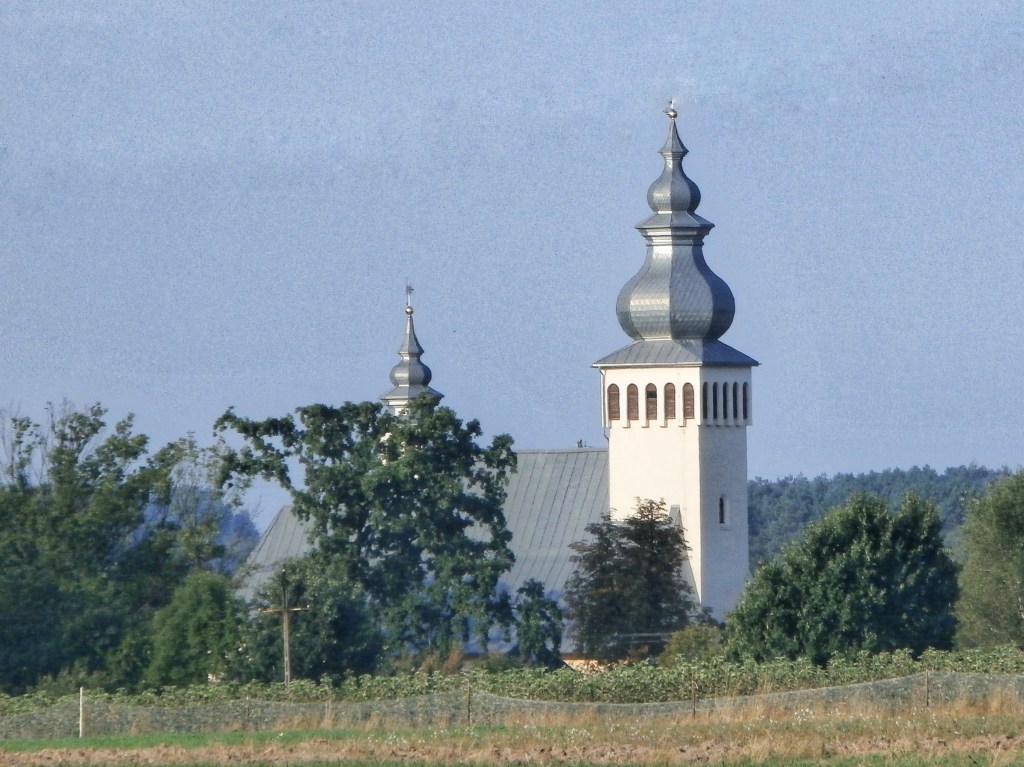
Country church

We booked an Airbnb in Drzewiczka and it turned out to be so new that some of the furniture still had wrapping on it. As usual, we were the only guests. We found out later that the Polish government offers subsidies to build tourist accommodations and these Airbnb places can be found everywhere. Sort of “if you build it they will come” philosophy but I don’t think they have it quite right yet – our accomodation has 9 small rooms and 1 shared bathroom and a small communal kitchen. I can’t imagine what it would be like if all 9 rooms were full. However, it was the only accomodation in town, and at $40 who is to complain?
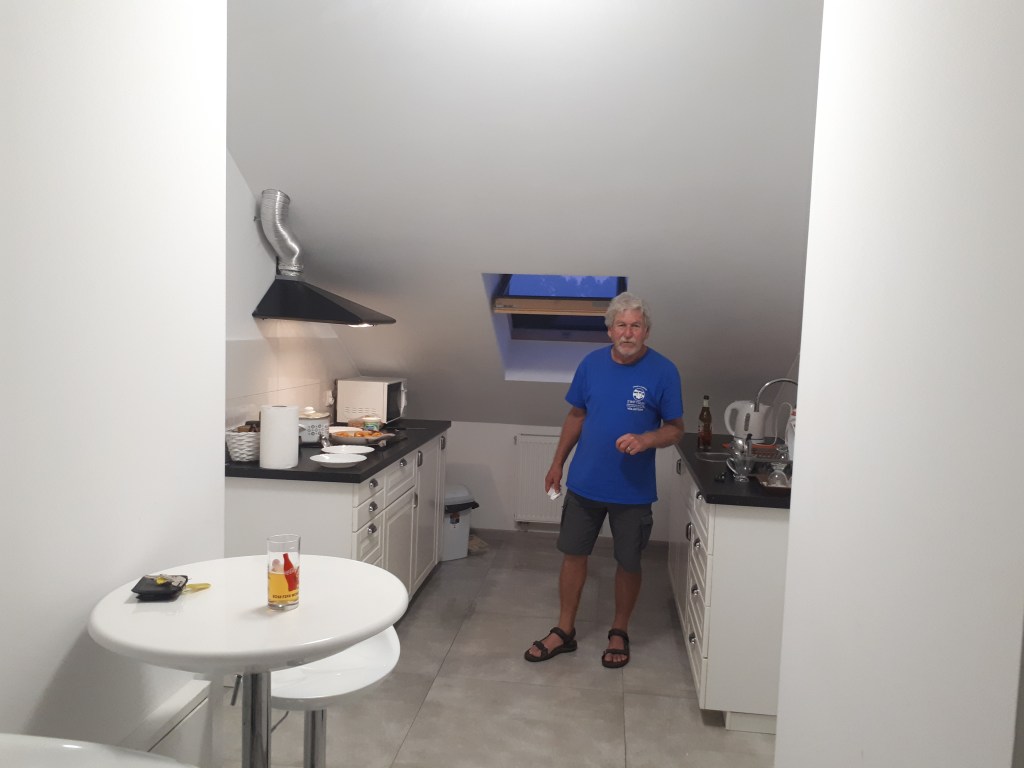
One person kitchen

Drzewiczka to Krzetow – 92km Avg 19.5 km/hr

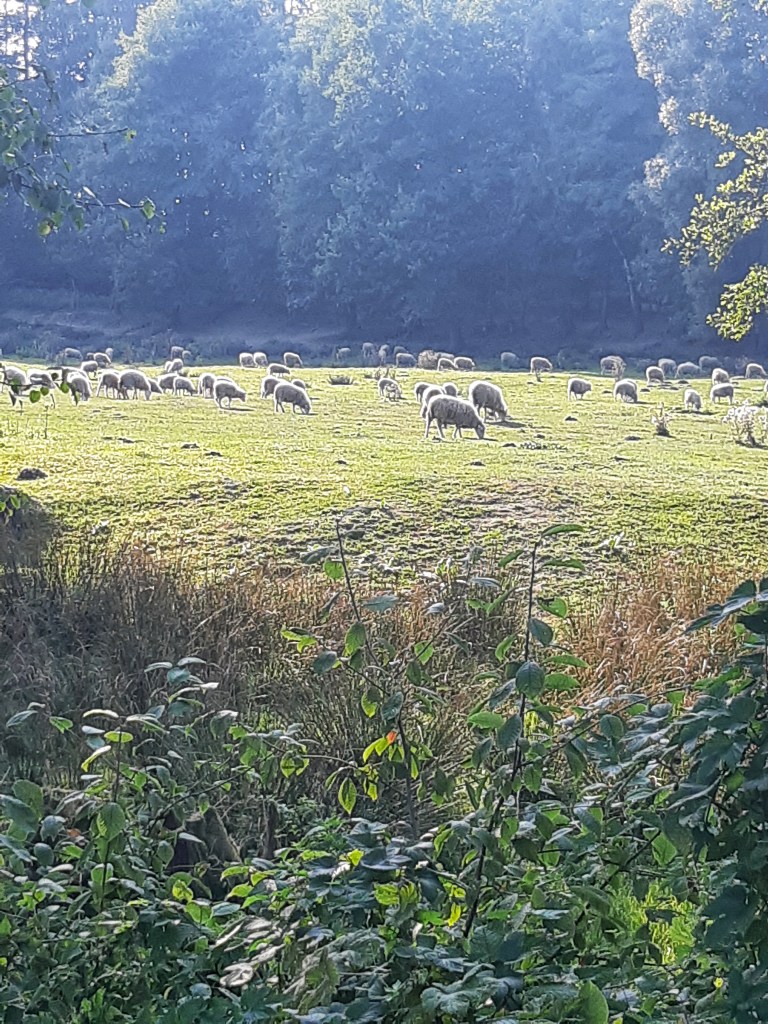
Sunday morning and we were woken up at 6:00am by the sound of church bells from the church across the street. It called for another hot day so we were underway at 7:15 but within an hour were sweating. This was a great ride through rural Poland with lots of small farms growing produce, cows, sheep and very little traffic. It they could just turn the temperature down a bit…
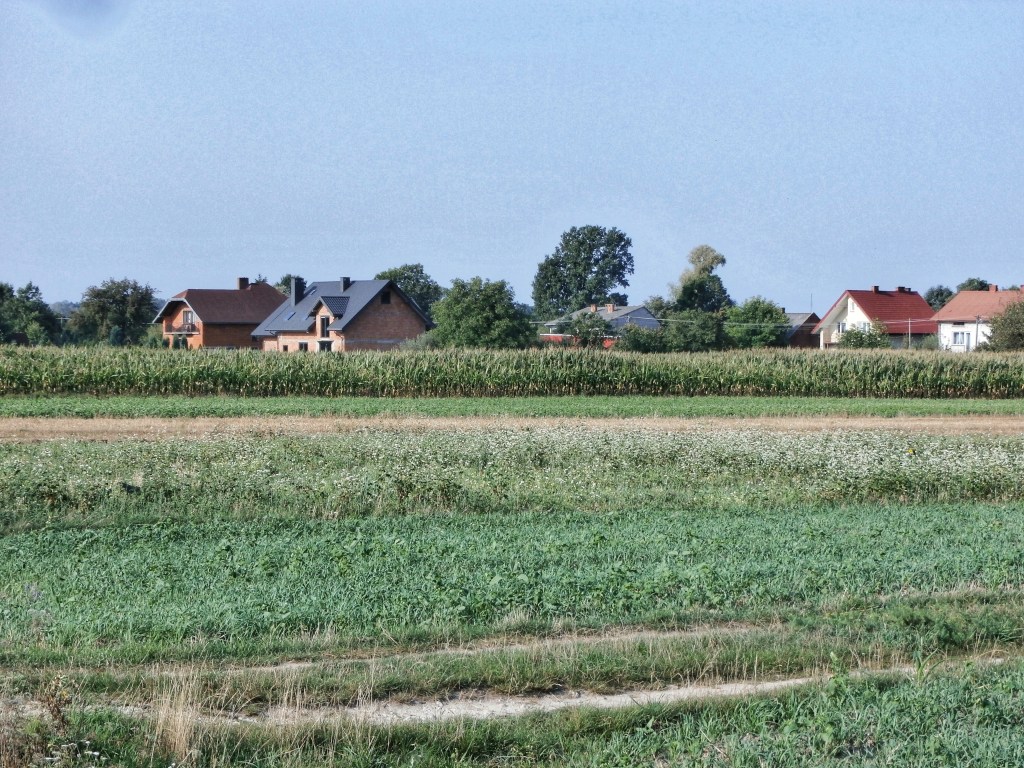
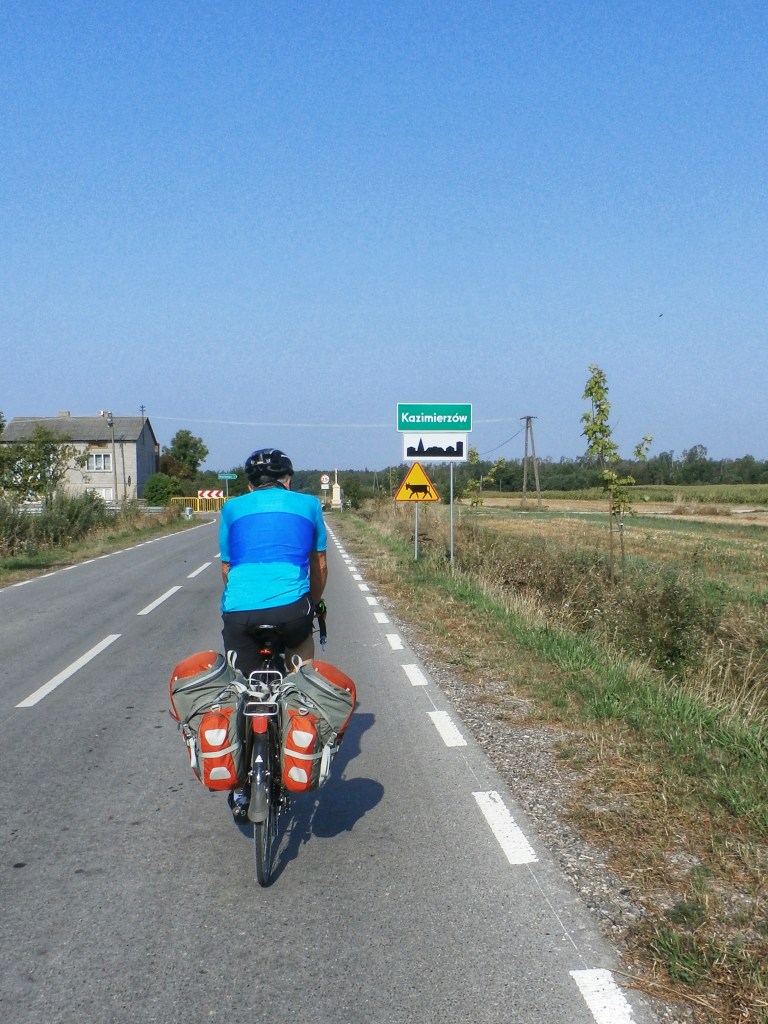
Some of the small villages have about as many houses as on the pictogram, but always a church.
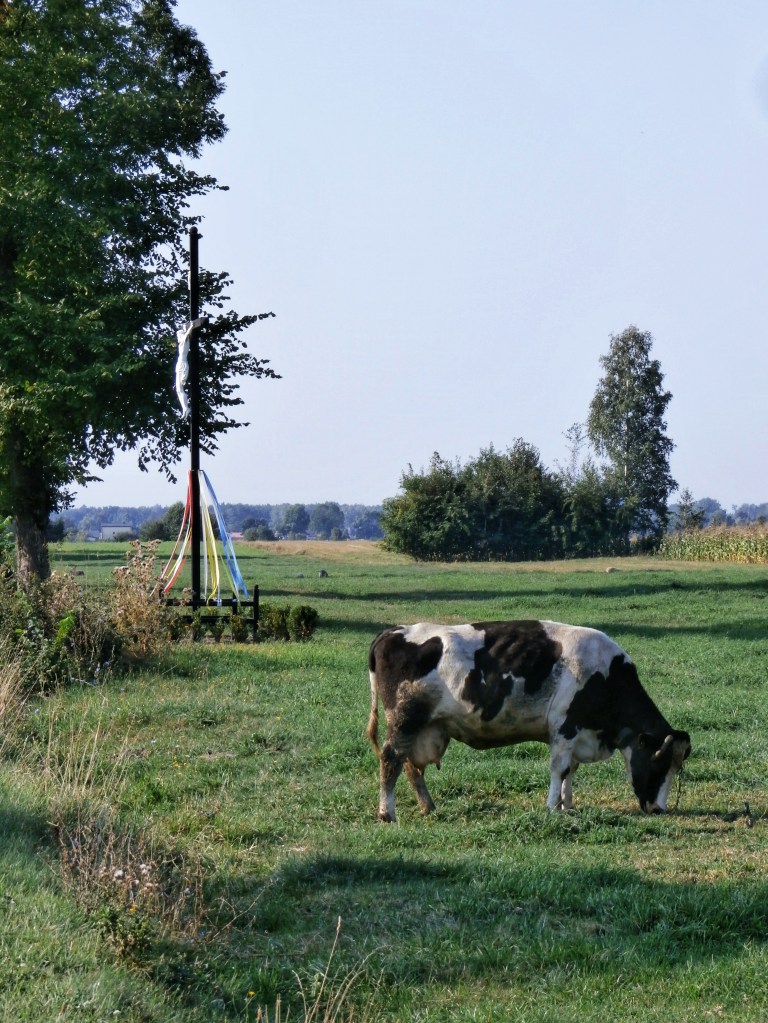
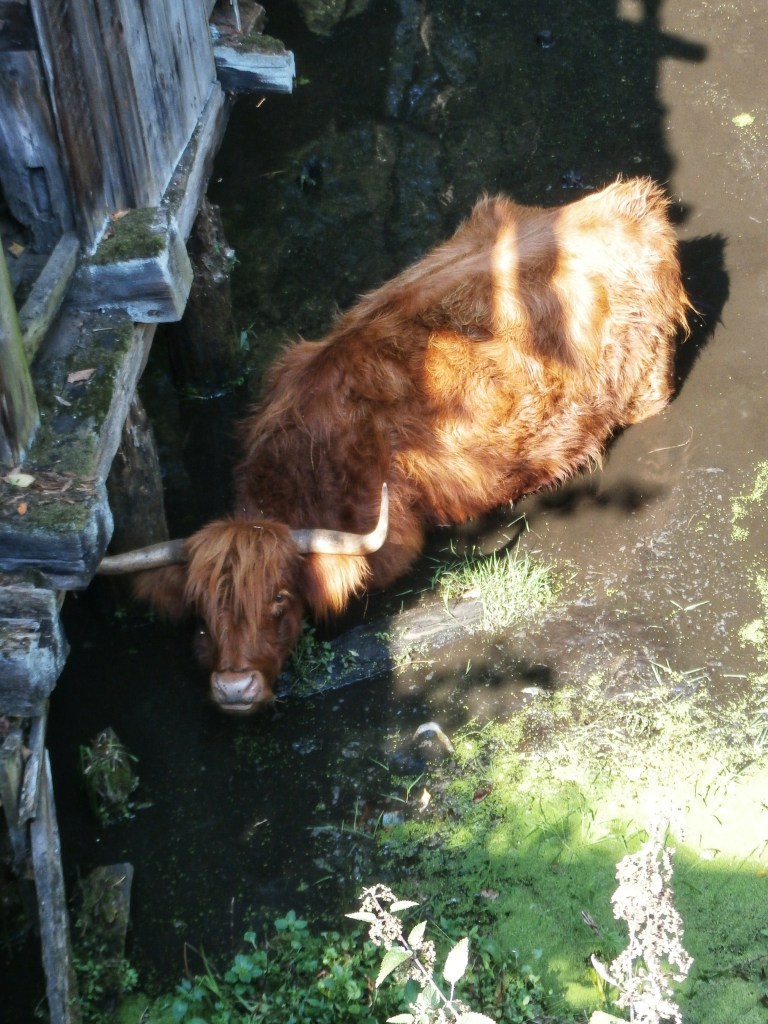
A new meaning to the expression “Holy Cow!”
This guy knows how to keep cool!
Well at least there is no car traffic on this road

It sounded good on Booking.com “Farm stay resort on the Pilica river” and there wasn’t much choice so we booked it….
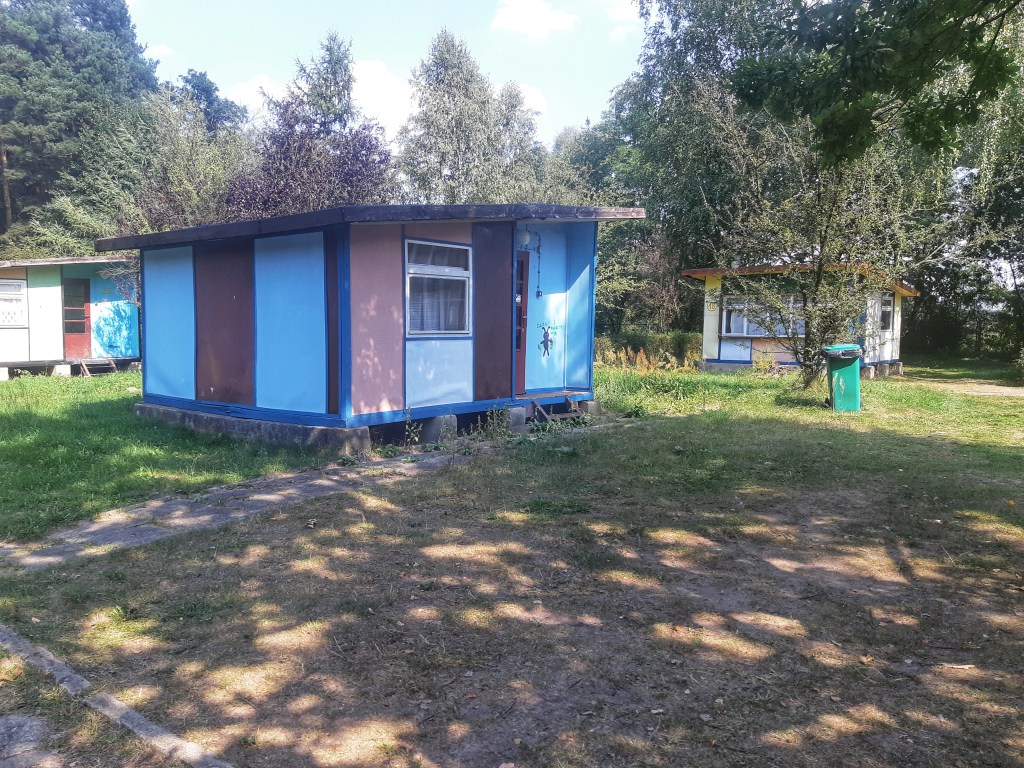
When we rolled in, the place looked deserted with no one around, but after a few minutes a women came out and asked in perfect English if we were the ones who made the reservation. It turns out, Ursula and her husband Jan had lived in Vancouver for 15 years then moved back to Poland where they bought a 200 year old stone building and turned it into a farm stay. The place we had booked was an in area they had developed for kayakers and campers to stay and not in this lovely old building.
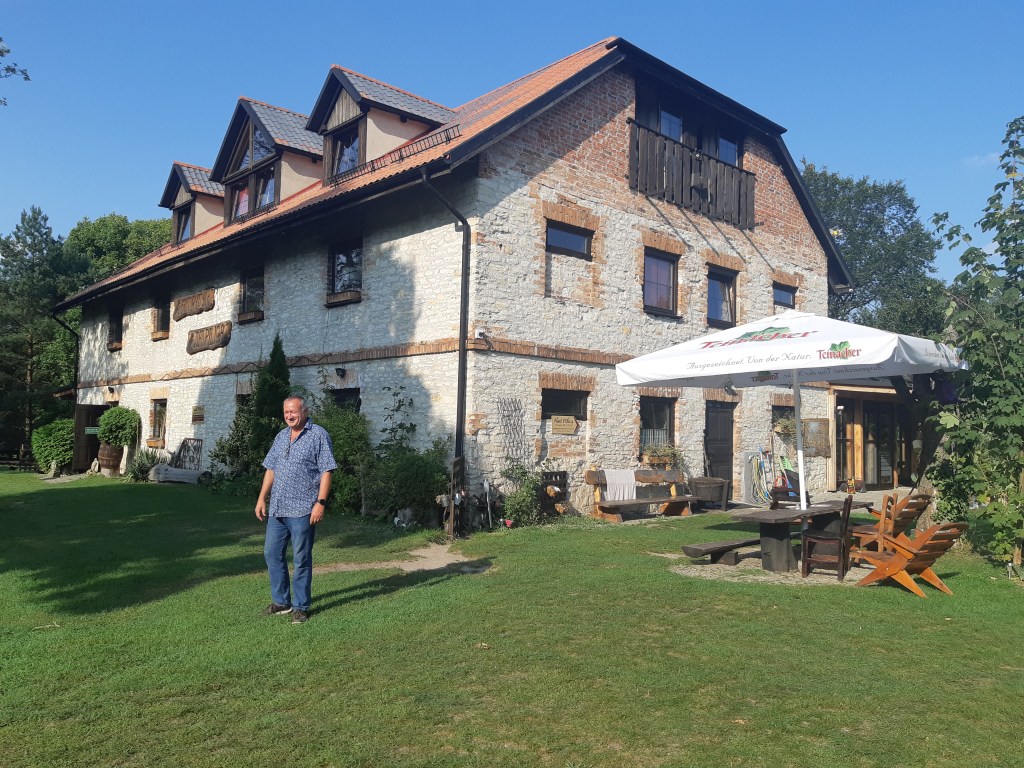
Domki nad Pilica – the “Agroturystyka” (farm stay) accomodation and Jan. This place is popular for weddings and as a getaway for the city folk.

Jan and Ursula invited us up for a beer and plate of homemade smoked cheese. Jan is a keen cyclist and Ursula was a ski instructor so we had lots in common and enjoyed an afternoon of conversation. Even though all the weekend guests in the farm stay building had left, they kept the cook on to make us dinner, as there were no restaurants in the nearby village and the local small food store was closed on Sundays.
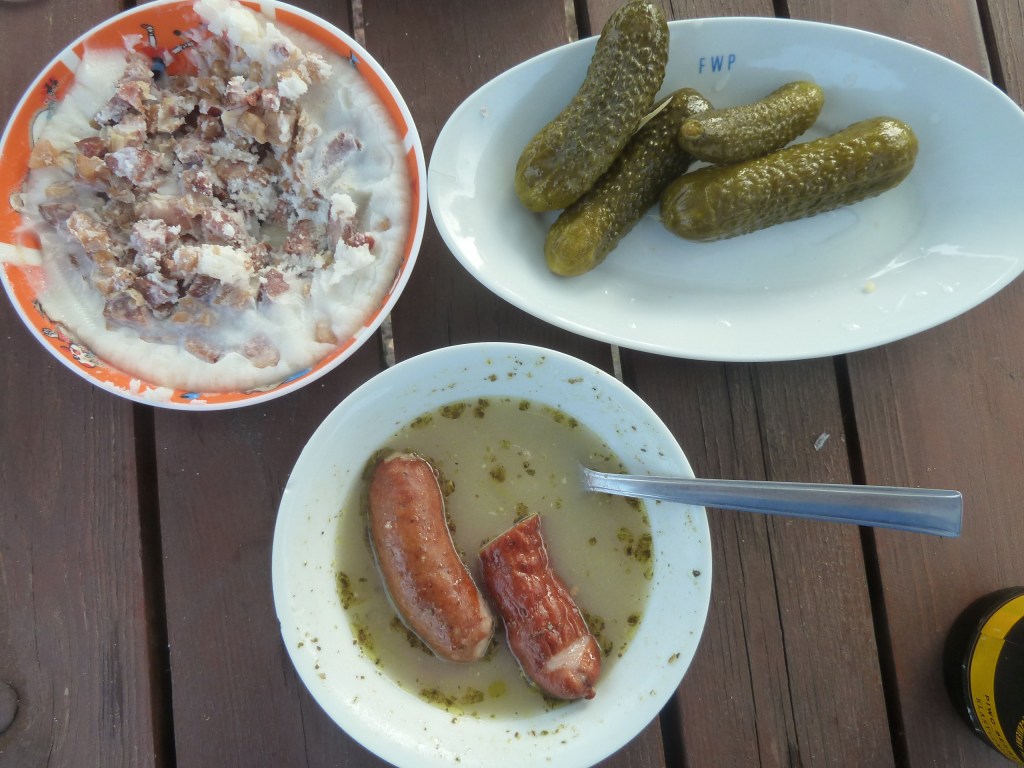
Polski ogorki style pickles, sausage soup and Smalec for the bread. Smalec is a salty spread made from rendered white pork fat flavoured with onion, garlic, spices and pork crackling. A very filling meal!

Krzetow to Wolbrom – 81km Avg 18.4 km/hr

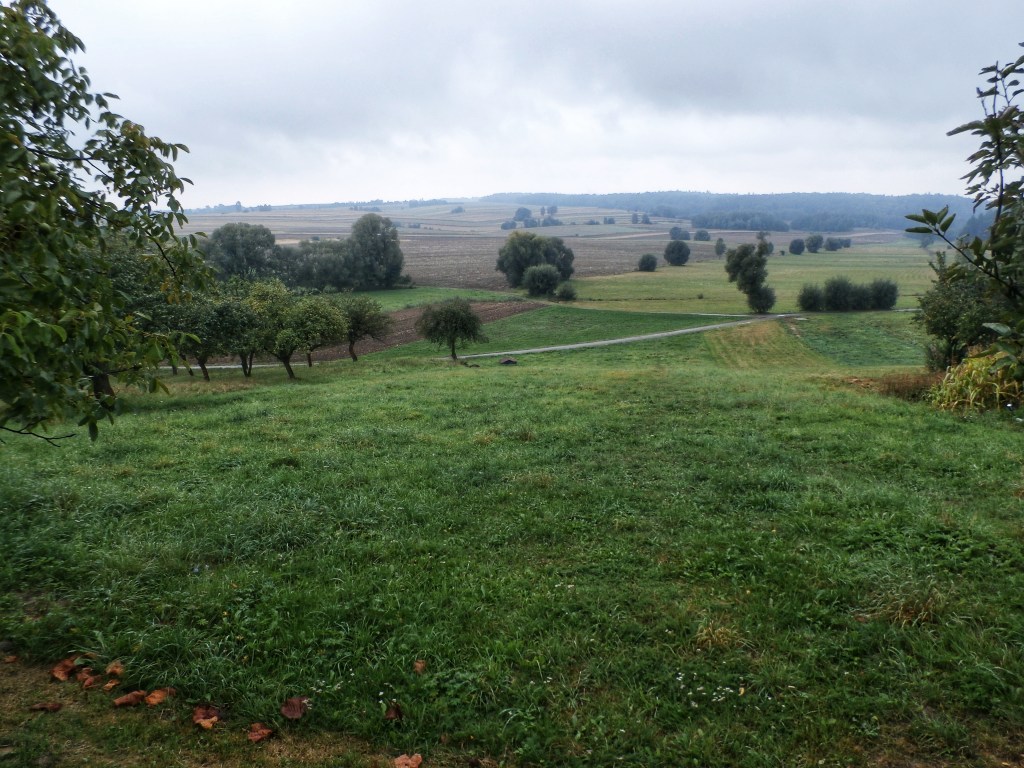
Much cooler today around 19 with rain in the forecast. We have not seen any rain since Estonia, and the cooler temperature is a pleasant relief from the heat. Today was another ride through quiet country roads, but the terrain is getting hillier. Many of the crops have been harvested already leaving barren fields of dirt.
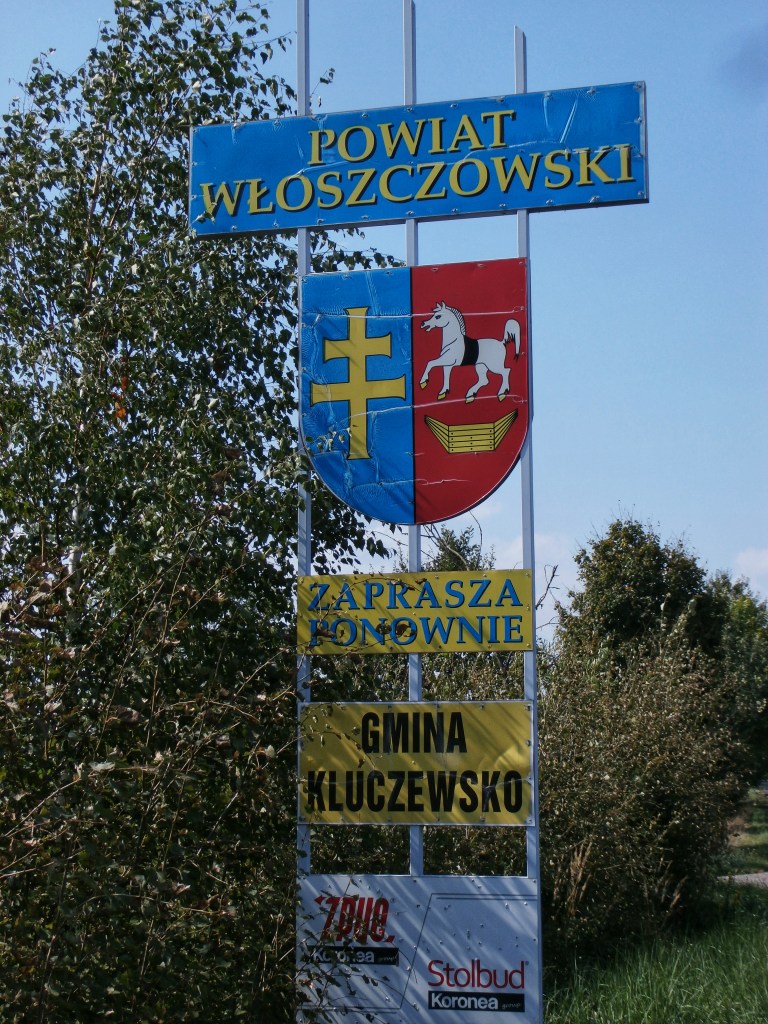
Each county has their own coat of arms
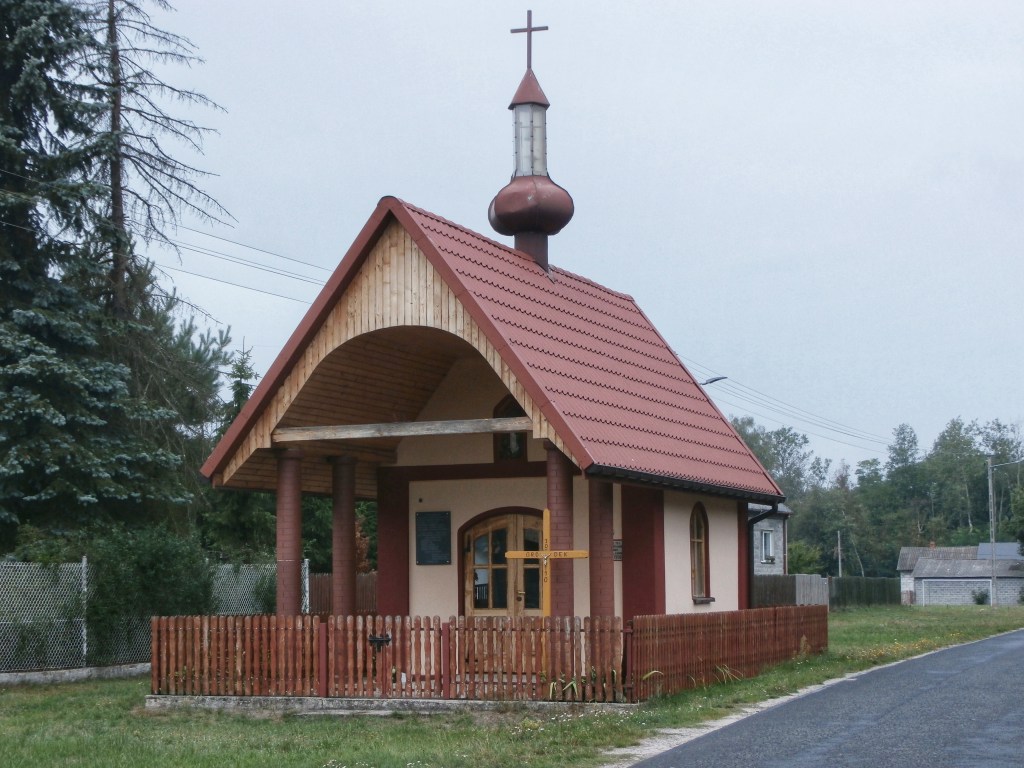
Not all Polish churches are big but they all have the “onion” steeple.
Don, be led not into temptation!
It is getting hillier as we approach Krakow
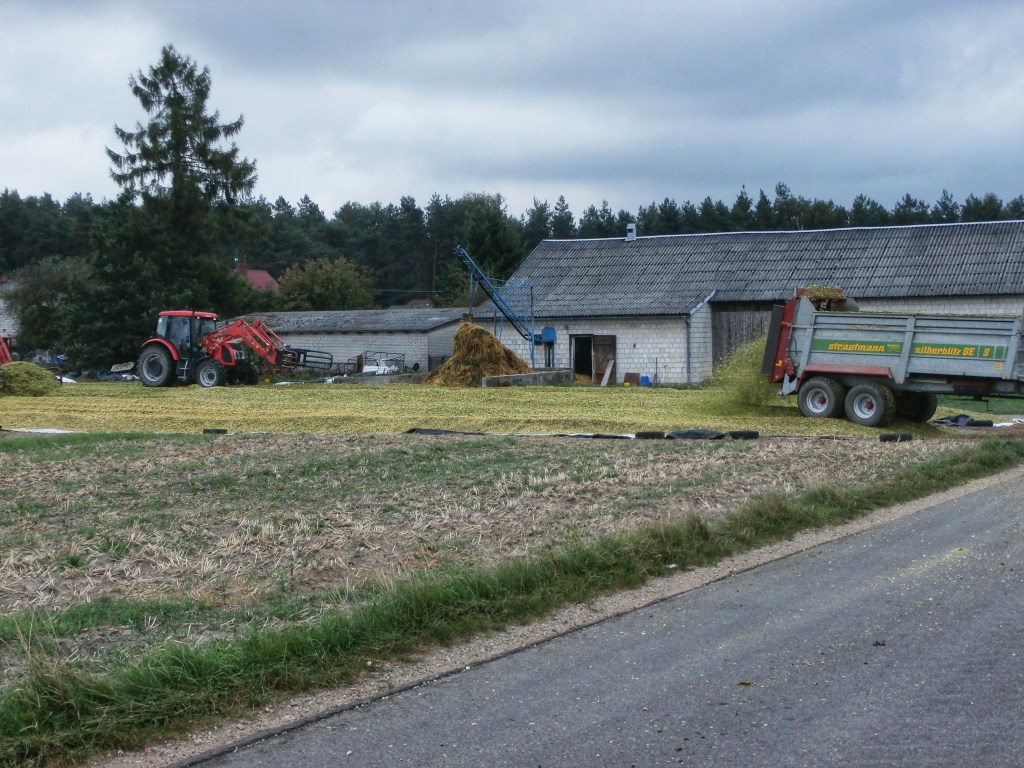
Harvested corn. First it is cut and mulched, then spread out and driven over by tractors. I have no idea why.

Wolbrom to Krakow – 45km Avg 17.6 km/hr

Last nights accomodation was a generic hotel suited for business people and could have been anywhere in Canada. It had an excellent restaurant though, with plentiful portions.
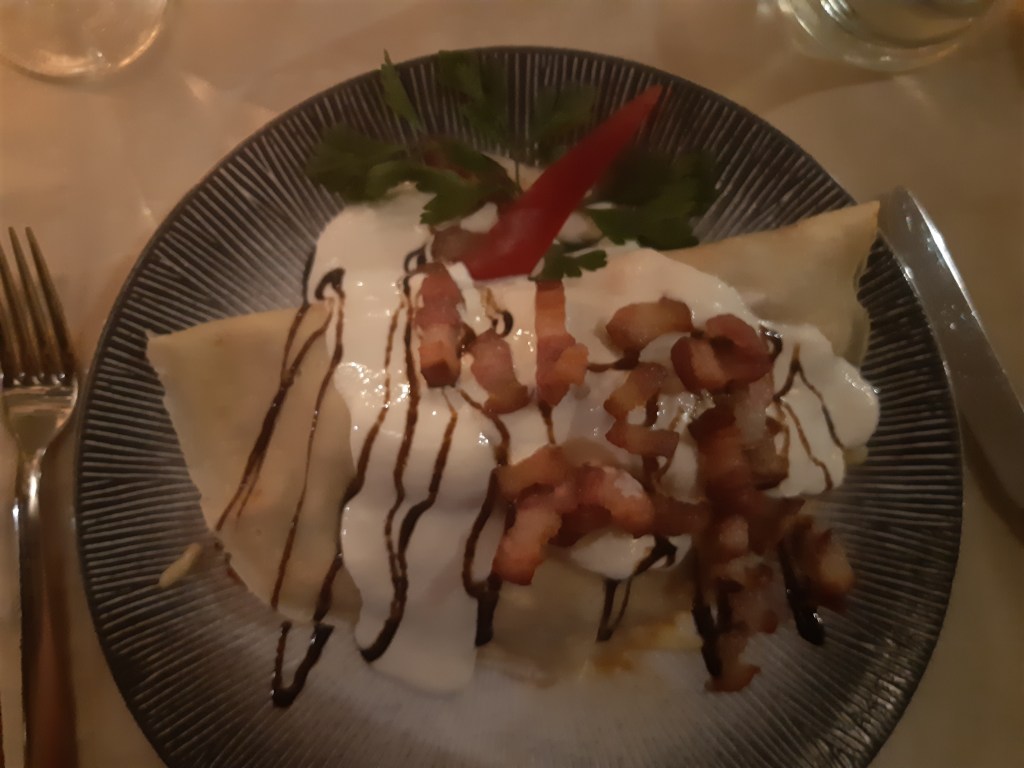
Pork filet with vegetables and cheese wrapped in a potato pancake and smothered with sour cream, crackling and a mild horseradish sauce. Delicious!
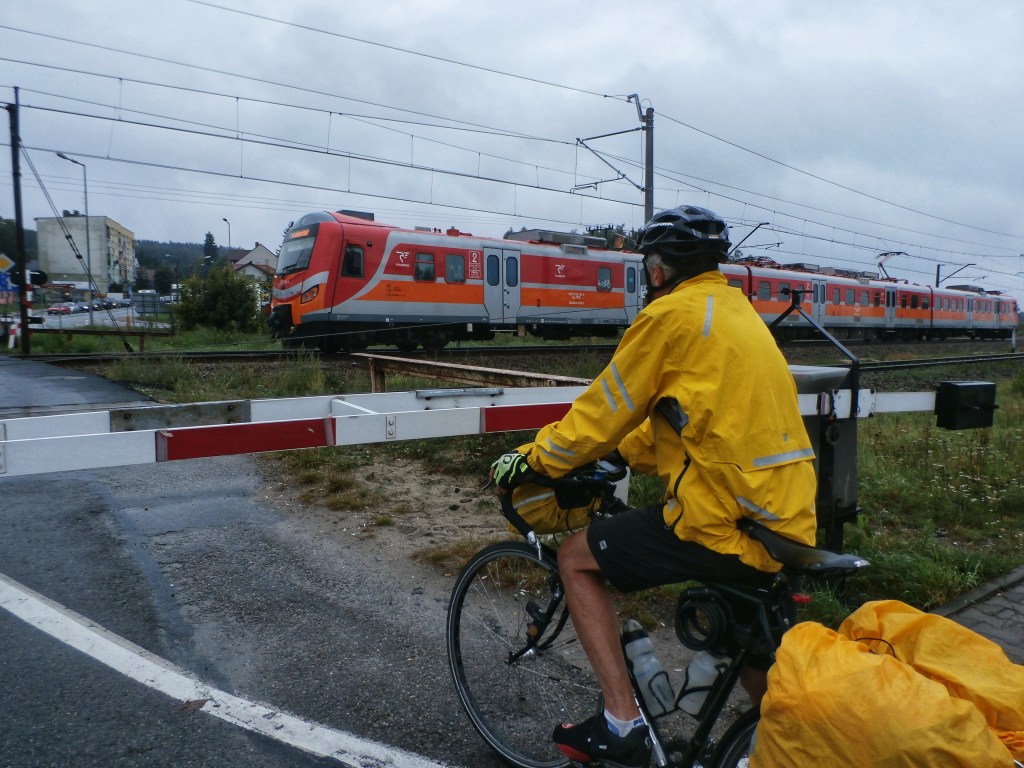
Ready for rain

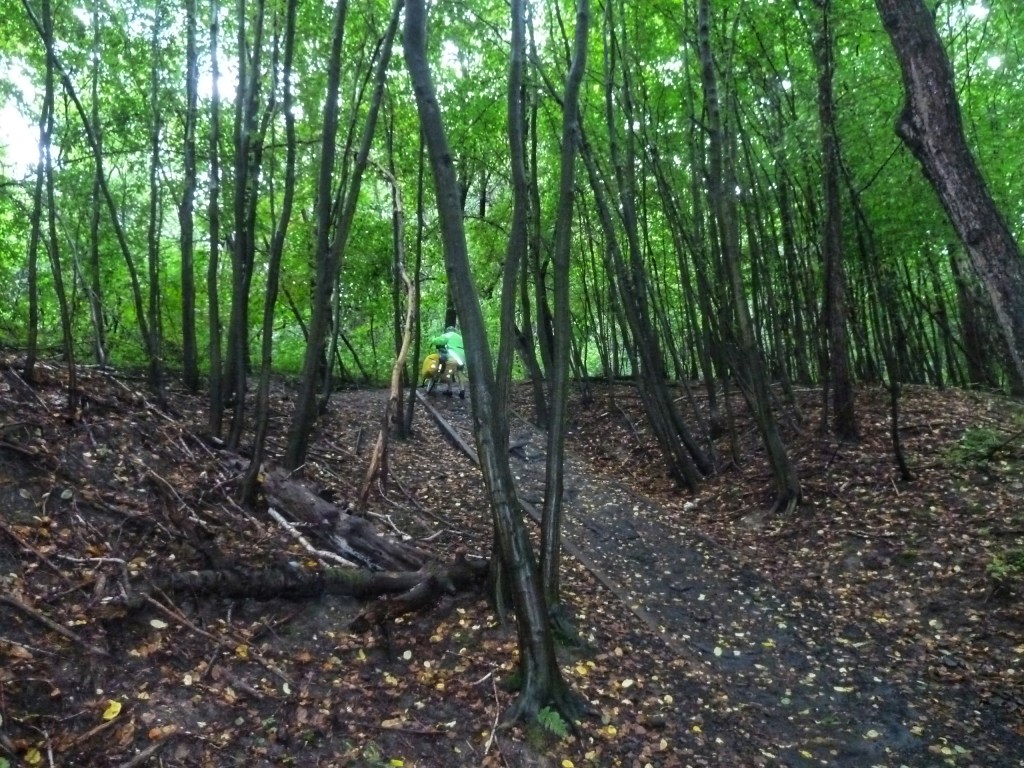
It rained all night but was just a drizzle when we pushed off for Krakow, 45km south through the rolling hills. Once again Komoot took us off road where we did not want to be, necessitating us walking the bikes for some stretches. Still, better than being on a busy road.
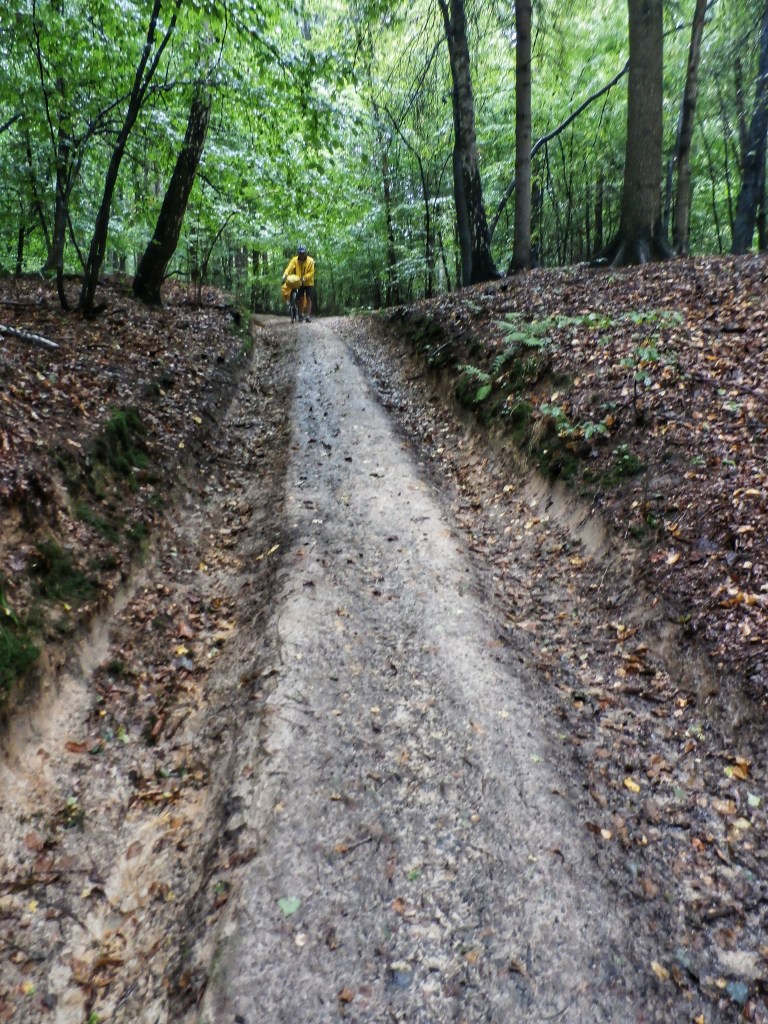
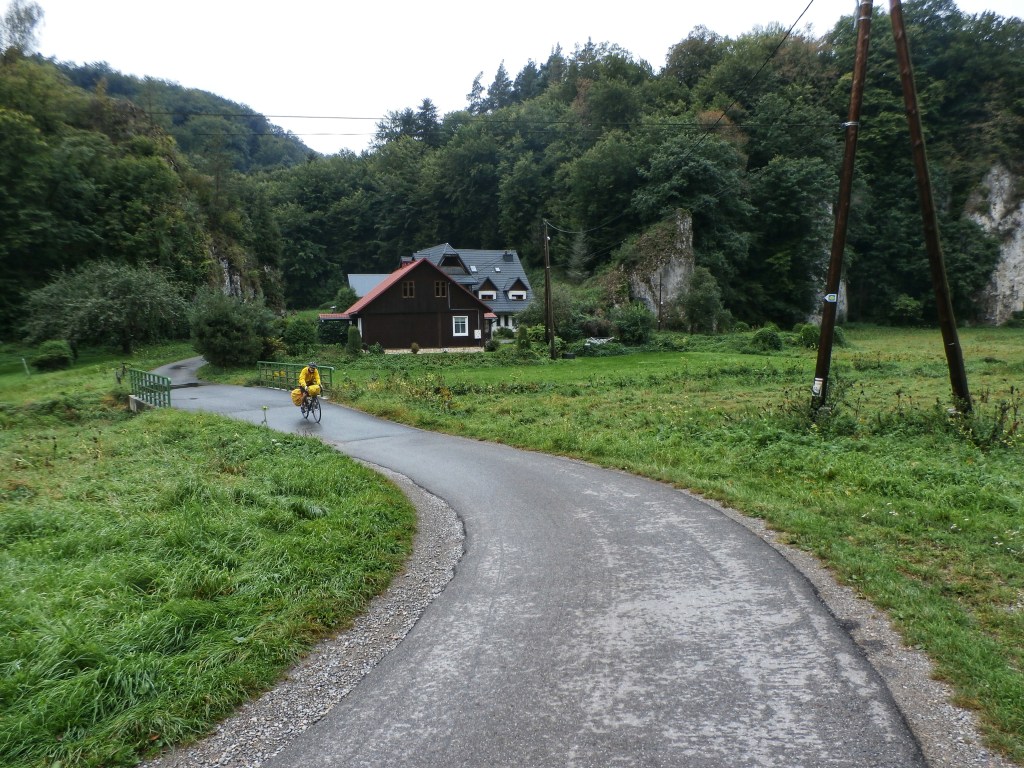
Coming through a valley after the rough stuff earlier on. This is in Ojcowski National Park and is the first time we have encountered rock formations since starting the trip.
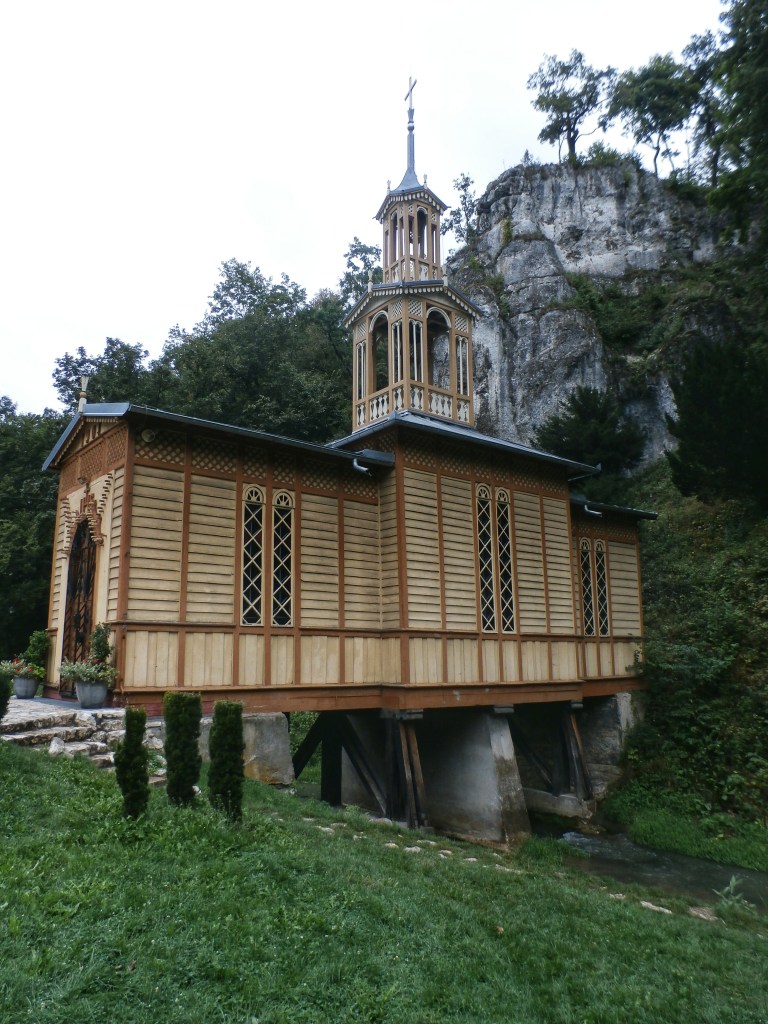
Tsar Nicolas forbid that a church be built on Ojcow land, so the cunning locals built it “on water”
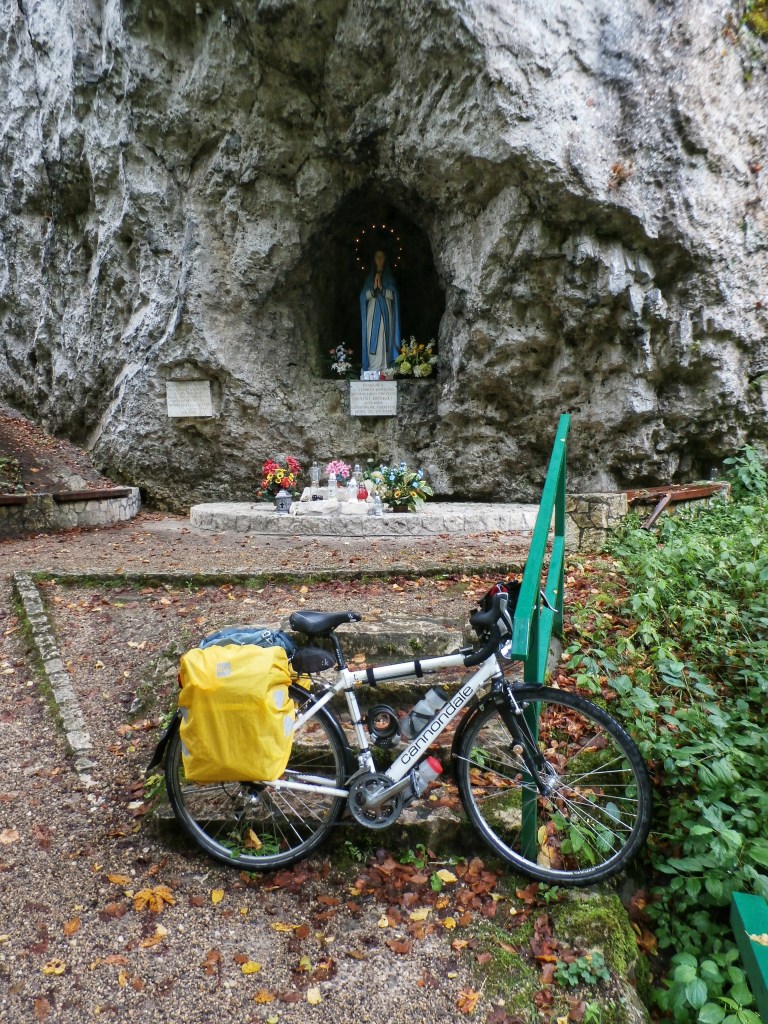
Some of you may be wondering why I included so many pictures of churches and shrines. No I am not religious, it is just that these countries have churches and shrines absolutely everywhere, and often the are the only interesting things to take photos of.

22. Lead Us Not Into Temptation

In order to try and reduce the amount of white line fever and to provide homage to Lou Reed who is revered by many of those who lived behind the Iron Curtain, we have been taking a walk on the wild side.

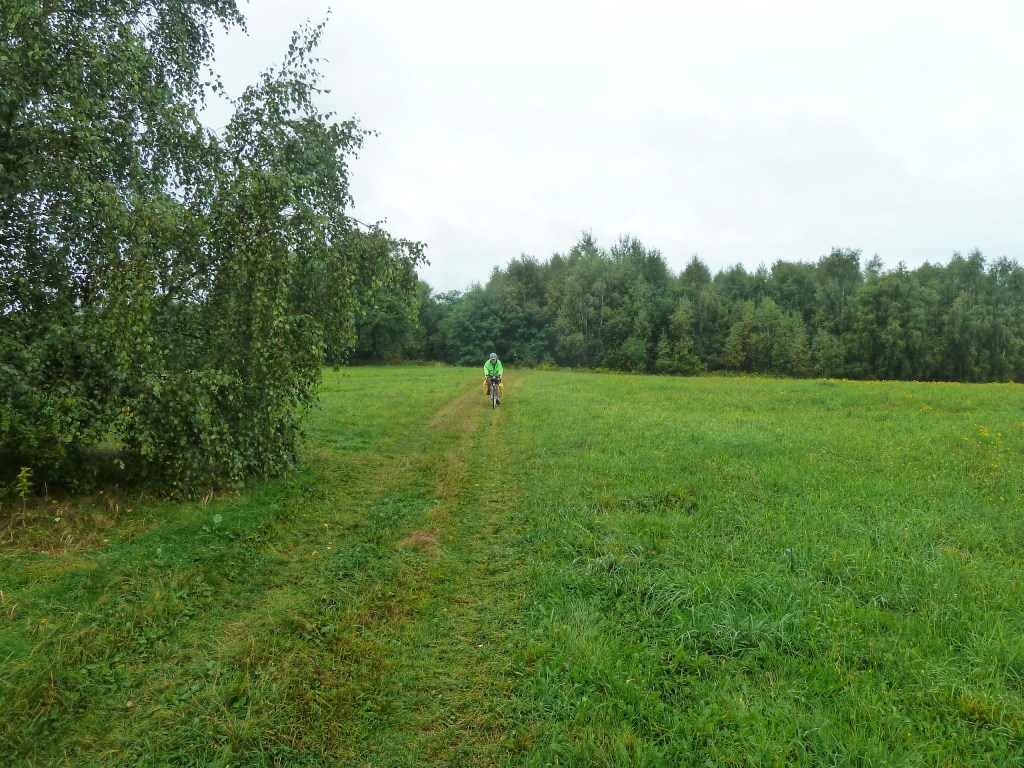
Basically this means trying to find roads that are a little less travelled by using a combination of Komoot for route planning and Street View to look at the actual roads. But Komoot isn’t always accurate with its description of the road surface and Street View hasn’t been on every road. This introduces an element of risk. Sometimes it works well and you are on a quiet paved road. Sometimes not so well and you end up on rough rocky roads. Sometimes its worse.
When on a rough rocky road you are often tempted, like brave Ulysses was tempted by the Sirens, to come over by the side where finer particles, like sand, have been pushed covering the rocks and smoothing things out. Sometimes it works well and the ride smoothens out for a bit giving a reprieve from the jarring. Sometimes it is just a bunch of soft sand with nothing underneath, the nemesis of a heavy laden bike. You see the tires sink in and the soft sand takes control of the bike. The heavily weighted bike now having momentum in a direction which is no longer consistent with the direction of the front wheel. If you are in a low gear and clipped in to your pedals sometimes you can power through to the road and regain control. But sometimes you’re in too high of a gear, or the sand is too deep and you’re clipped in and then…….well….. then……,

Well then there is blood on the saddle.

And the watching milk cows go

doo doo doo doo doo doo doo doo doo doo doo doo doo

21. Wandering around Warsaw

By Dennis

It was a hot and humid 32 degrees for our 3 nights in Warsaw, with lively thunder and lighting in the middle of the night, so it was good to have a couple of days off from riding. I had the opportunity to see the local’s side of Warsaw by visiting a number of shops to replace some lost items. When leaving Pultusk, I failed to properly secure my “caboose” bag which sits between my two panniers, and it flew off somewhere on the bumpy roads without me noticing it. Bummer, but I did not have anything valuable in it that could not be replaced. On the plus side, I saw a number of mega malls while looking for replacements – multi-storied, air conditioned and filled with shoppers (mostly young) who were either shopping at the fashionable shops or sitting at Starbucks or the food courts doing emails or social media – just like home! At any rate, criss-crossing the city to various bike shops and hardware stores and malls to replace my lost items was fun.

I really enjoyed Warsaw with it’s eclectic mix of old and new, and its extensive bike path infrastructure making it so easy to get around the city. However both Don and I have not been able to fully trust the drivers like the local cyclists do, sometimes causing a bit of disgruntlement when we stop or slow down and they are behind us. But the drivers always stop for cyclists, it is just so hard to get used to after riding in Victoria.

We purchased new SIM cards for the phones – 25 zlotys (about $8) for 50GB. At home 4GB costs $50/month. Why?

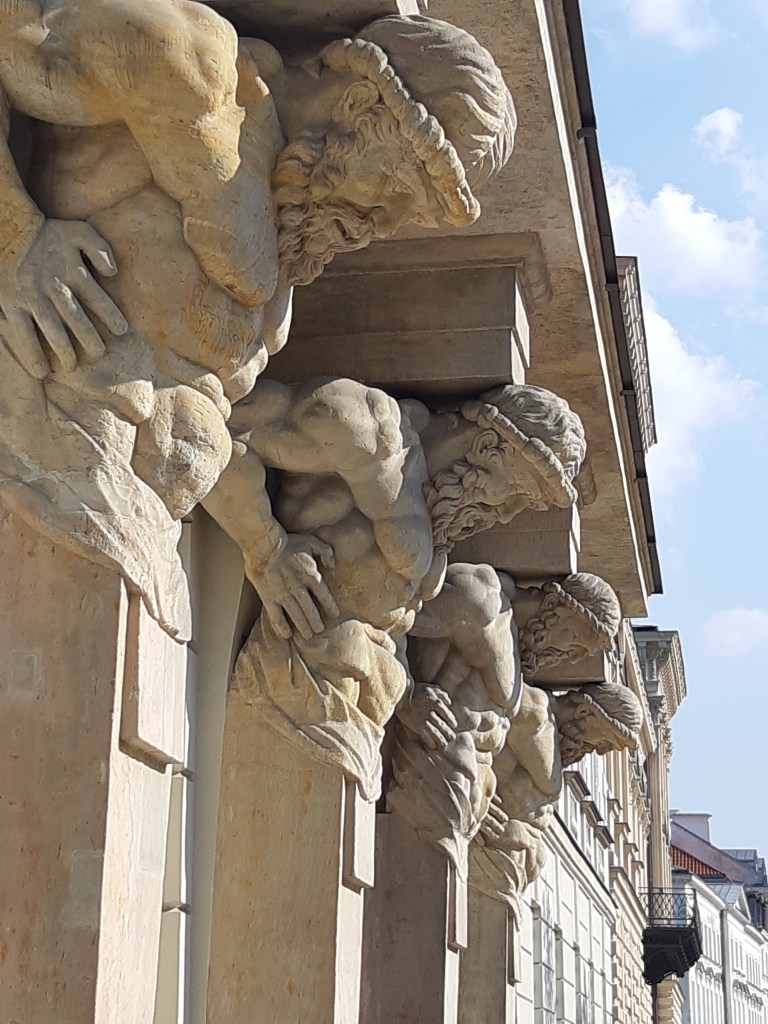
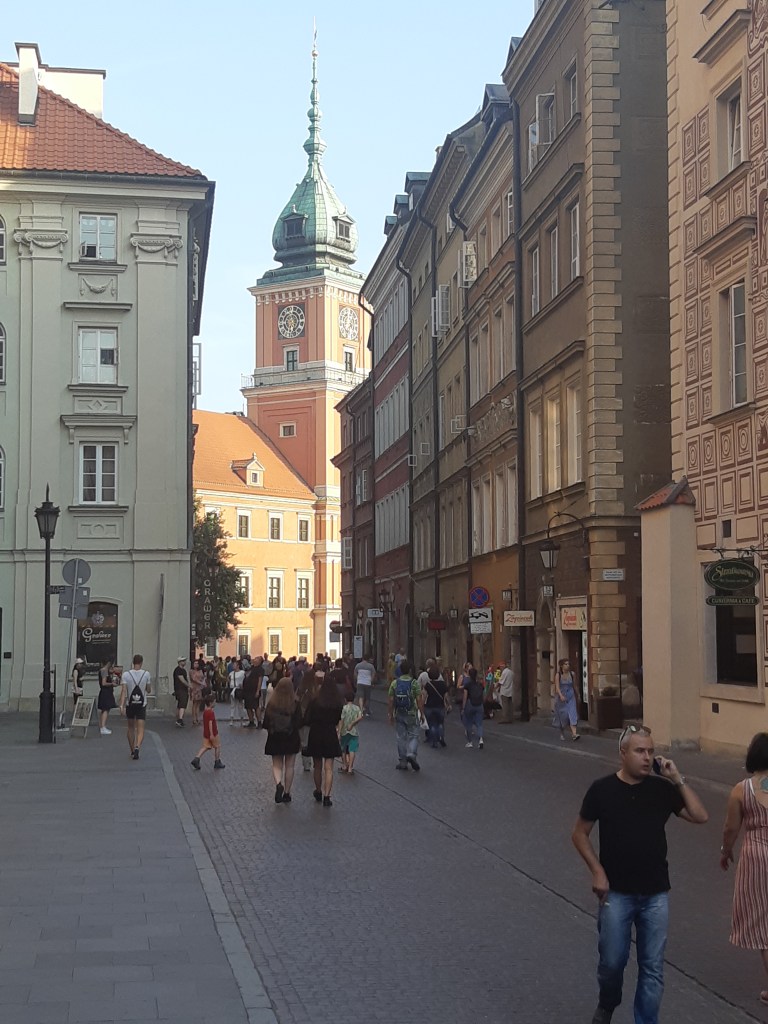
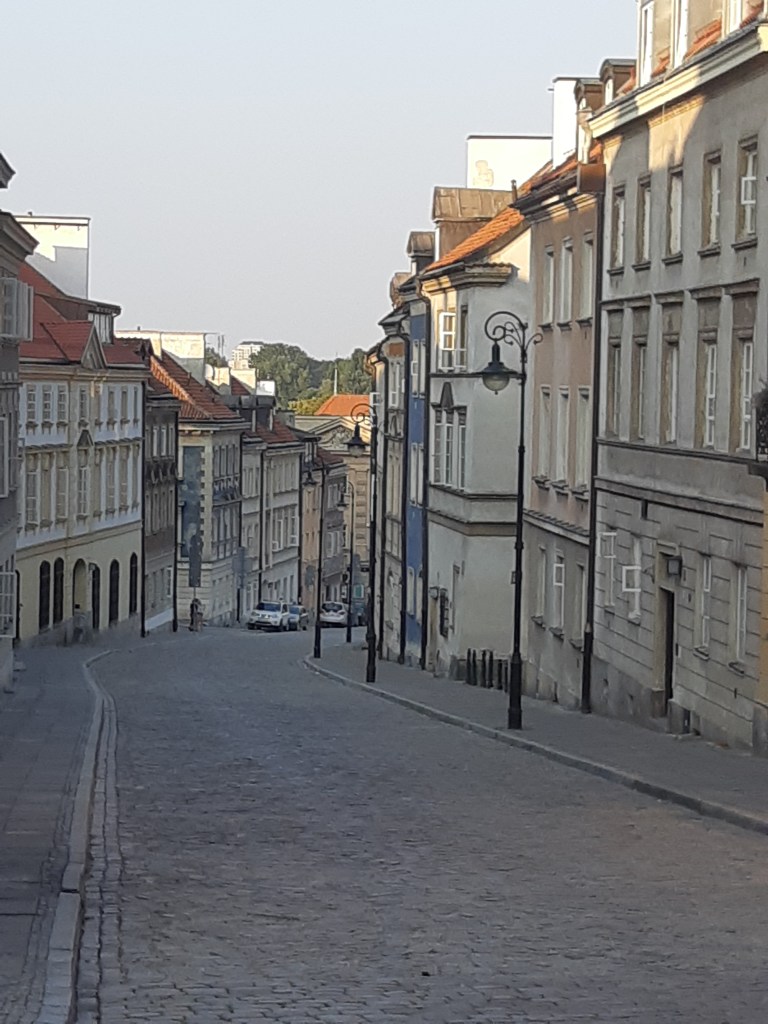
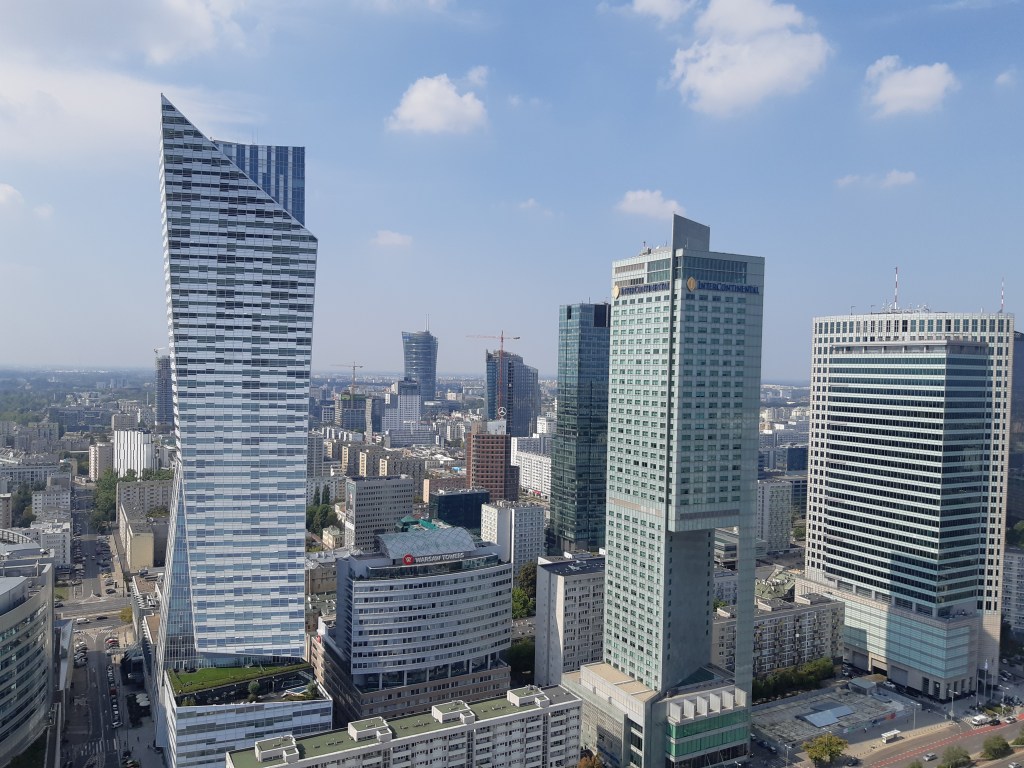
Random pics around Warsaw…

The old…

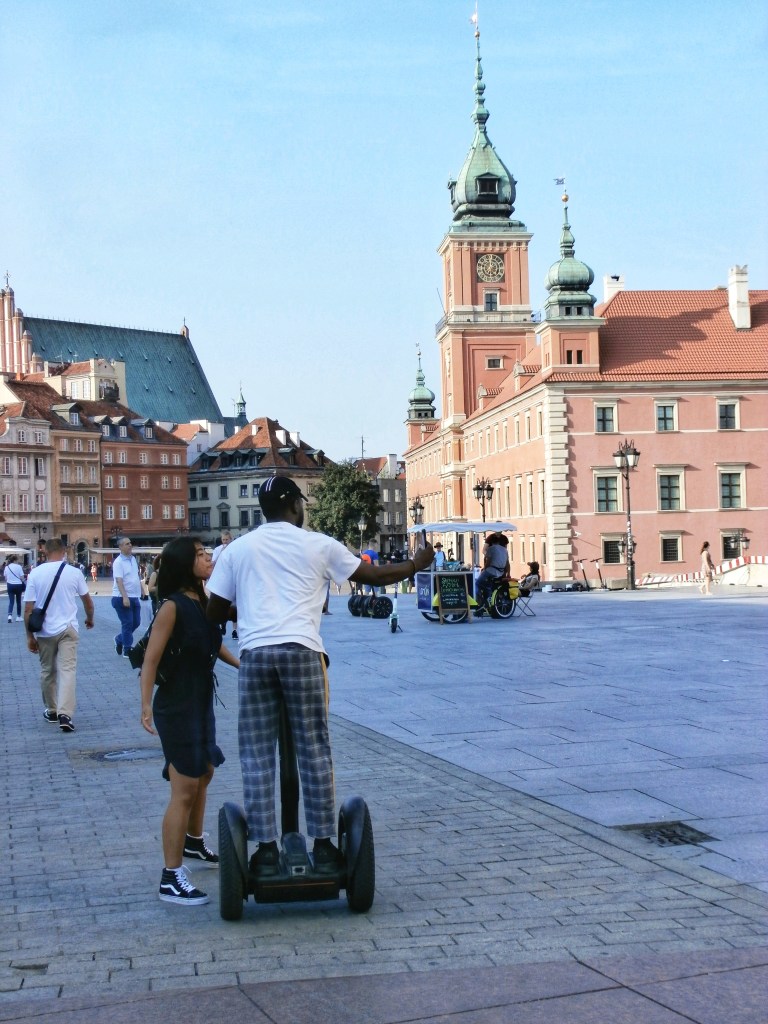
An easy way to get around
Wher are we?
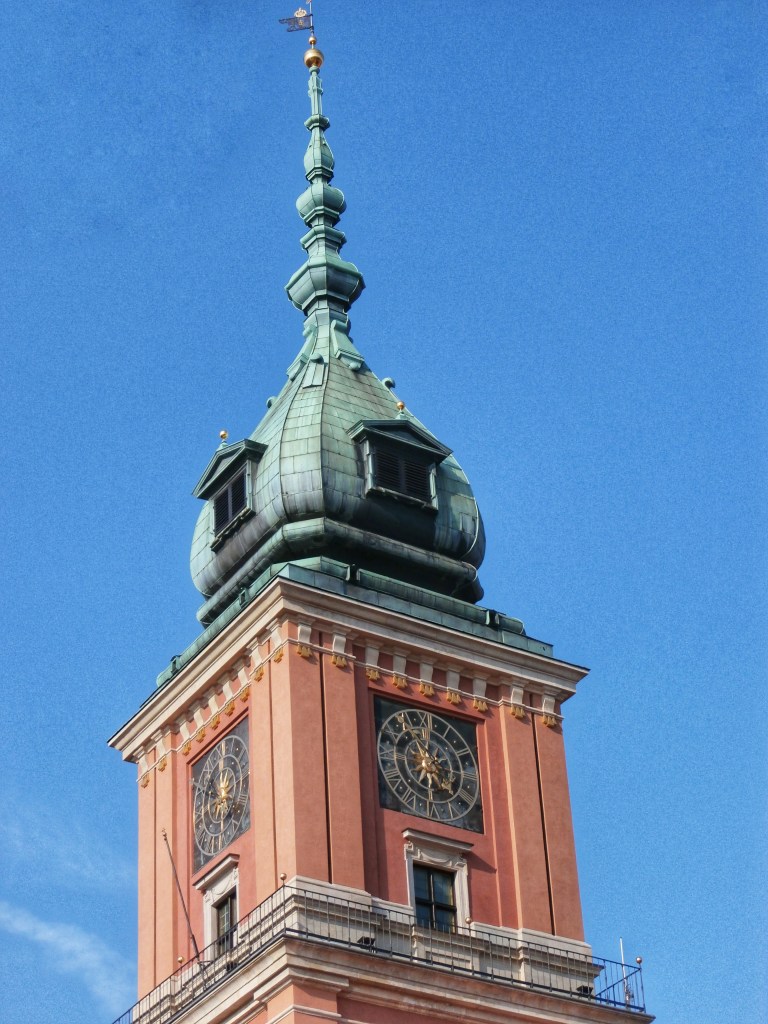
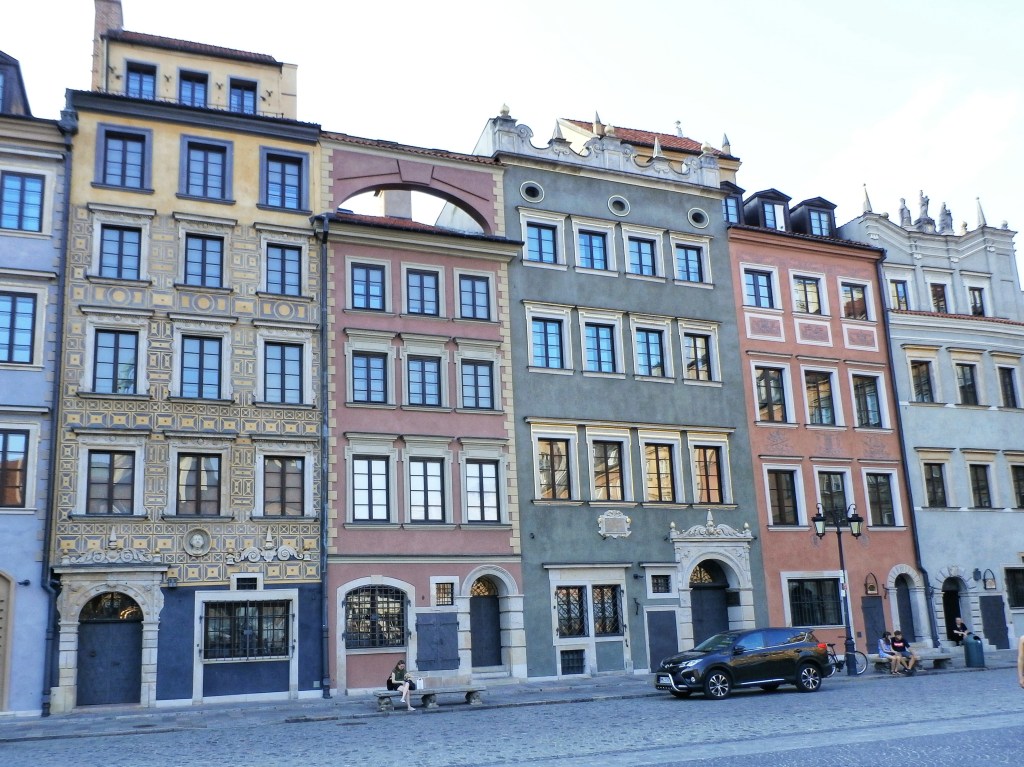
The Old Town Square
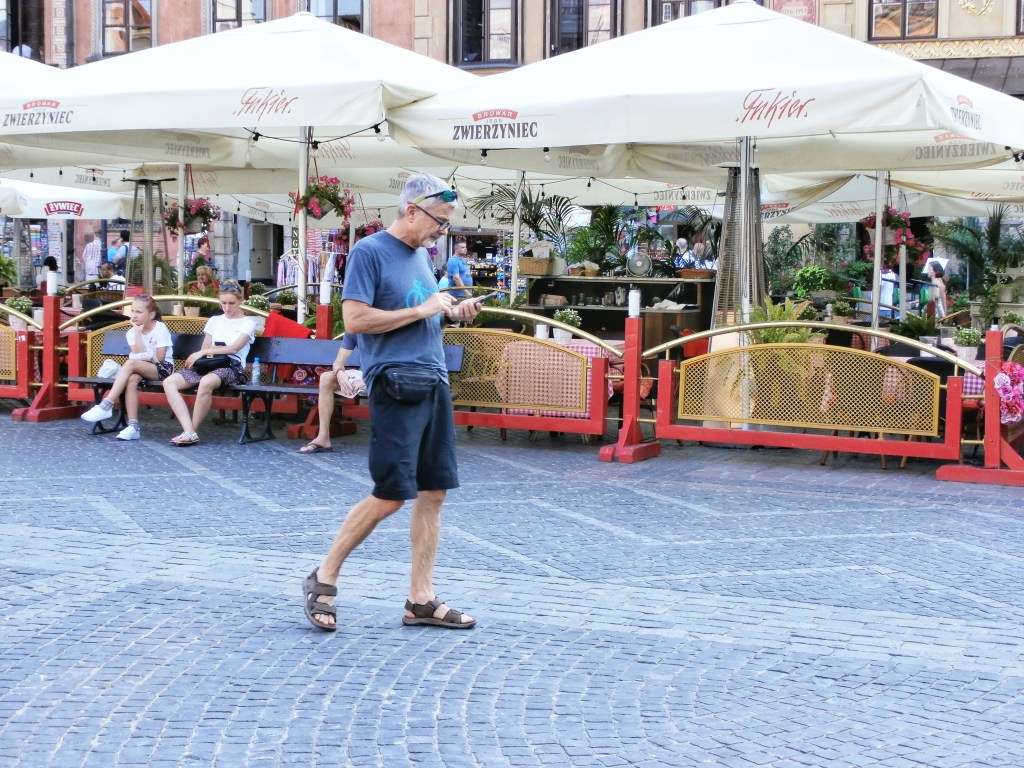
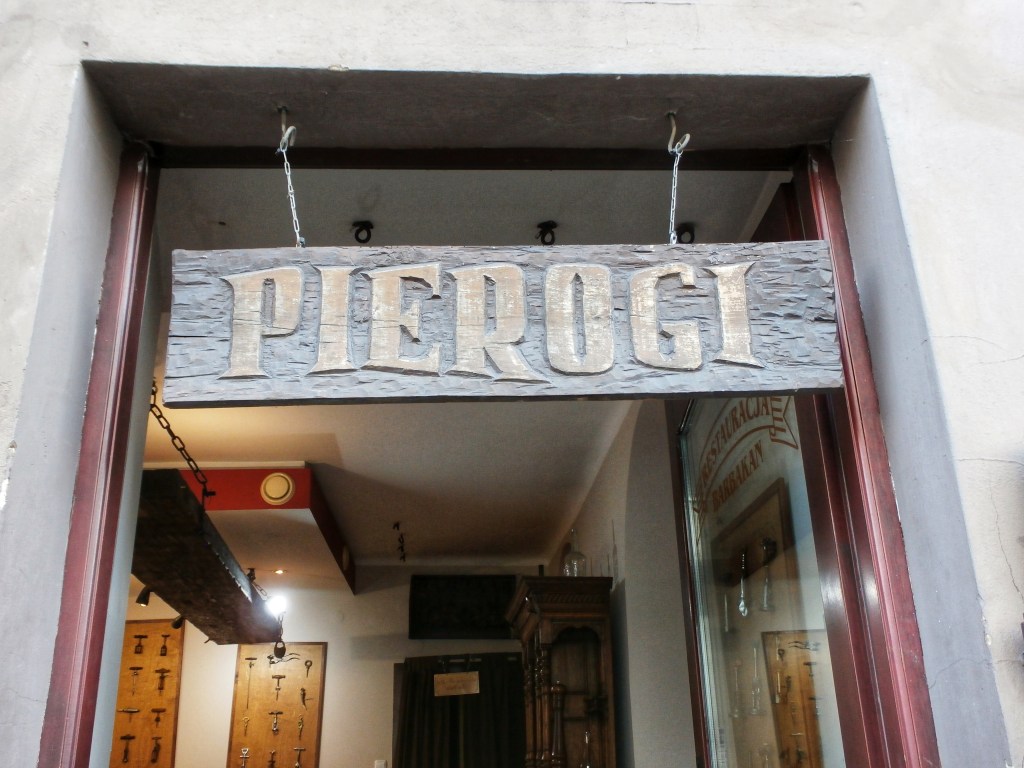
Lots of pierogi restaurants
Incentive to work on my upper body physique!

The new…

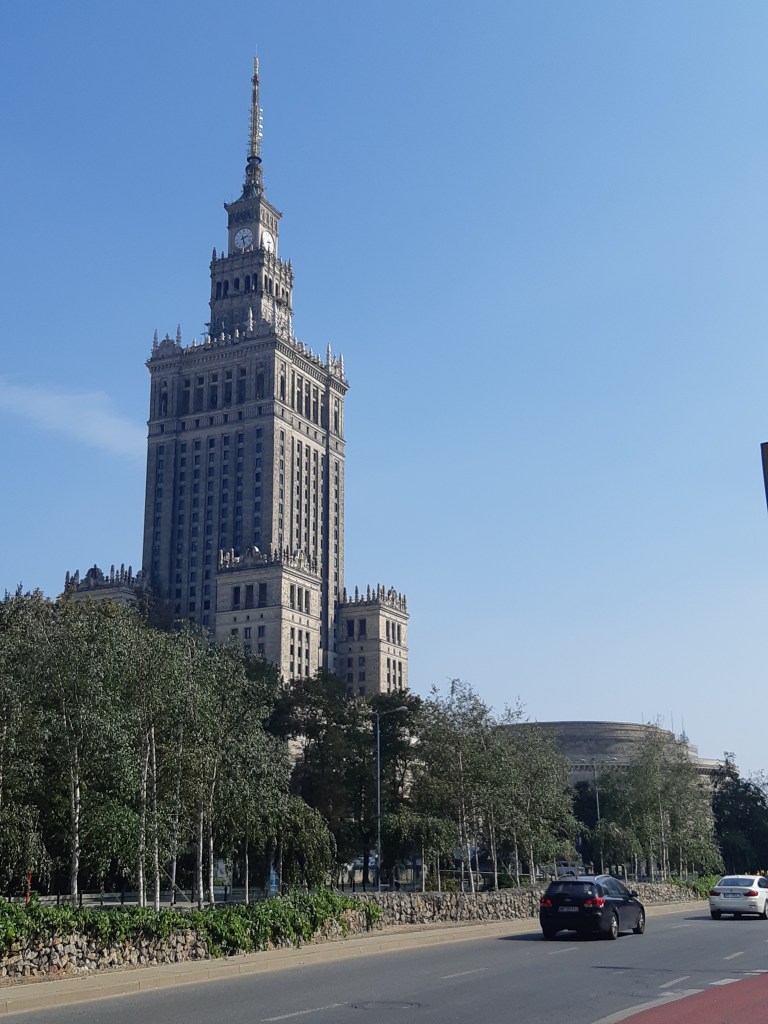
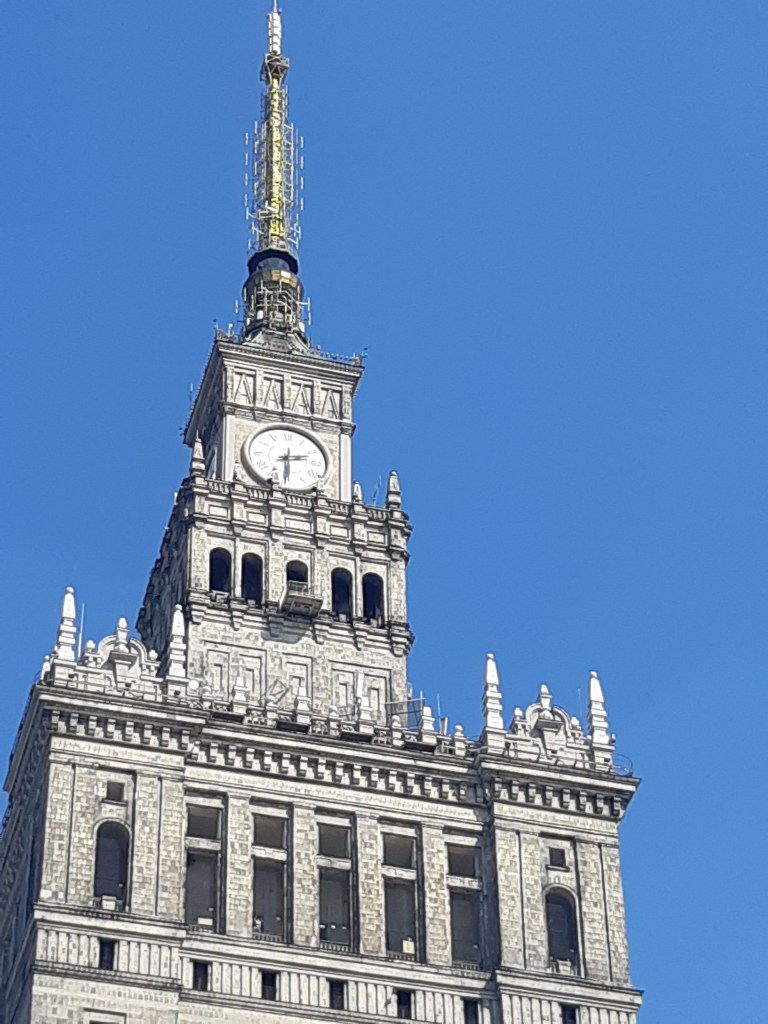
The Stalinist Palace of Culture and Science
Built in 1955. Warsaw was razed in WWII and rebuilt.
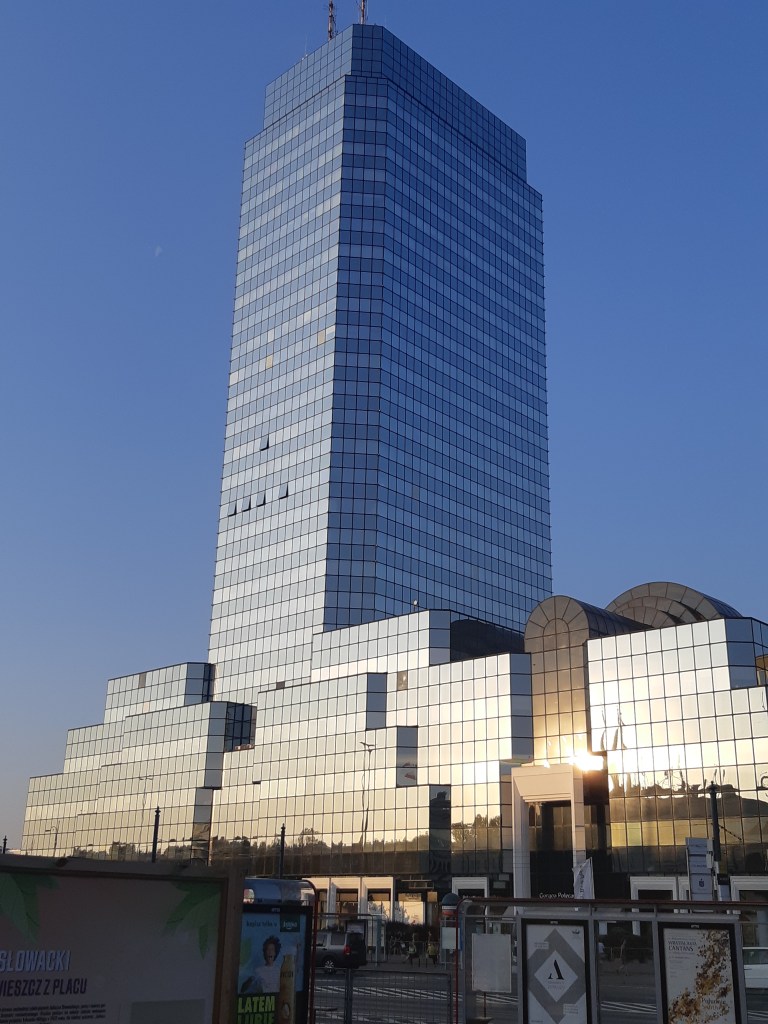
The “sail” building
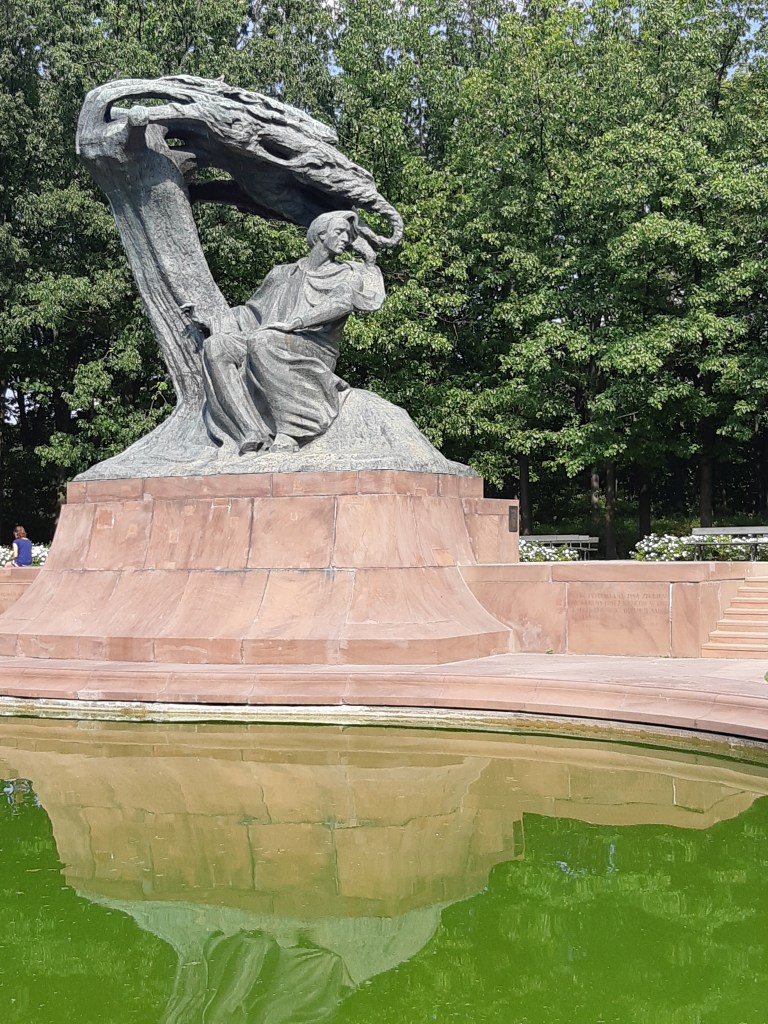
Frederick Chopin monument. Free concerts every Sunday in the summer.
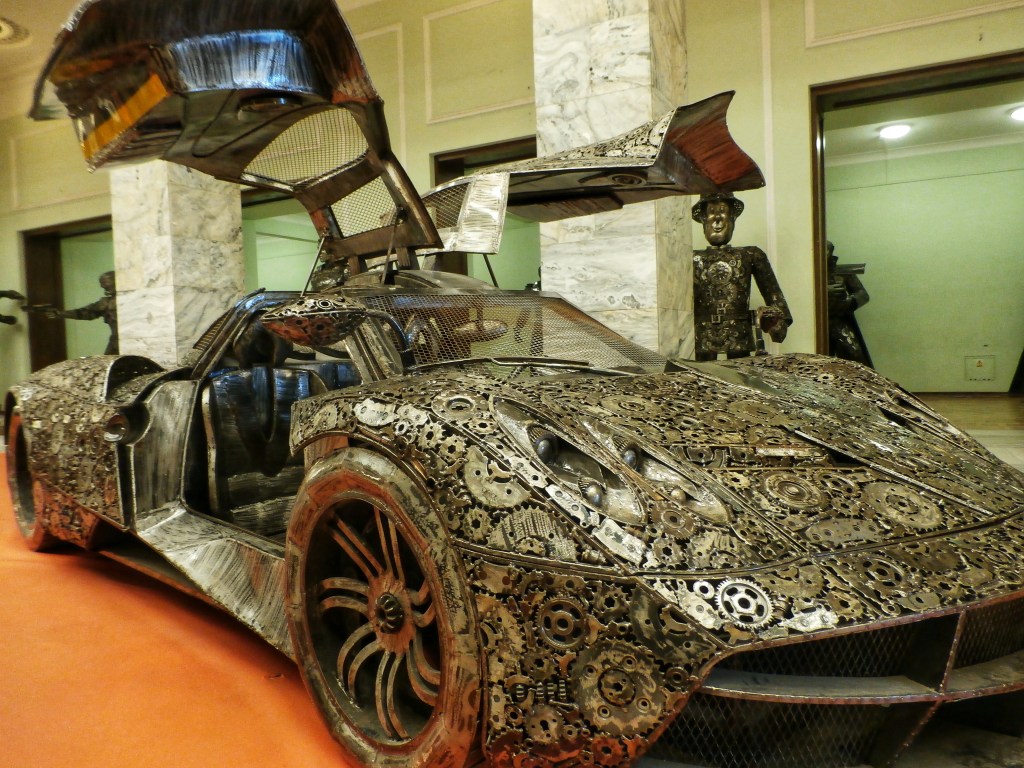
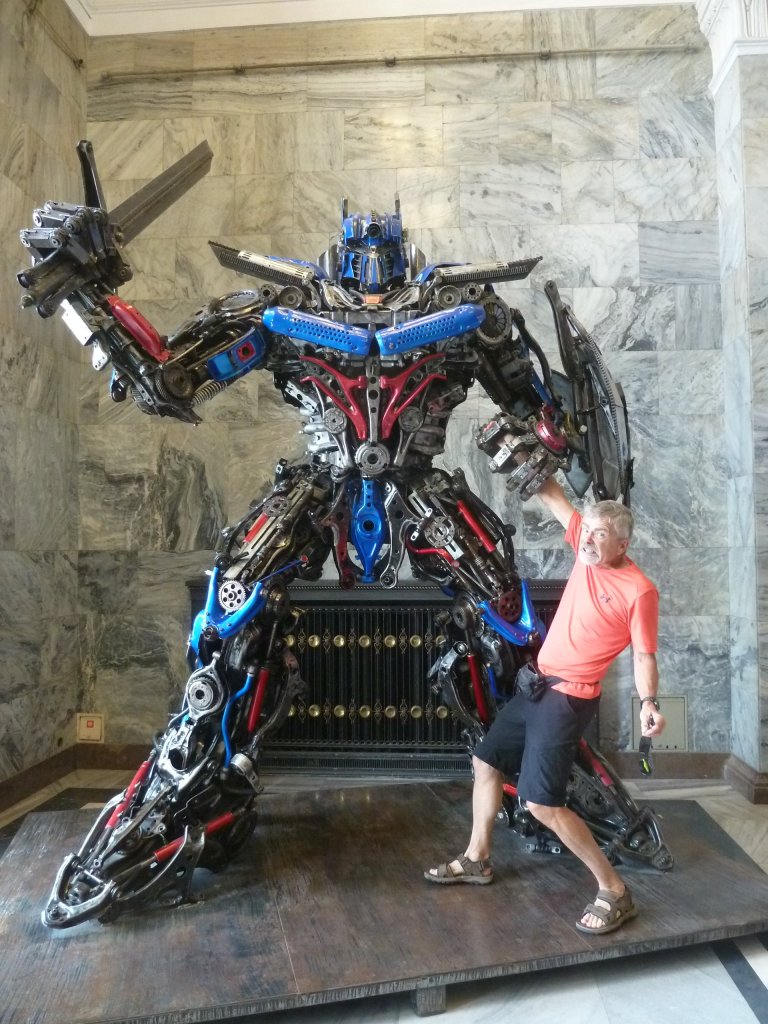
The Gallery of Steel Figures. Dozens of sculptures made of recycled metal, mainly car parts.
Don always wanted to be a Transformer!

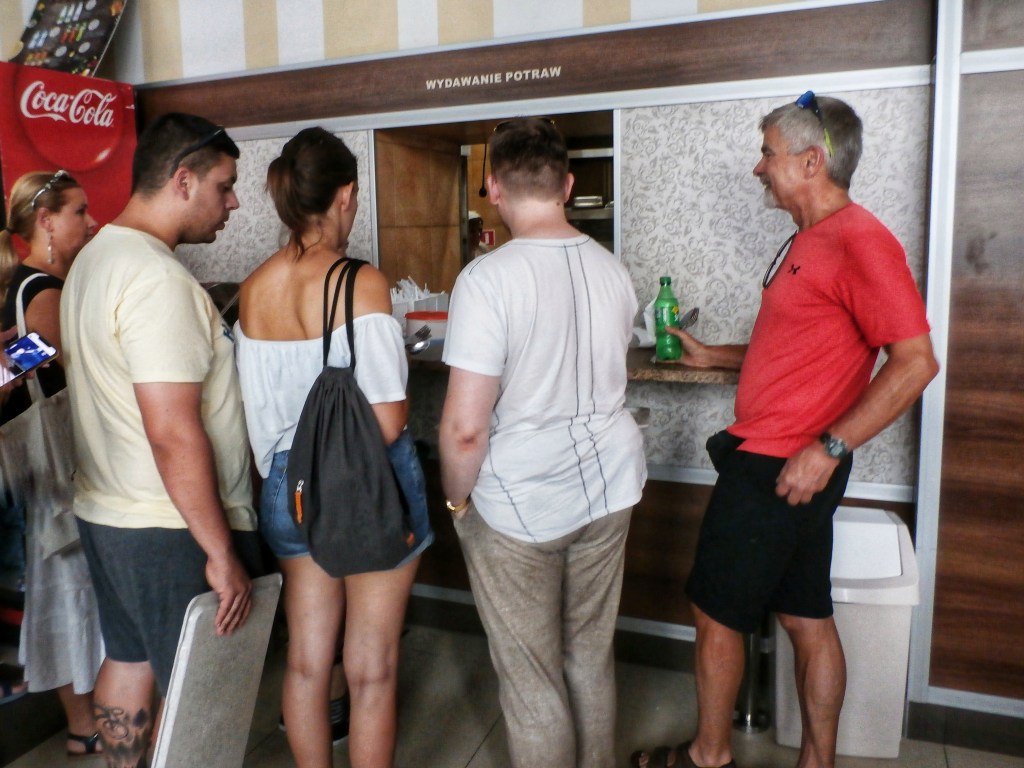
We decided to visit a Milk Bar for lunch. The following description is an excerpt which describes them better than I can.

In short: don’t expect The Ritz. There’s never been any pretentions about service or style in the Polish milk bar. These places were created for the express purpose of doling out homemade food quickly and for uber-affordable prices. Consequently, you’ll typically be left to find a table on your own. The décor is likely to be simple and stripped-down, with tiled walls and rickety seating. Classic milk bars may even have the occasional remnant of the Soviet age still decorating the place, and most will feel totally unchanged since the days of Brezhnev et al.

Milk bars are almost always self-service. You’ll have a laminated menu outlining the dishes of the day, or a blackboard with all the options scrawled haphazardly across it. As soon as you’re ready, head up to the bar and order. Be prepared to go to collect your food from a hole in the wall once it’s ready, and then return your dirty plates and cutlery once you’re finished.

The food of the Polish milk bar derives its inspiration from the hearty, homey creations of the Polish family kitchen. It’s very meat-heavy (sorry veggies) and is typically packed with carbs, mimicking the sort of utilitarian meals that would have dominated plates in the post-war and communist periods. That said, there’s something endearing and enticing about the simplicity of milk bar cooking. It is a welcome diversion from the pomposity of European fine-dining that’s sure to keep patrons coming back for more.

Some of the most popular milk bar meals still on the menu include the likes of traditional pierogi dumplings (little parcels of dough packed with cream cheese and potato), pork knuckles, bubbling borscht (a blood-red beetroot soup that originated in eastern Europe), potato pancakes topped with mushroom sauce and spinach mixes wrapped in cabbage leaves.

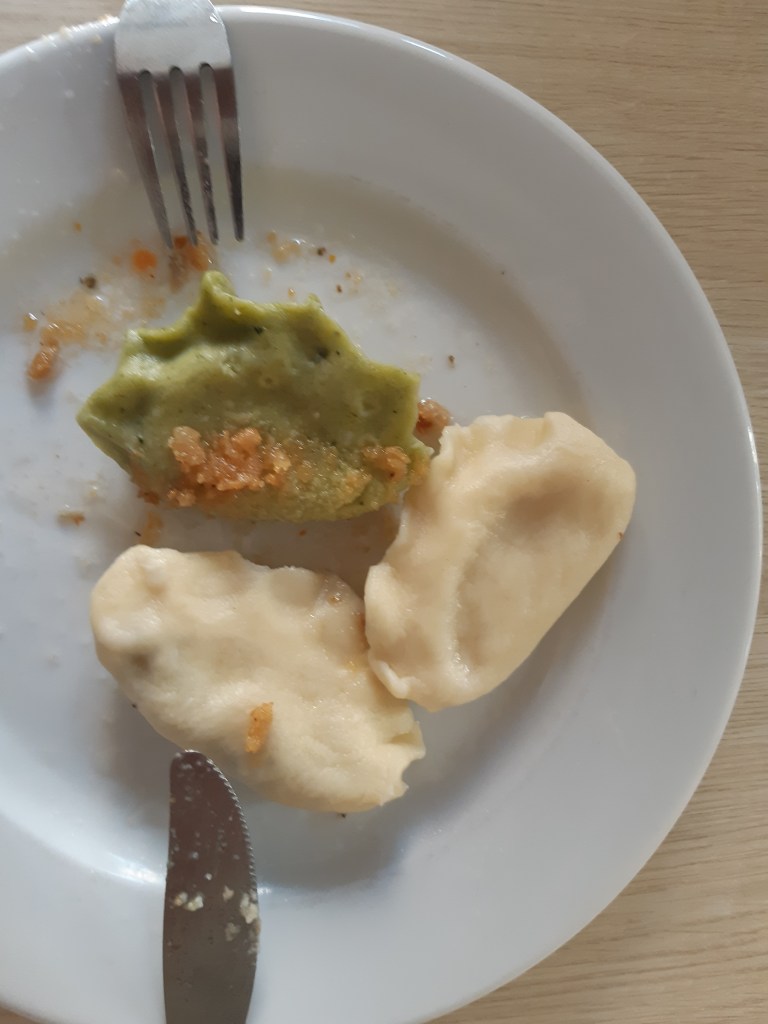
This was a challenge. There was a lineup to get in the door and once in the menu was scrawled on the wall – in Polish of course. We stepped out of the line to try to determine what to order, as most people knew what they wanted, and the only thing I could recognize was pierogi, so pierogies it was. You paid your money to the cashier (about $2.75) who gave you a ticket with your order. Wait in another line to hand it to the server in the window. Stand there for 10 minutes waiting for your meal to be prepared. Find a table and eat. Delicious!

I got 8 of these tasty delights!
When in Warsaw… this one puts hair on your chest!

20. Existentially in Poland

By Don

My wife tells me my posts are too long. She only feels that way because she feels obligated to read them. The rest of you should feel no such compunction to do so. Sue, however, you’re right. You do have to read them.

As Dennis pointed out a couple of the rides in Poland have been less than pleasant. Imagine riding over a hundred km on the road from Edmonton to Calgary, only with two lanes not four, no shoulder, more traffic and fewer turns. As you develop white line fever (not the kind Merle Haggard wrote about, but the kind where you sweat and start shaking) hugging the side with a 3 inch drop on one side and a semi truck doing 100 k/hr on the other which is then followed by the inevitable entourage trying to pass him, you may ponder an existential question like, “I wonder if the driver had a fight with his wife this morning before he left and now wants to text her to see if she is home so he can call her and apologize. I wonder, when he reaches over to the right for his phone will he also swerve slightly over to the right, because there is a propensity to do this, and if so, how far to the right will he go? What if he notices and then over corrects into the oncoming traffic? What if he doesn’t notice?”

Now while riding on quiet roads through corn fields, which can get boring after a while, you may ask “What is Reversed Polish Notation, what does it do, why is it ‘Polish’ and really, why is it reversed?” You think no, you wouldn’t ask this but have you ridden through corn fields in Poland? So how do you know? OK, maybe, you retort, but it is not an existential question. But how many engineering students owe their lives to it, as it prevented them from throwing their slide rule out a 3 story window and then jumping out to follow it.

When the engineers of the world gleefully hung up their slide rules and bought their obscenely expenise Hewlett Packard pocket calculators they, the calculator, operated using Reversed Polish Notation. What is it? It is where you first enter the operands and then the operators. So 10 20 4 + * would be 10 plus 20 times 4. This meant the calculator didn’t have to deal with parenthesis. (10+20)*4 is very different than 10+(20*4) which would have been 10 20 4 *+. So why is it Polish? According to Wikipedia “The description “Polish” refers to the nationality of logician Jan Łukasiewicz,who invented Polish notation in 1924″ which separated the operators and operands. Why is it reversed? Good old Jan had the operators before the operands, I mean he did create it in 1924..

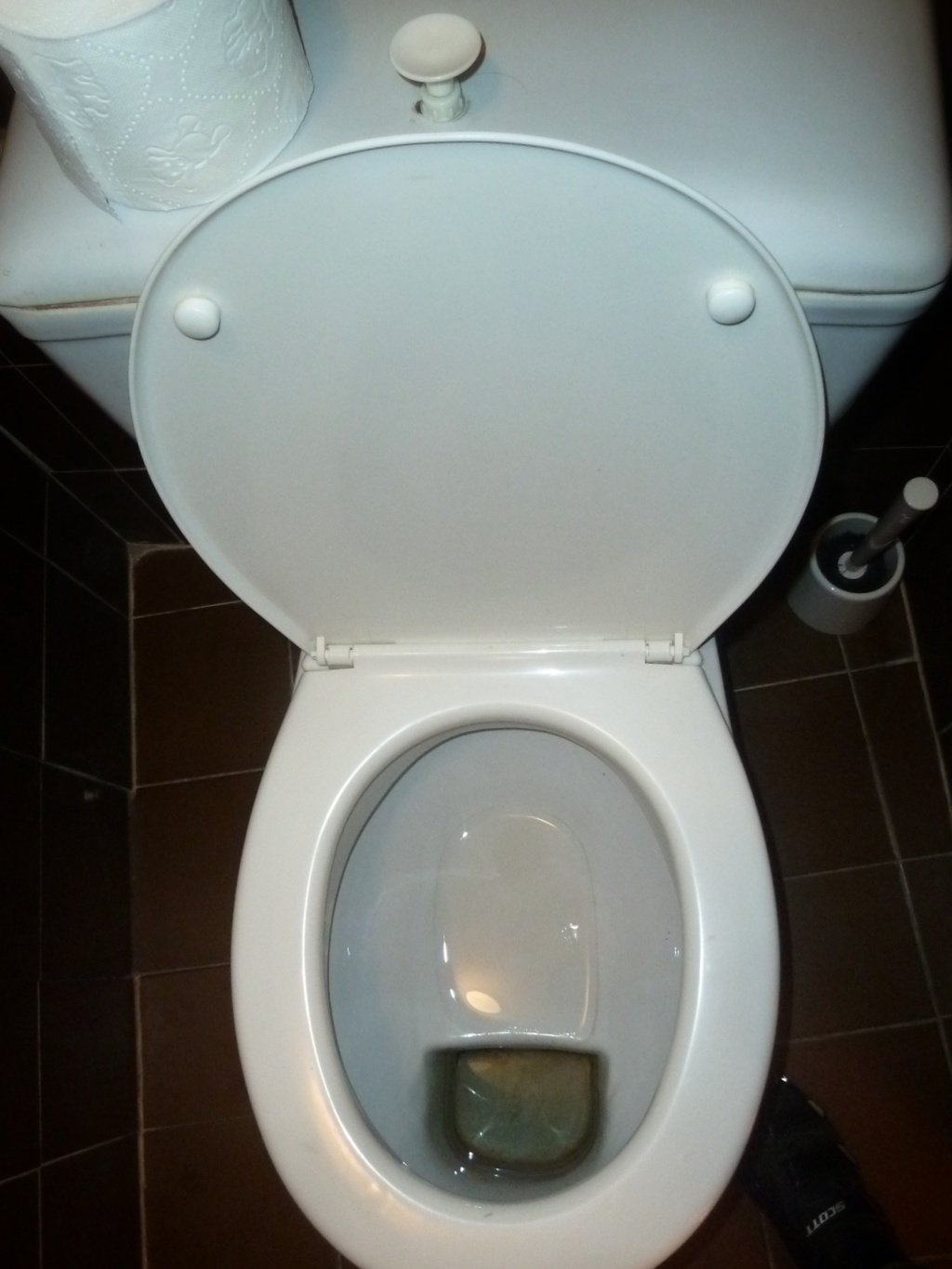
God, I can hear it here on the other side of the world and through all the time zones. Geez Don, you should listen to your wife. Why do you think we need to know this? GOD!!!! Well, because it has been a set up. The following is a picture of a Reversed Polish toilet that we had in Pultusk.

Now look at it and think about it. It should not conjure up anything pleasing in your minds eye.

Being Frank

As Ron, Hal and Steve wittingly hinted at in their great comments, the Patron Saint of Uzupiz is Frank Zappa, the leader of Mothers of Invention and father to Dweezil, Moon, Diva and Ahmet. Lyle in his comment pointed out that Havel, the first president of the Czech Republic, also had a strong relationship with Frank Zappa. “Zappa and Václav hit it off immediately. Zappa was appointed as “Special Ambassador to the West on Trade, Culture and Tourism”. Yes Marx, Lenin and Stalin; Frank Zappa is placed way higher on the pedestal than you. In fact they took you off the pedestal. Ironic justice. Spend some time reading about it to understand why, just ask Dr. Google about the Velvet Underground and the Czech Republic. It includes Lou Reed.

Literally

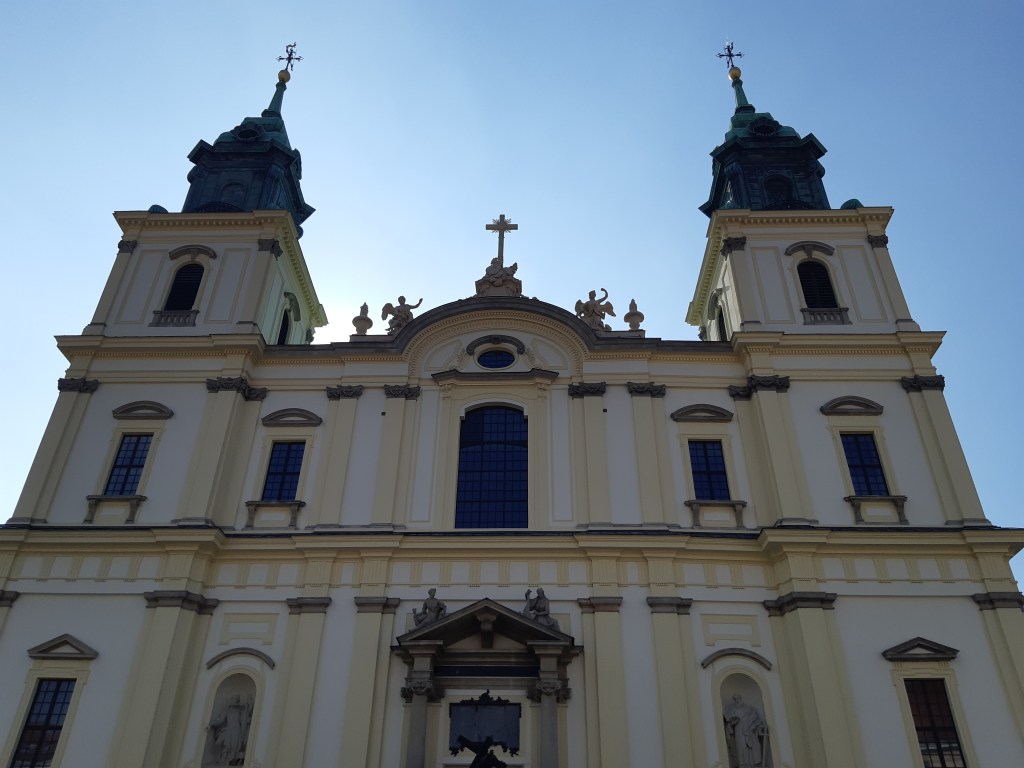
As you may or may not know, and if you do you may go back to reading about Donald Trump instead, Frederic Chopin, or Fred Chopping as Dennis and I refer to him, was born in Poland and grew up in Warsaw. He is a big deal here even though at 19 he left, started training in Vienna and ultimately lived in Paris. Today I was reading sign about him saying that he died in Paris but his heart was in Warsaw. Well they mean that literally. Apparently at his death bed request his sister cut his heart out, put it in a jar of Cognac and smuggled it into Poland where it is interned in the Holy Cross Church. So his heart really is in Warsaw. Somehow that does not fit into the category of cute in an absurd but pleasing way.

19. On the way to Warsaw… 5 days 490km

By Dennis

Take me home, country roads… Vilnius to Alytus – 107km Avg 20.4 km/hr

It was nice to visit the big city, but after 3 days it was nice to get out and continue our journey. Busy getting out of Vilnius in the morning rush hour, especially with heavy traffic and a motorway with essentially no shoulders, but we were soon onto the country roads with minimal traffic. A nice ride through verdant grasslands supporting a thriving dairy industry and many small towns every 10k or so. What amazes me is the cleanliness of the towns and countryside in Lithuania with nary a piece of garbage to be seen, it seems the people have a pride in their country.

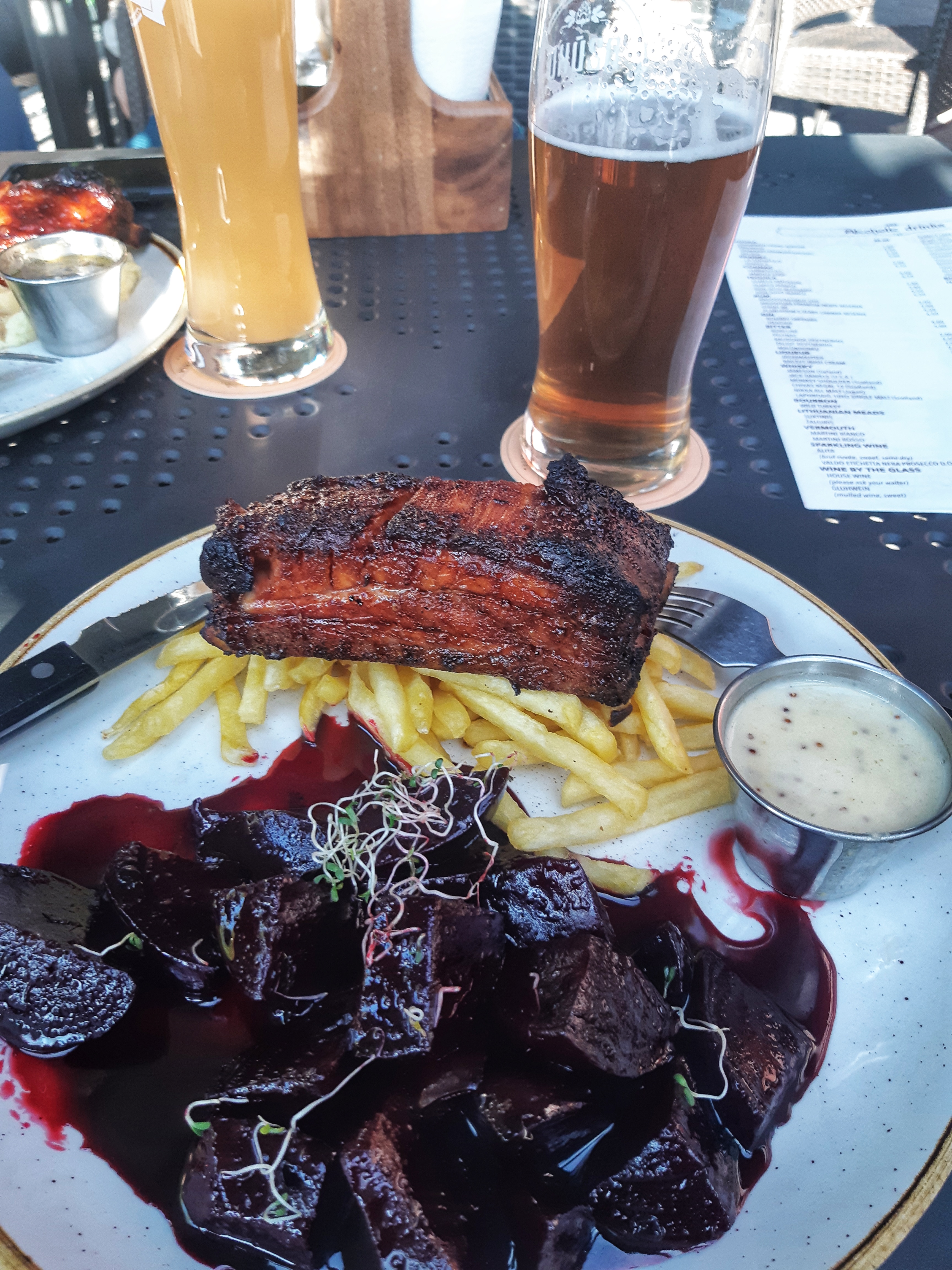
Our stop for the night was Alytus. With a population 60,000 and situated on the banks of the Nemunas River. The town has a good feel to it and has lots of young people (but don’t they all look young these days?). Dinner was ribs and a delicious carmelized beet dish.

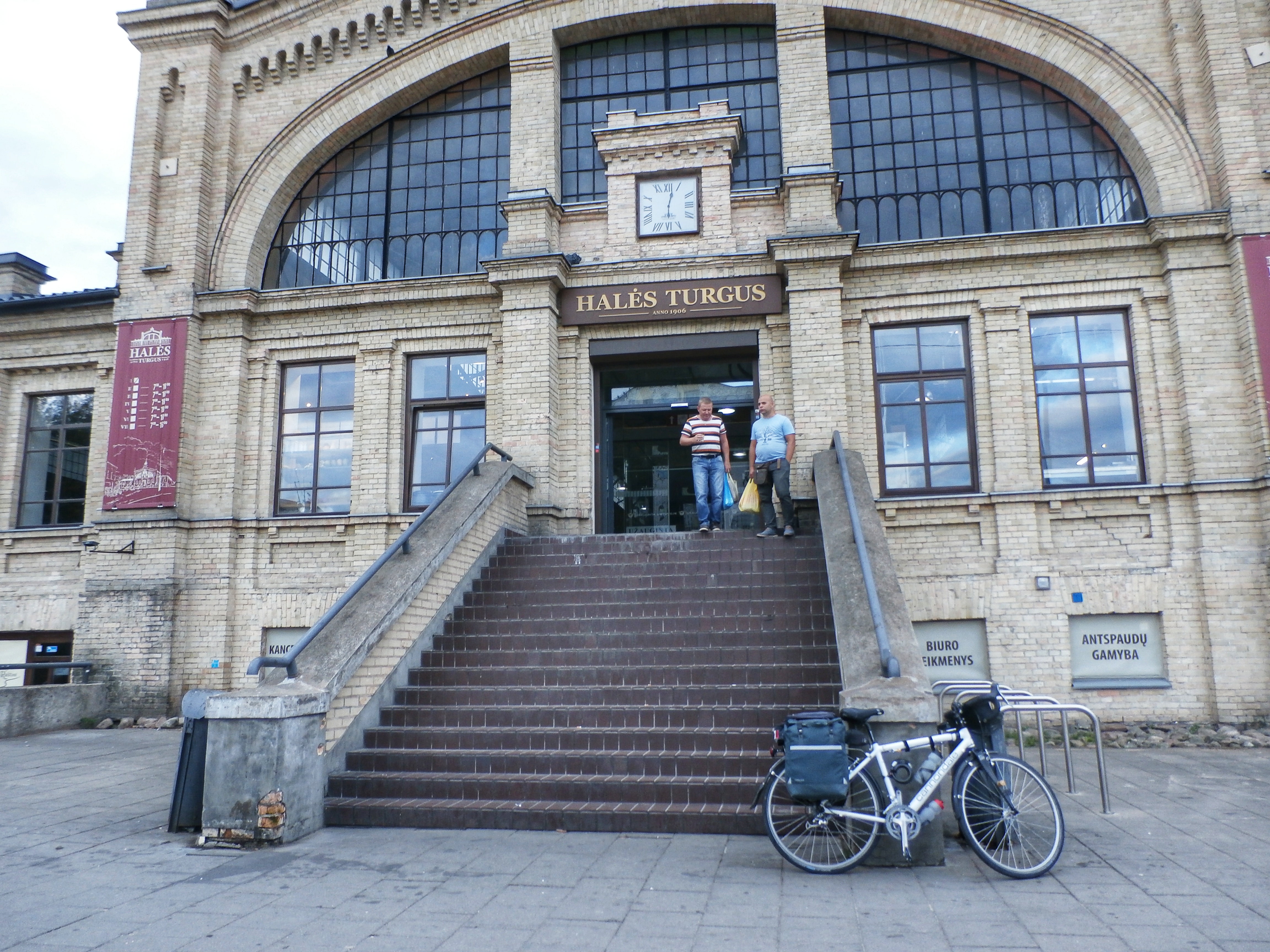
Old Soviet style market where I stopped in the early morning for some day snacks but they were not open yet. Turgus means market.
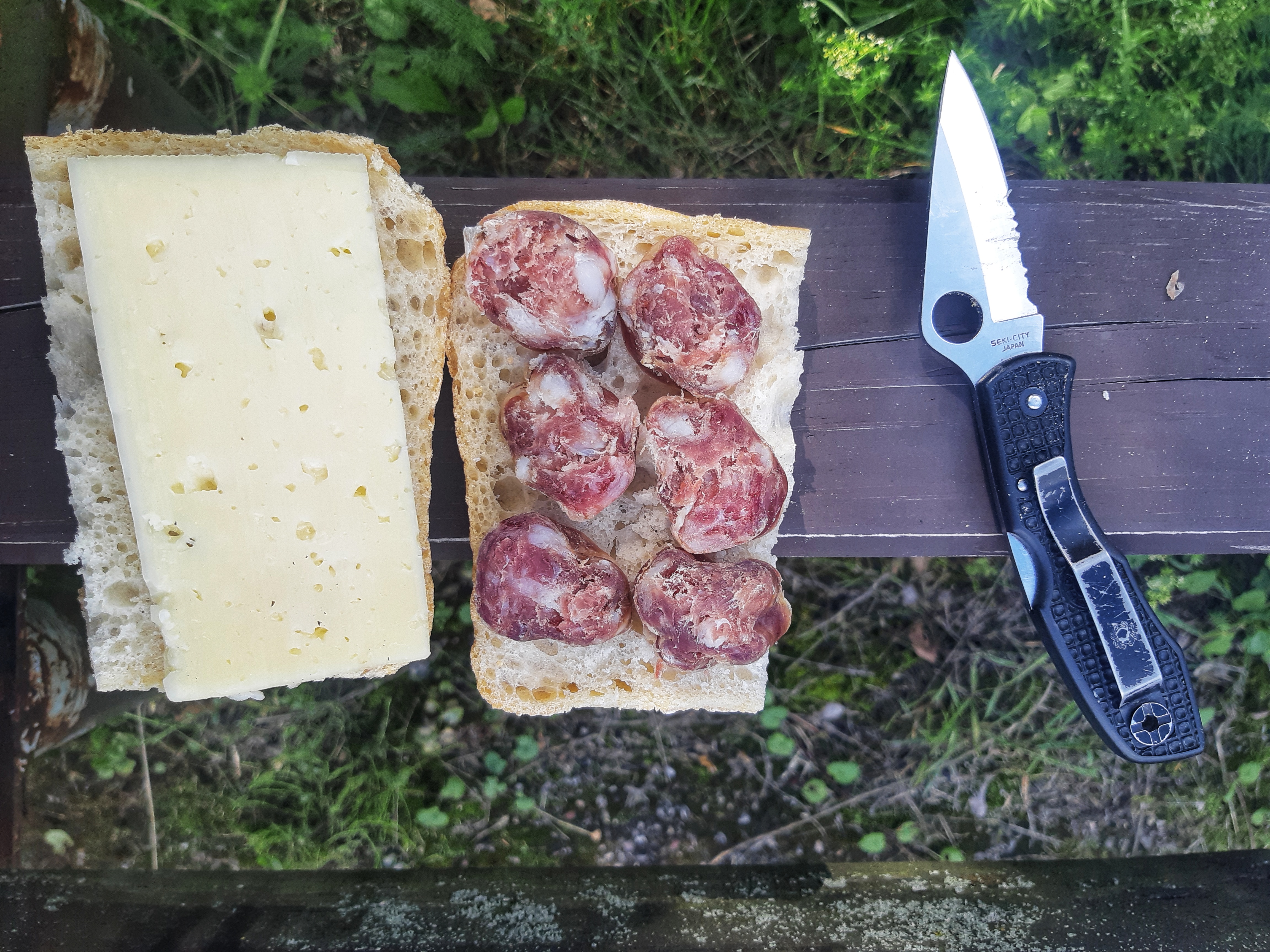
Lunch – not very healthy but tasty!
Dinner – pork ribs and carmelized beets.

White knuckling it from Alytus to Augustow, Poland – 107km Avg 20.4 km/hr

A ride on a highway with no shoulder all day, but most drivers will go around you or slow down until oncoming traffic has passed. None the less, when the big transport trucks go by it is unerving and by the end of the day I had a sore neck and shoulders from being tense all day.

Augustow is situated on a lake and is a summer vacation town for the people from Warsaw. As such it is expensive and busy – we paid $100CDN for a room, the most we have spent so far.

The headwinds were back today, time for another eleemosynary to the wind gods!

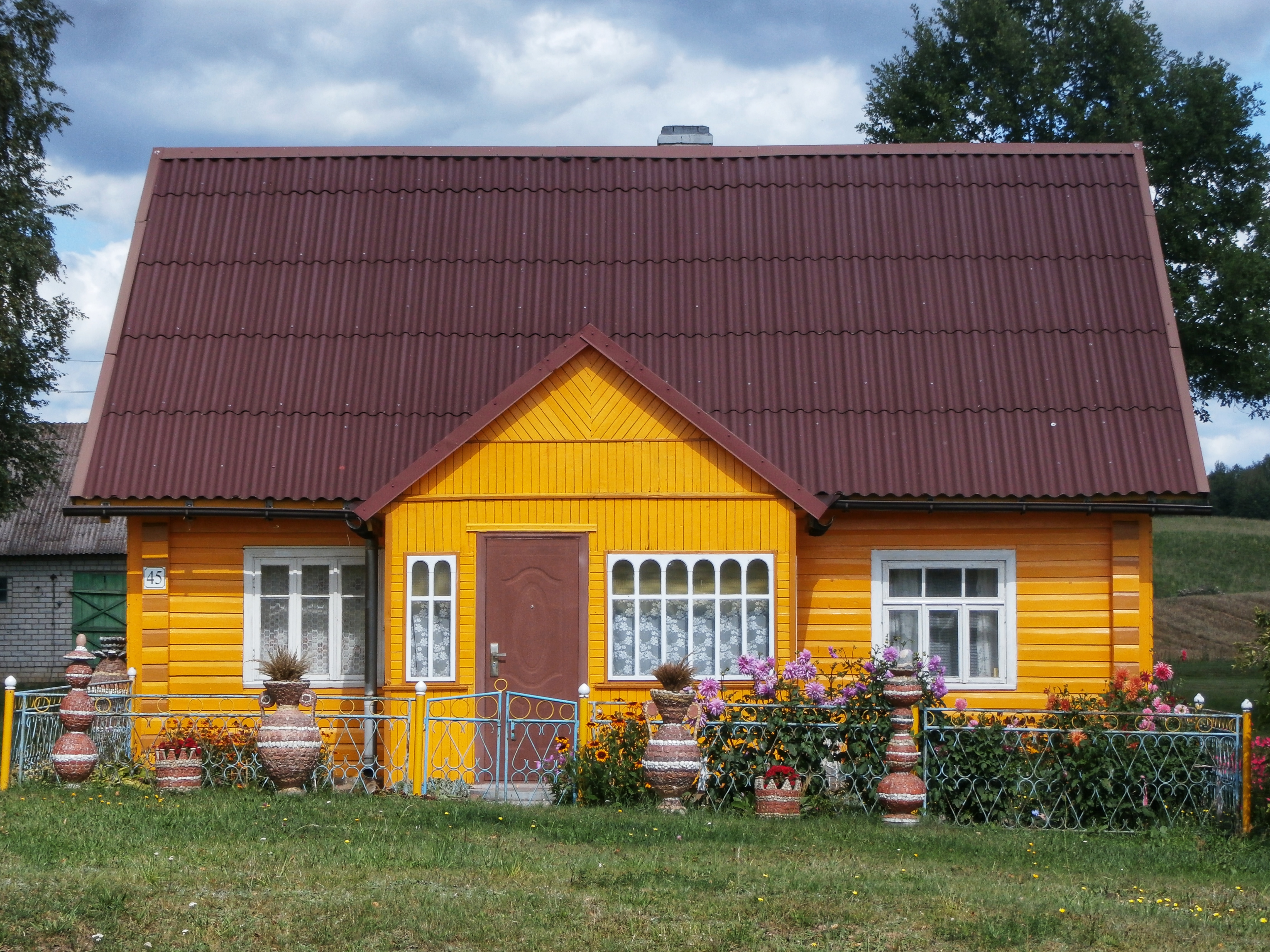
Cute little Lithuanian house.
Lithuanian tongue twisters!
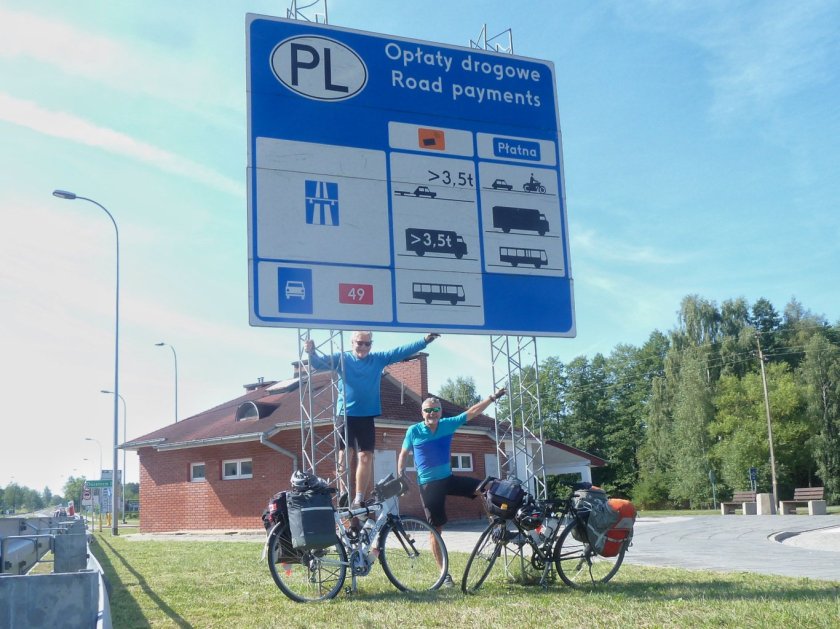
Poland! This was their “Welcome to Poland. Have a nice day, eh!” sign.
Warsaw 311 km to go!
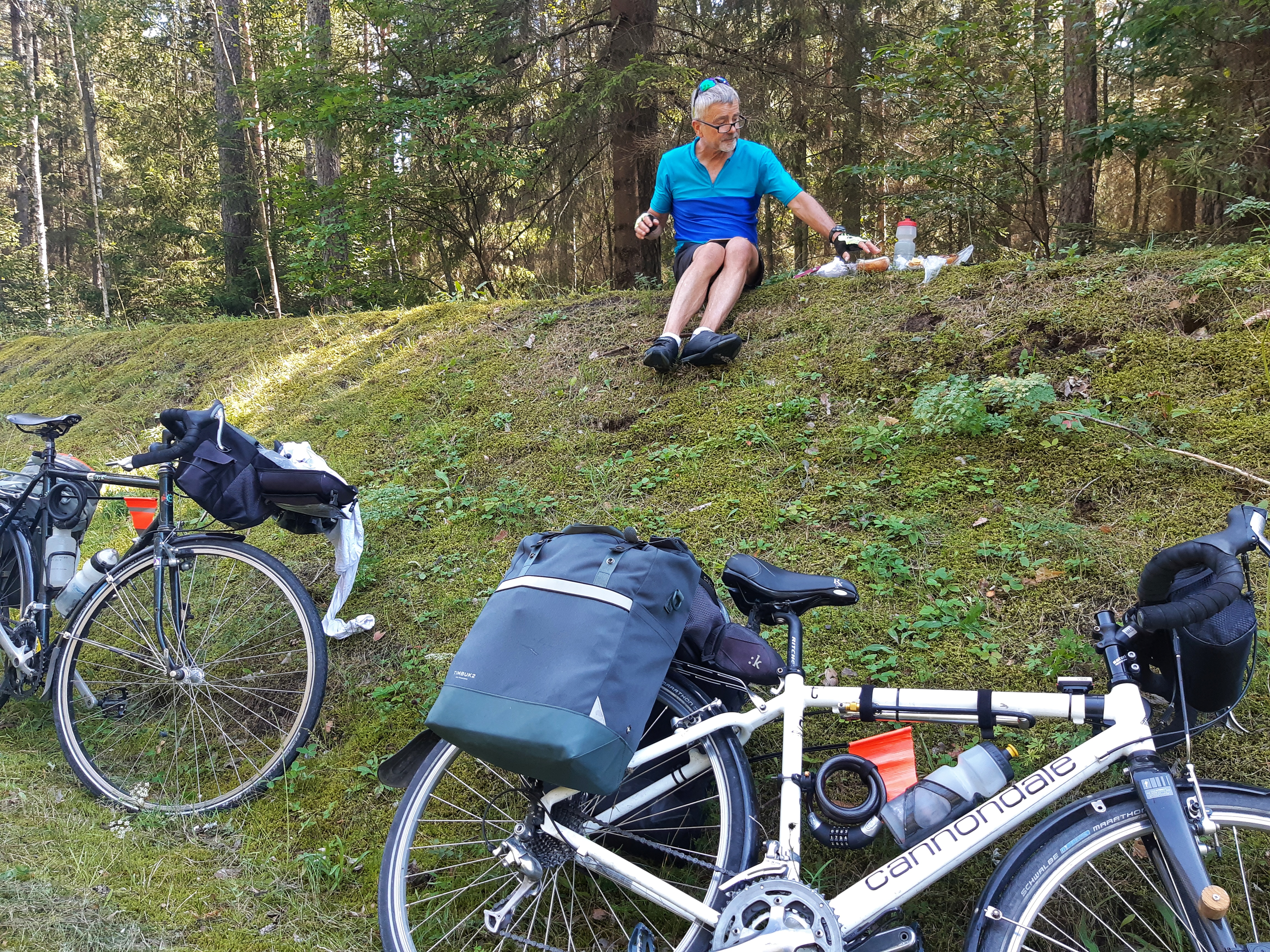
Lunch break on the side of the road
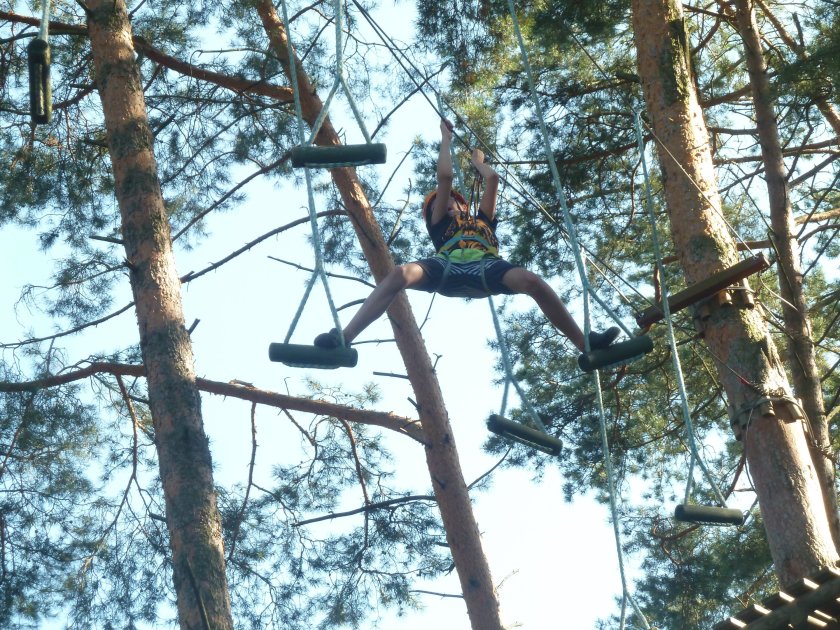
Augustow play park – obstacle course through the tree tops. Not sure if this would be allowed in Canada!

So much for that theory… Augustow to Lomza – 113km Avg 20.7 km/hr

Up early and on the road by 6am, the theory being that it is a Sunday and there would be no truck traffic. Wrong! The trucks started early and the holiday traffic built continuously all morning, forcing us to find and alternate route through the countryside for the last hour. At our hotel we inquired about the heavy traffic and were told Sunday is the busiest day of the week in the summer with people heading out to the plethora of lakes in the area. Thankfully tomorrow’s route looks less busy.

After our first days in Poland, some observations have been apparent when comparing it to the Baltic States (Estonia, Latvia, Lithuania): There is garbage thrown on the side of the road and lying around the town squares. The forests are not manicured with neat rows of trees and the understory cleared out. There are a lot more aggressive drivers who can’t slow down for 5 seconds to safely pass us. The roads have no, or very narrow rough shoulders. There was no Polish flag at the border crossing nor a sign saying “Welcome to Poland”, not even a Polish flag. They use funny money call zlotys (about 3 to a CDN dollar) with a zloty broken down into 100 groszys (1 groszys = .3 CDN cents) In the Baltic States, most young people speak English, in Poland most do not.

But! On the plus side they acknowledge a wave or nod of the head or a “good morning” (Dzien Dobry!). And today we even had a man approach us and strike up a conversation in English after seeing my Canadian flag. These acknowledgments make up for a lot!

The population of Lomza is about 65,000 but it is a nondescript fairly modern town with no real “atttractions” and nothing worth taking a picture of.

Polish tongue twisters
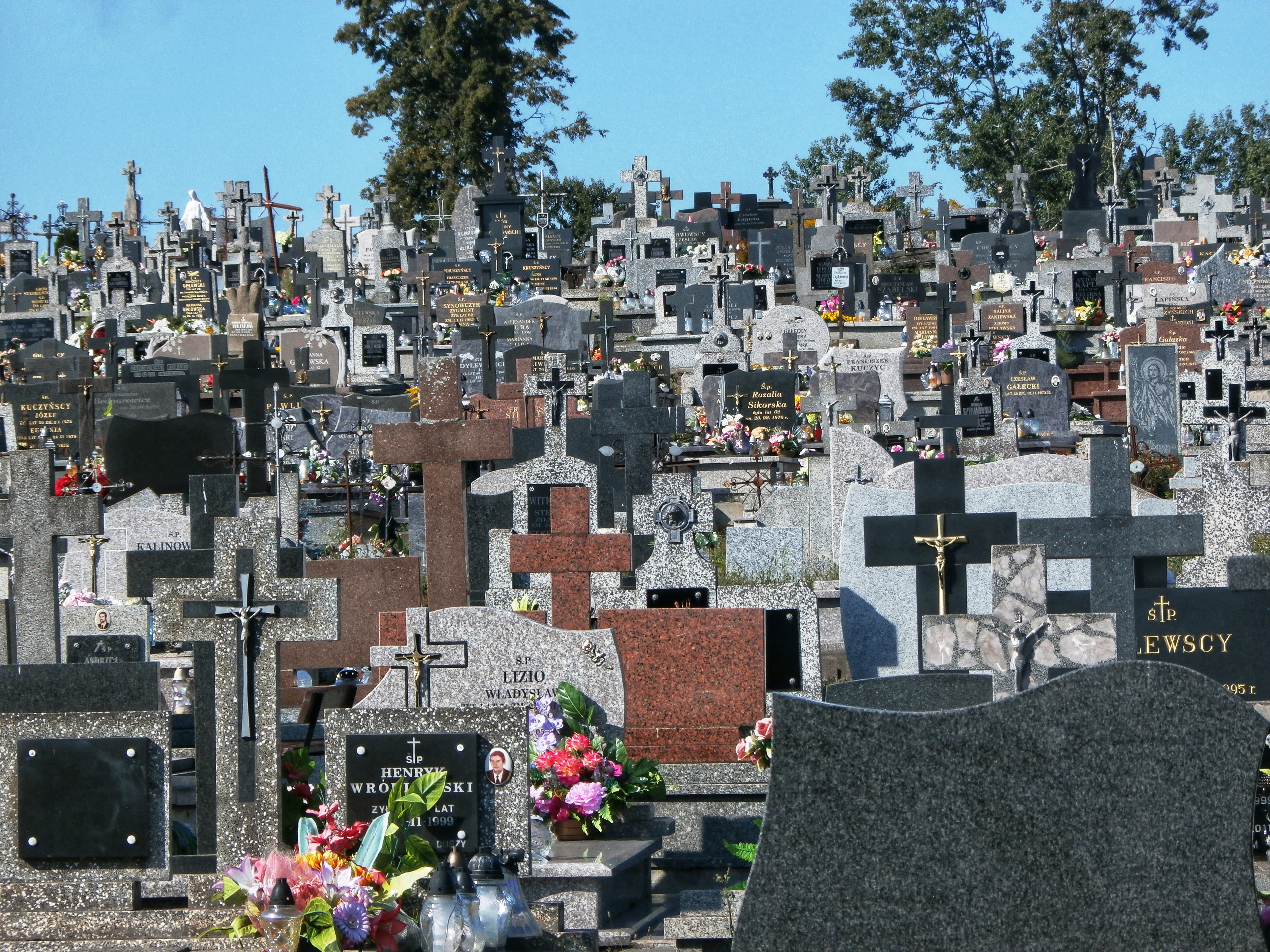
Crowded Polish cemetary – standing room only

A sigh of relief… Lomza to Pultusk – 103km Avg 21.6 km/hr

After and hour of busy highway with no shoulder we finally turned off onto a series of country roads which took us all the way to Pultusk. What a relief to have a break from the trucks and traffic, and believe it or not, tailwinds giving us a boost in speed of about 5km/hr. It seems the wind gods heard my promise of another eleemosynary made a couple of days ago and gave us a credit!

The landscape for the past two days has been covered with cornfields, a crop they grow for the dairy industry. I was tempted to grab a couple for dinner, but upon close inspection the cobs were bright orange and hard and did not look at all appetizing not at all like the Silver Rill or Peaches and Cream we get at home. Apparently the Polish do not eat corn, deeming it suitable only for pigs or cows.

It was 31 degrees today, we must be getting south!

Riding through the corn fields
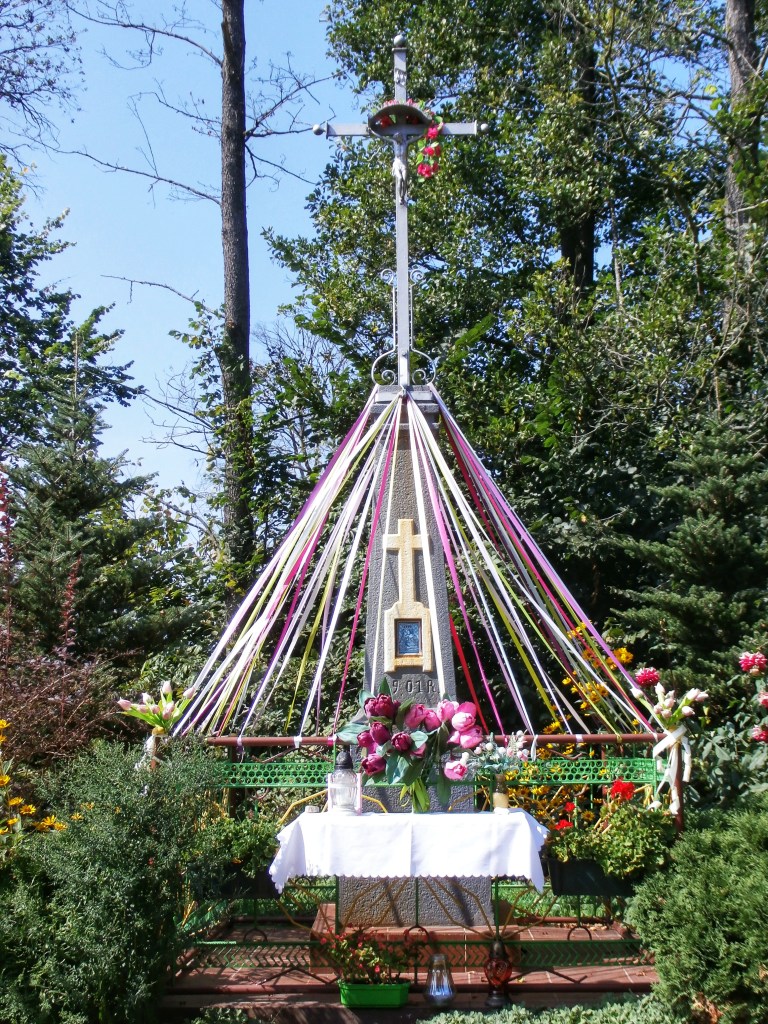
These roadside shrines are everywhere
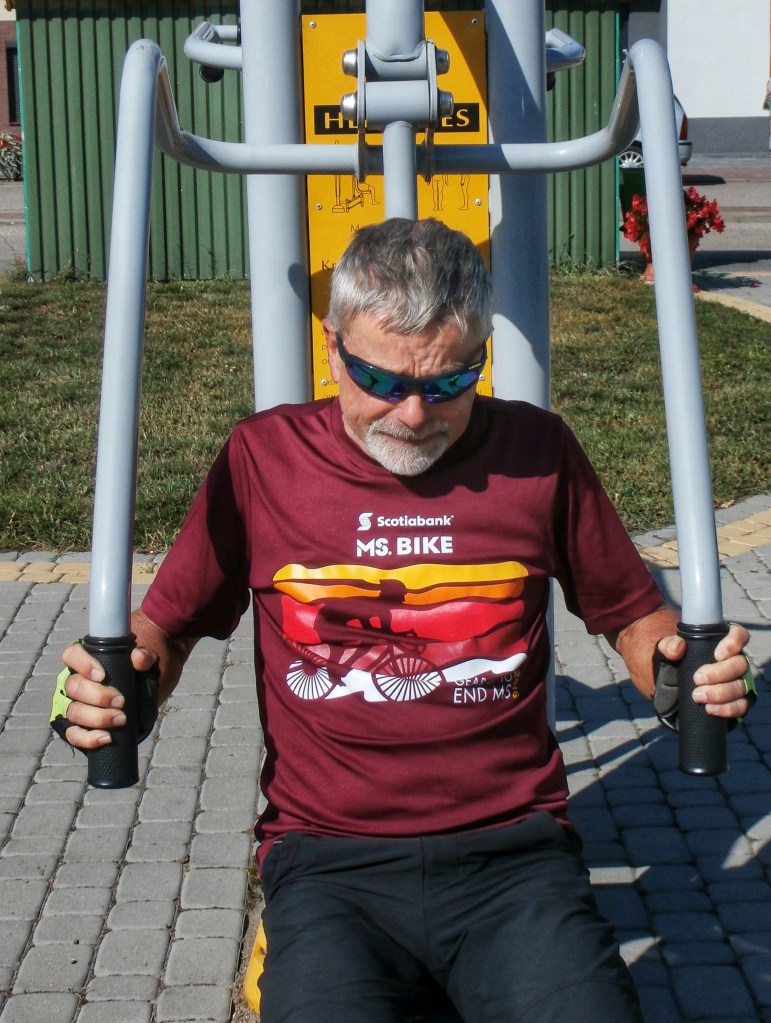
Don working on his upper body strength. His bottom half is much stronger now!
Our “castle” accomodation in Pultusk
This castle was once surrounded by a moat with drawbridge but is pretty run down now.
Don is getting tired of talking to me and wants to talk to someone who will listen to him

Wandering into Warsaw… Pultusk to Warsaw – 69km 16.1 km/hr

After 4 consecutive 100km days it was supposed to be an easy ride into Warsaw, a mere 61km on country roads.

Don: Komoot is suggesting a ride down the west side of the Narew River but look at the route I just found on the east side of the river, probably even less traffic.

Dennis: Maybe, but I wonder why Komoot did not suggest it as a possible route?

Don: I don’t know, I had to trick Komoot in order to get this route, but let’s try it. Should be a breeze.

Dennis: Ok. We have all day.

Next time we will believe in Komoot’s suggestions

After 3 hours we found a bridge taking us back to the west side of the river and re-joining the original Komoot route about 30km north of Warsaw.

Warsaw is a big city and it starts getting populated about 30k out. Fortunately it has and excellent bike path infrastructure and we were able to ride the final 25k off the road. The drivers in Warsaw are amazing with their respect of cyclists – as soon as you approach a crosswalk they stop, we even had a trolley on the tracks stop for us.
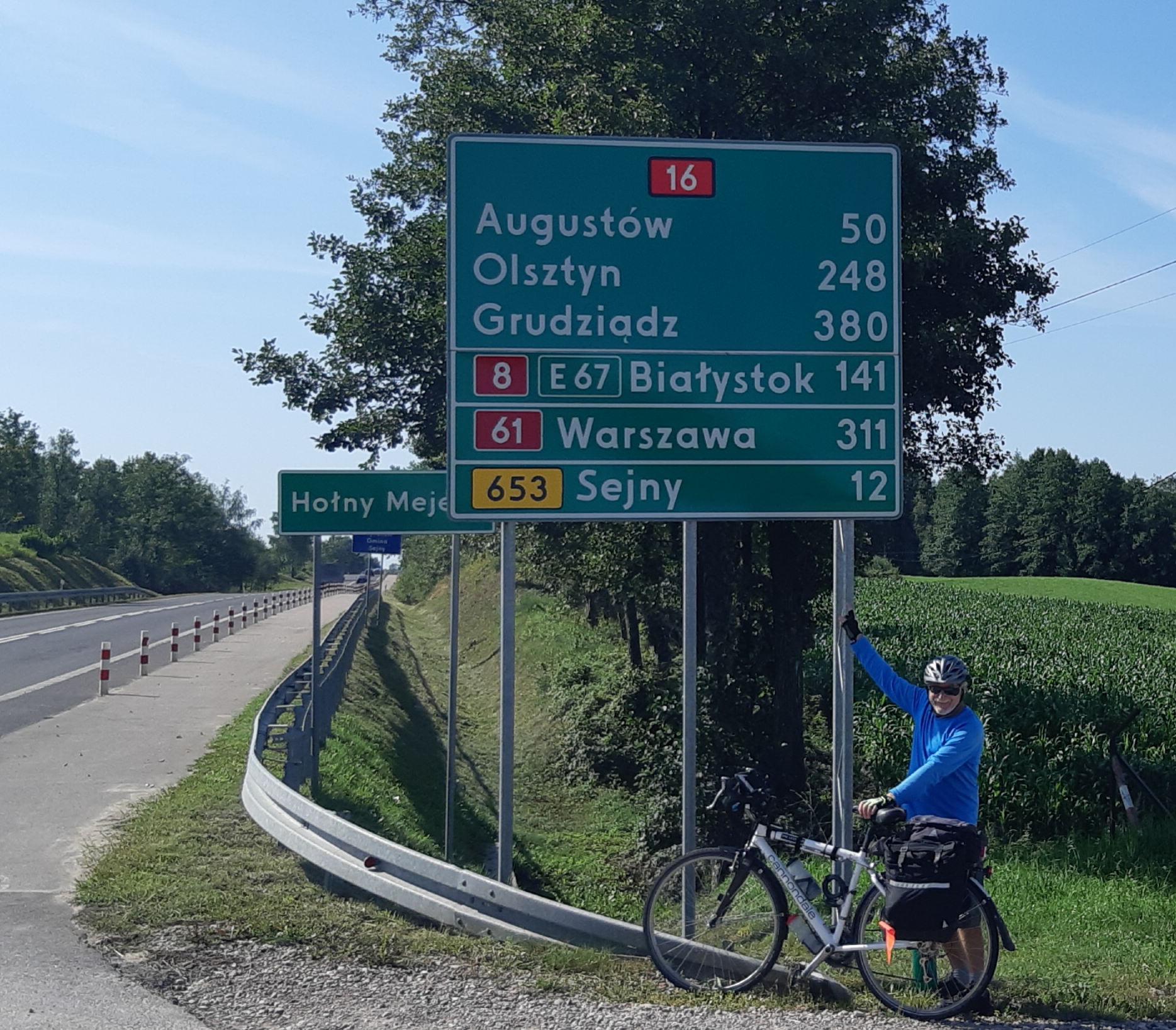
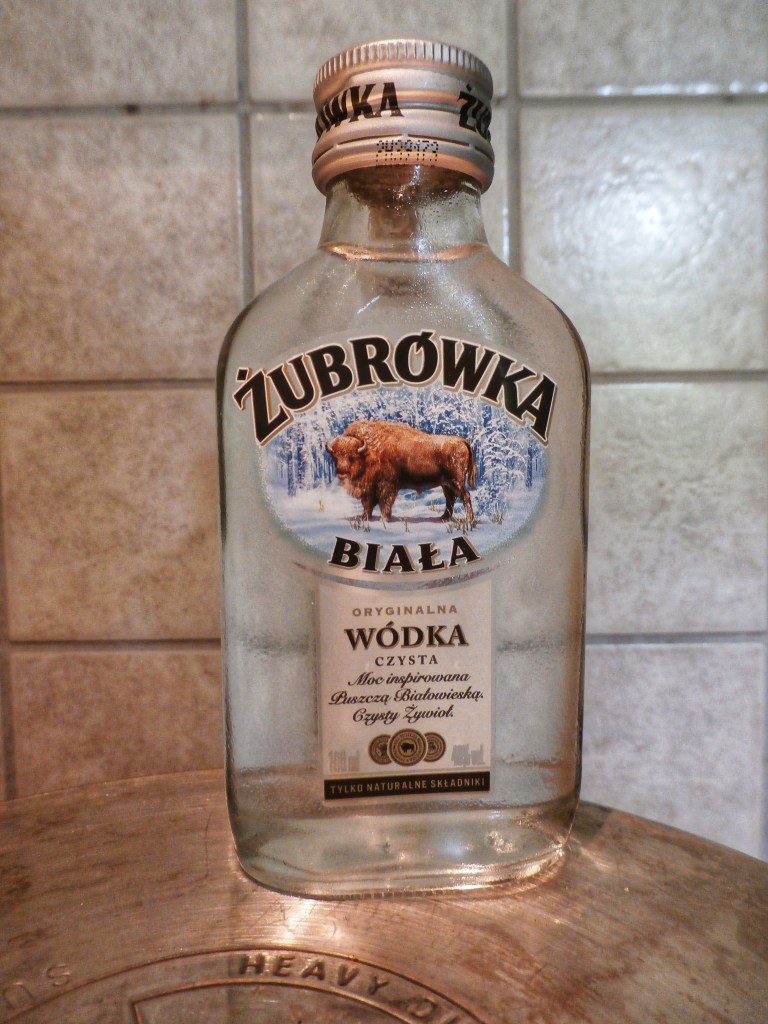
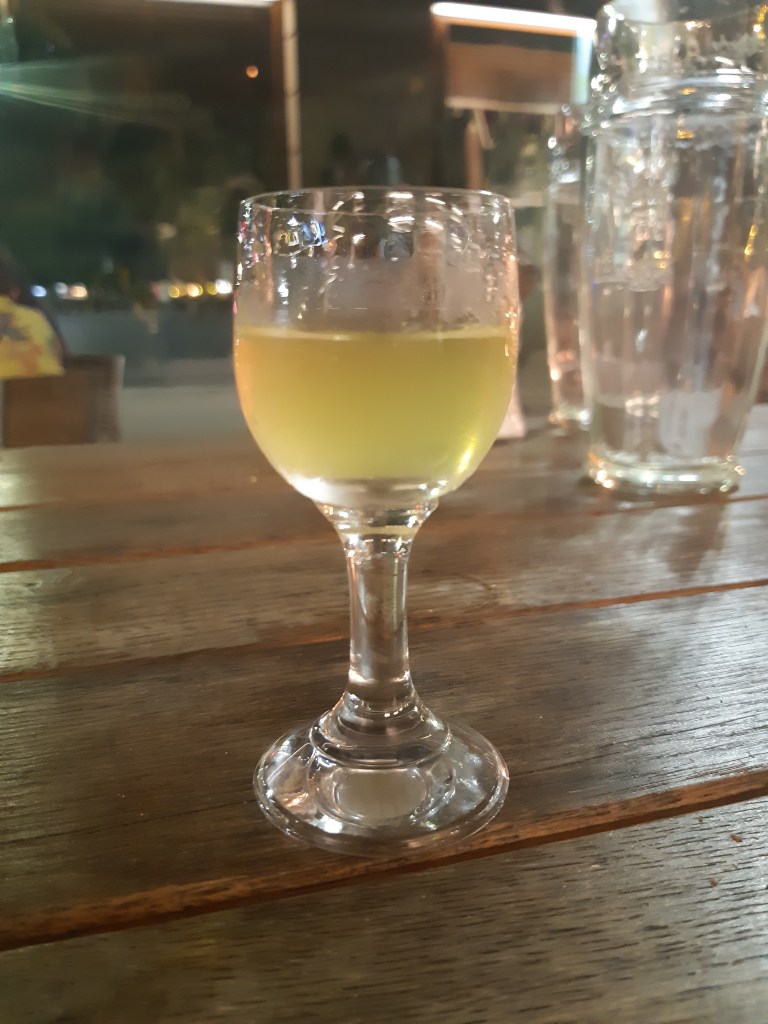
We settled into our airbnb not far from the Old Town. Seems all these cities have an “Old Town” but Warsaw’s original was rebuilt after WWII bombing destroyed most of the city. After a long, hot day we went out for a beer and pizza and were given a shot of vodka with our bill!

Cooling off in the 32 degree heat
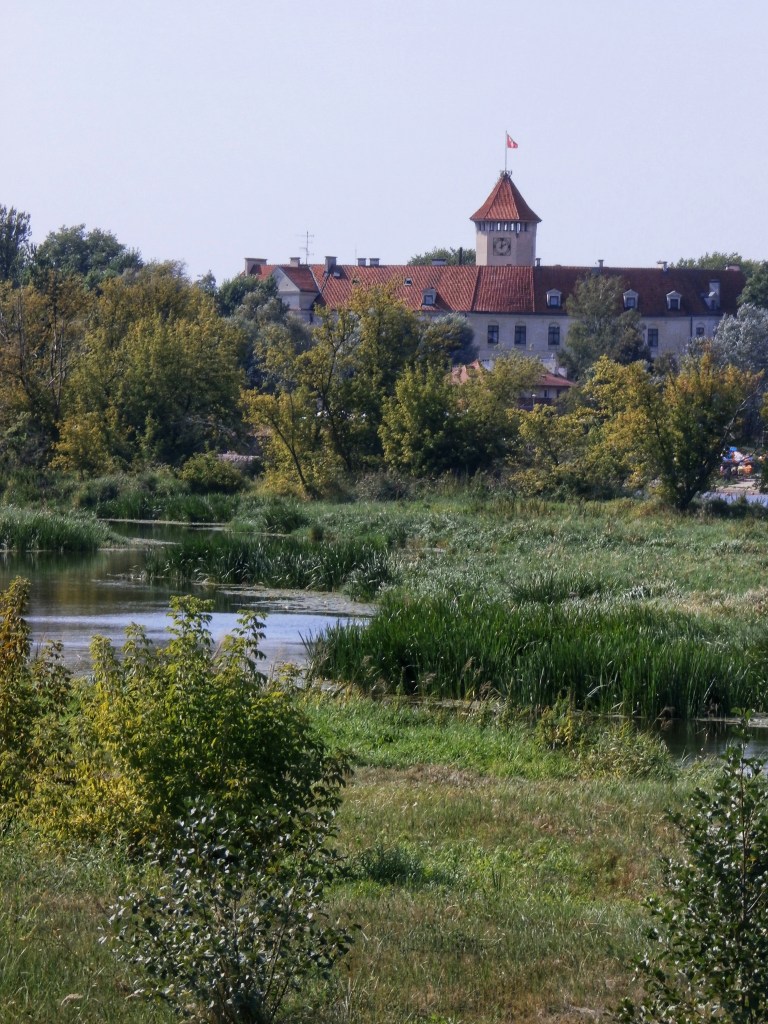
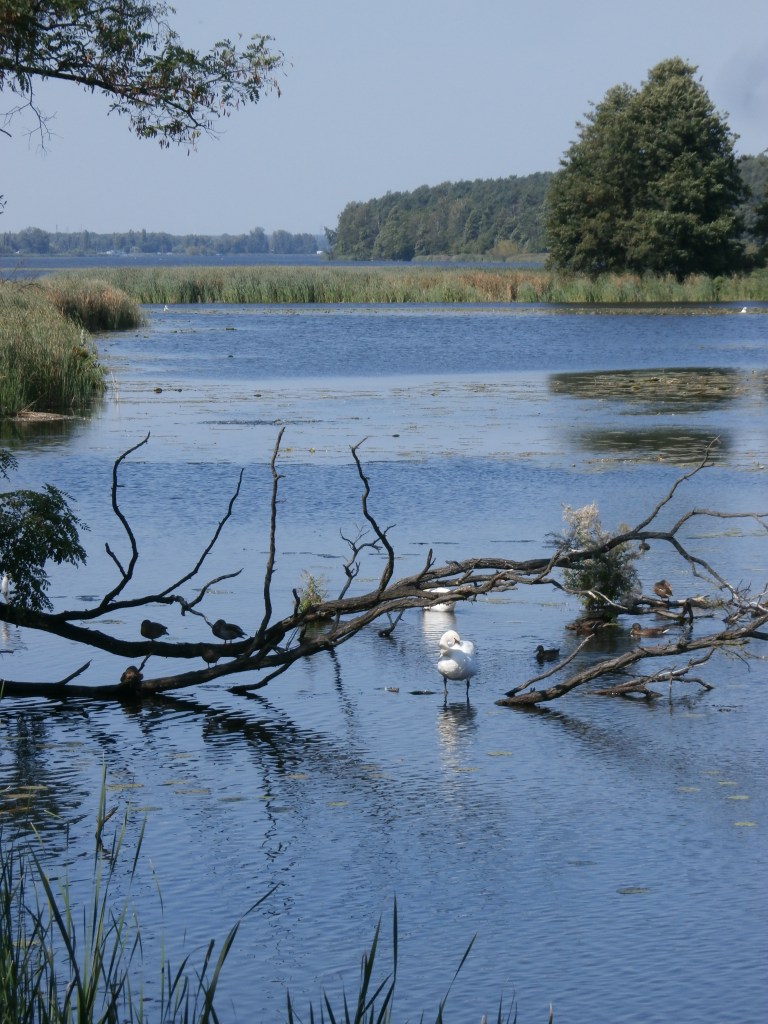
Swans on the picturesque river we have been riding beside all day
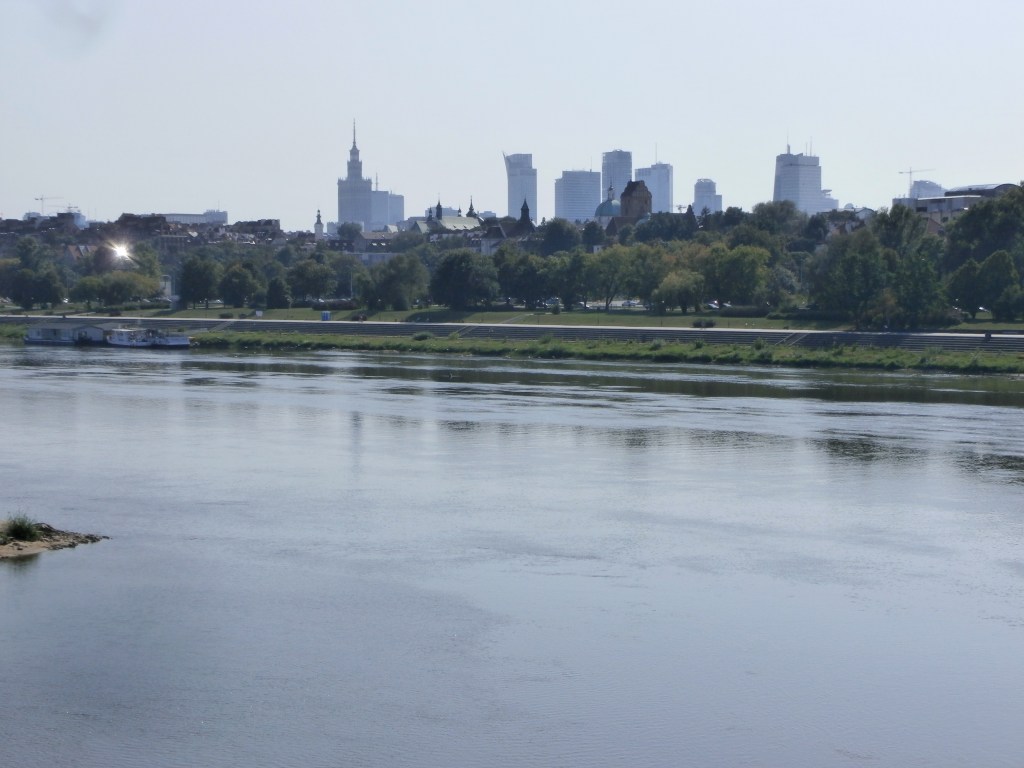
Approaching Warsaw
I thought they gave us this because they felt sorry for a couple of old guys looking tired, but they were giving the free shots with the bill to the young ones too.

We have 3 nights in Warsaw before moving on. Warsaw will be the last big city we visit until Istanbul, so our last chance to by a few needed things (like an electrical adapter that I left behind in a hotel and some bike spares).

18. The Republic of Uzupis

By Don

In 1990 Lithuania declared independence from the Soviet Union. All praise Mikhail Gorbachev. In Vilnius there was a run down and dangerous neighbourhood known as Uzupis which was across the river from the ‘Old Town’. Uzupis means “beyond the river”, imagine that. After the Soviets left, and before that, lots of down an out people squatted in the area, and who is more down and out that struggling artists, druggies, prostitutes, etc.

In the 90’s it appears that the place became safer and more artists, termed bohemians for this blog, began to hang out. Over beer a few of these bohemians decided they wanted to change things. They wanted to create a sense of belonging and a sense of community for the somewhat eclectic community living there. They also wanted to make it safer. So they declared their community the independent Republic of Uzupis to attract the attention of the city’s administration. They created an anthem, an army of 11 people, a stamp for passports and a constitution. Now more on the constitution will come in a bit but first think of the glorious days when the Cold War ended and mankind, for all so fleeting a time, seemed to rise up in optimism. This is the backdrop to Uzupis.

OK, why am I telling you all this. Hang in there and no cheating. I.E. no asking Dr. Google anything. For some of you older folks this will get cute. No, not cute as in puppy cute but as in absurd in a pleasing for no apparent reason way cute. Alright? Back to the story. Go get a coffee, or better yet a cappuccino, come back and continue on. Yes Don T., you can get a Scotch.

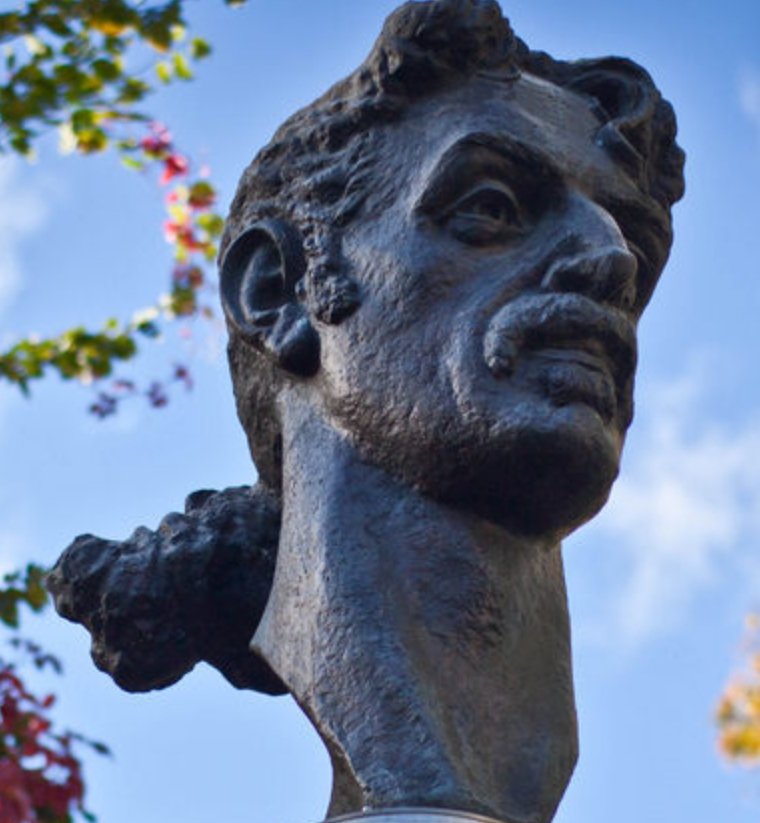
After the Russians left there were a lot plinths left around which used to support statues of such redeemed people as Lenin, Marx and Stalin. (Geez, after all they had done for Lithuania they took down their statues!) In this brief world of optimism, bohemian Saulius Paukstys decided they needed to put a statue of a certain revered man on one of these spare plinths and this gentleman would become their Patron Saint. The statue was commissioned and sits there to this day. Look at the statue, anyone recognize him? Rather impressive looking guy.

Saulius said “The spirit of (what’s-his-name) made us see that independence from Moscow was not enough and persuaded us to declare independence from the rest of Vilnius.” So maybe a little too much optimism but it was all tongue in cheek, sort of.

Now if you haven’t recognized him, you can start guessing and continue until the end of time and you would never guess who the patron saint is, although I suspect most of you, if not all, have heard of him. Alright you likely need to be over 40 and maybe 50 but this includes even the Jenkins sisters.

Alright, you already have a statue image of him. If that hasn’t told you who he is I’ll give you another clue. Suzy Creamcheese. That’s it, Suzy Creamcheese. Now don’t google this either. One of you who knows (Hal? Ron?) will have to spill the beans on this by giving another hint, or perhaps a link to show just how cute, in an absurdly pleasing for no apparent way, this is. On of his quotes? Imagine, him, the Patron Saint of Uzupis. Perfect.

The Užupis Constitution was written in 1998 by the bohemian Romas Lileikis (President of Uzhupis) and fellow bohemian Tomas Čepaitis (Minister of Foreign Affairs.) Some say beer was involved. Some say Romas came to visit Tomas to take a bath because his hot water wasn’t working and one thing led to another. The constitution is off-kilter and sometimes down right silly, but item 2 which says everyone has the right to hot water makes perfect sense. As does item 24 which says everyone has the right to understand nothing.
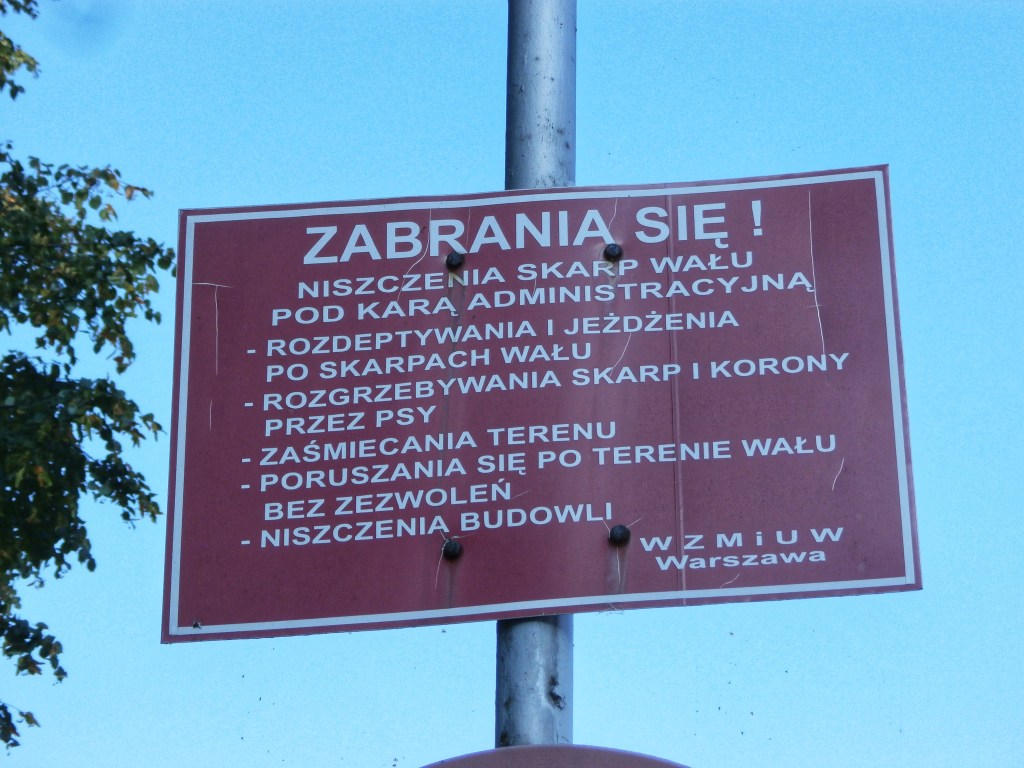
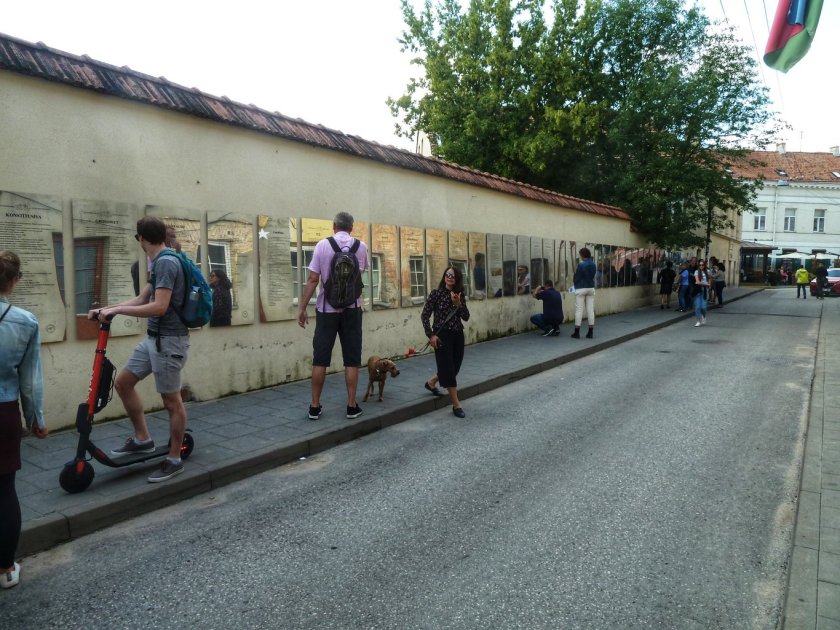
The constitution has been translated into 26 and counting languages and a copy of each language is on a metal plate and posted on the constitution wall in Uzupis.

So how does this all end? Well Uzupis is now very trendy and one of the most expensive areas to live in Vilnius. It is also a popular must see tourist site. Dennis and I went! So was it a success? The good news is it is still focused on art and hosts a number of appropriately quirky events each year. It also apparently has a very strong sense of community. But bohemian? Regardless, long should we remember what’s-his-name.

Design a site like this with WordPress.com
Get started