40. Parting Shots

By Don

The SIM Card Saga

So all in all I bought 5 SIM cards on the trip. Estonia, Poland, Romania, Bulgaria and Turkey. Outside of Turkey they were all very cheap. As it turned out the biggest challenge was that the people selling them were not well versed in how they behaved outside of the country.

In two cases they said they would not work once you left the country, but they did. However there was an additional charge added for data and calls. Since they came with some money on them and the additional charge was very little we continued with them through other countries.

In one country they said it would work in the next, Bulgaria, but it stopped at the border.

In Bulgaria they said it wouldn’t work in Turkey and they were right. We didn’t ask in Turkey so don’t know if they would have known, but we just assumed it wouldn’t. I’m now in Italy and have acquired my 6th SIM card which will work all through the EU. Of course it costs as much as my other 4 EU cards combined, but still cheap by Canadian standards.

The reason for the inconsistency, I have read, is the Eastern European countries charge so little that either a surcharge is added in other countries or they are blocked completely.

The Ring In Our Nose

I’m not sure how one used to do trips like this before sophisticated route planners, Google Street View, cell phones and GPS chart plotters. But I can assure you it would be much harder and take longer. On the other hand you get so used to these devices you frequently don’t know which way is north or where exactly you are. You just blindly follow their directions, led by the ring in your nose.
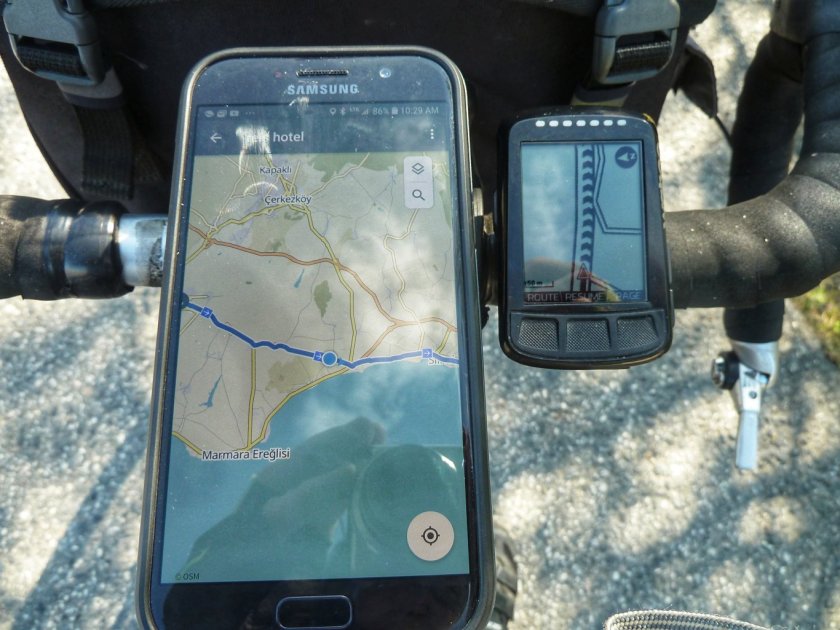
I had a Wahoo bike computer which has an integrated chart plotter and my phone mounted on my handle bars although I rarely had the phone on. Dennis just used his phone. The advantage of the Wahoo device is it is black and white and you can easily see it in bright daylight. It also has lights the flash red, green and white to tell you things, like you have gone off the route. The disadvantage is it is a very small screen and you have it zoomed right in so you really have no perspective of where you are in the big picture. Also it is difficult to know wether it matters if you are off course, as frequently the roads will rejoin. If you have to reroute you need to go to the phone to do it and then download the new route. Alternatively Dennis would use his phone and have it zoomed out so that he had the big picture but then would often miss a corner. I really liked the Wahoo, but you must also have a cell phone app for the bigger picture.

You Can Leave Istanbul But It May Not Leave You

As I mentioned I’m now in Italy where I have met up with Sue. Our first night was supposed to be dinner in a quaint restaurant with a fine bottle of wine. Not.

On my last full day in Istanbul, Dennis and I treated ourself to a lunch on a roof top terrace overlooking the Marmara Sea. It was lovely. The waiter talked us into some fresh pomegranate juice which was also lovely.

Well we aren’t sure if it was the juice, or something in the food, but two days later and it is still not a pretty picture, either for Dennis or me. I could leave nothing to your imagination, but I’m not that mean. But I will likely lose more weight in the few days after the trip than I did during it. Hopefully poor Dennis is better before he gets on his flight home. Did I mention it leaves at 4 am?
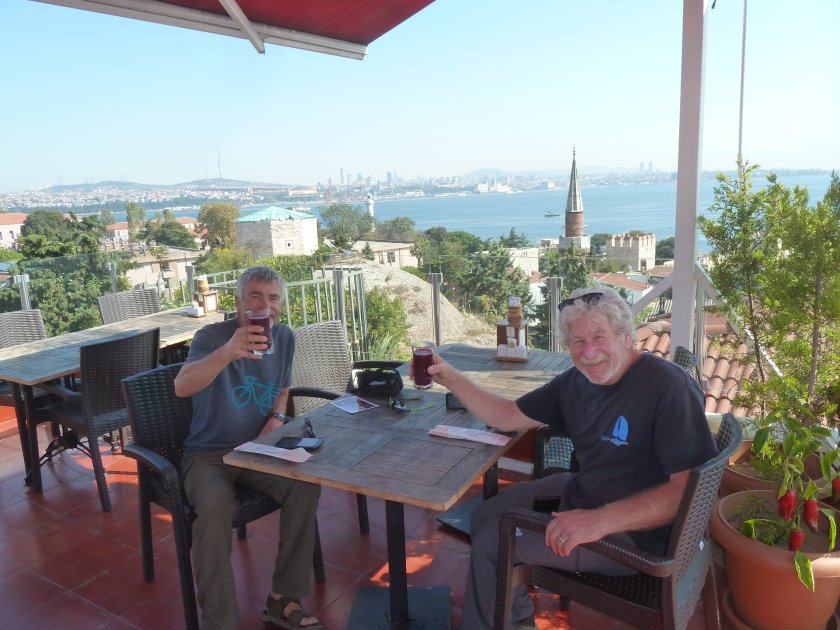
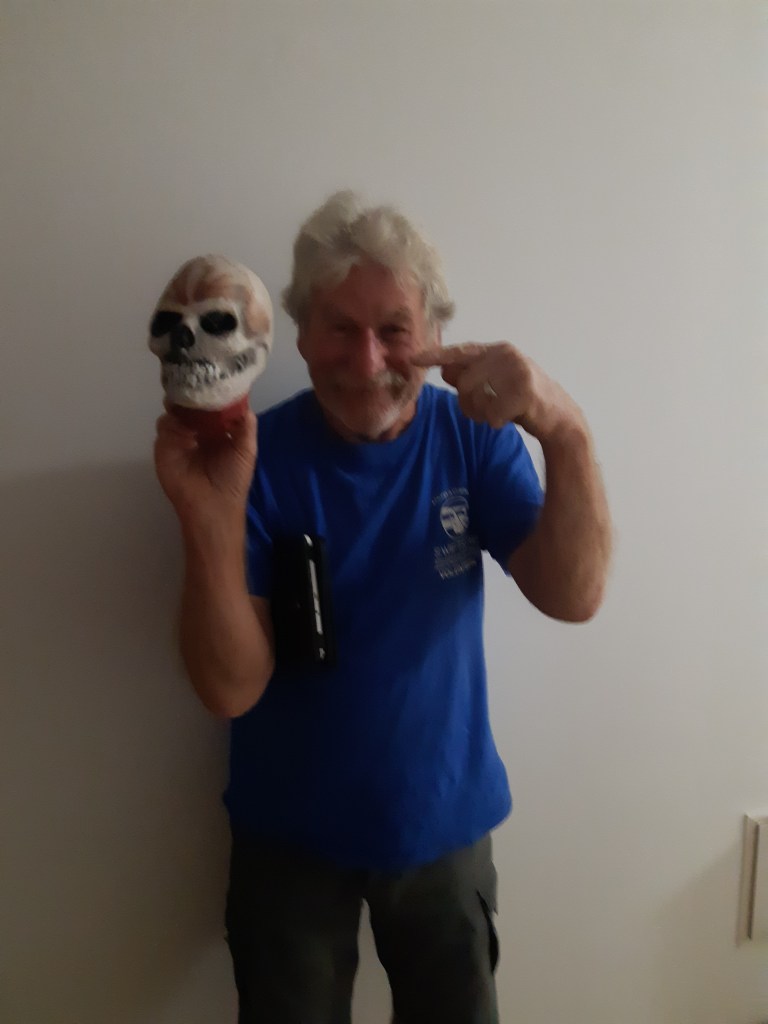
We should not have been smiling.

And?

All in all it was a great trip. The caveat is that it was a long time in the planning and now it is over and it is hard to keep the different parts clear in your mind. Fortunately we have pictures and the blog so we can try and sort it out, reflect back and savour. And Dennis and I are still on speaking terms.
39. Trucking in Turkey

By Dennis


Yambol to Edirne. 114km. 17.6 km/hr

Our hotels breakfast was not available until 10am so we headed to the local supermarket for its 8am opening to find 30-40 people waiting to get in. I left Don with the bikes and joined the crowd when the doors opened and was surprised that most of them made a dash for the fruit and veggie section which had a very limited selection of produce – no bananas and yoghurt for breakfast today.

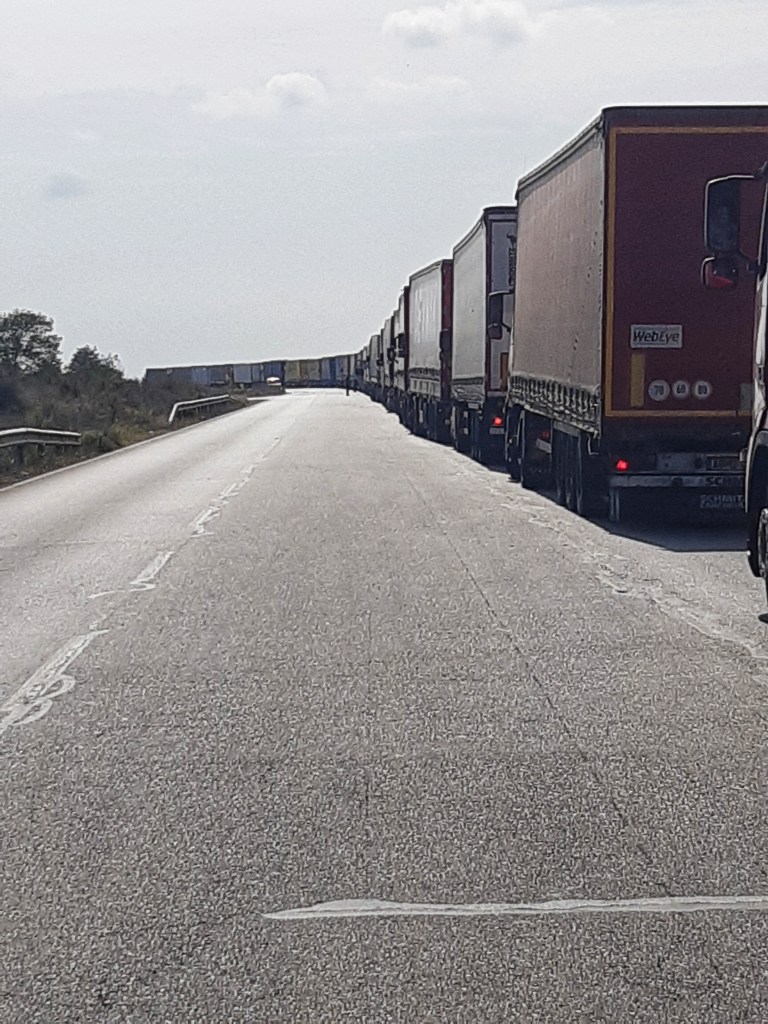
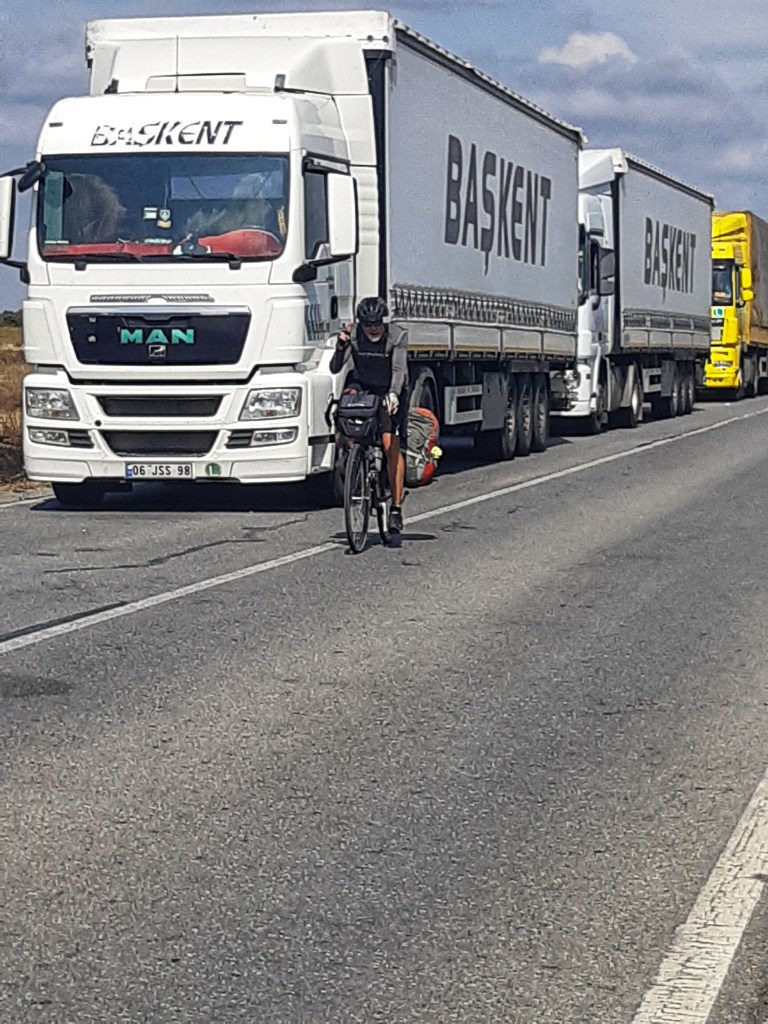
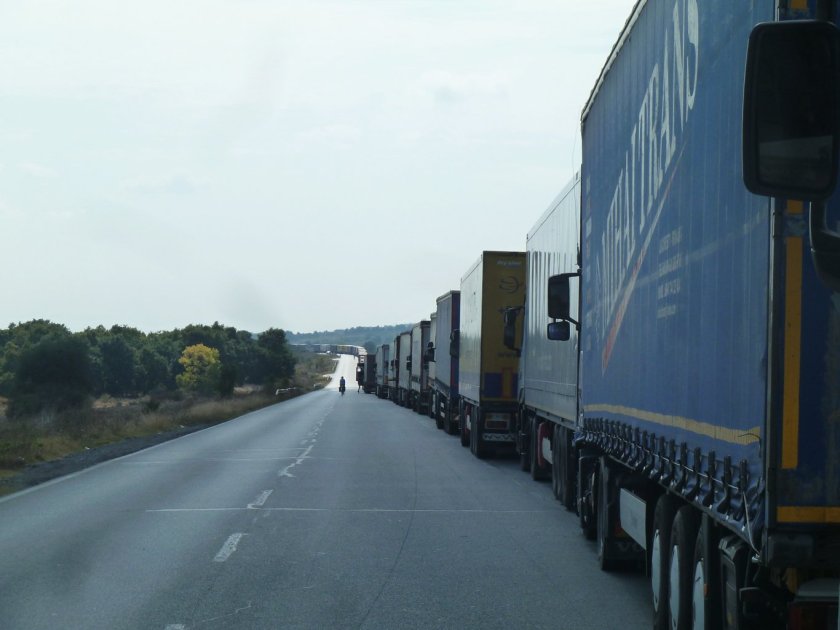
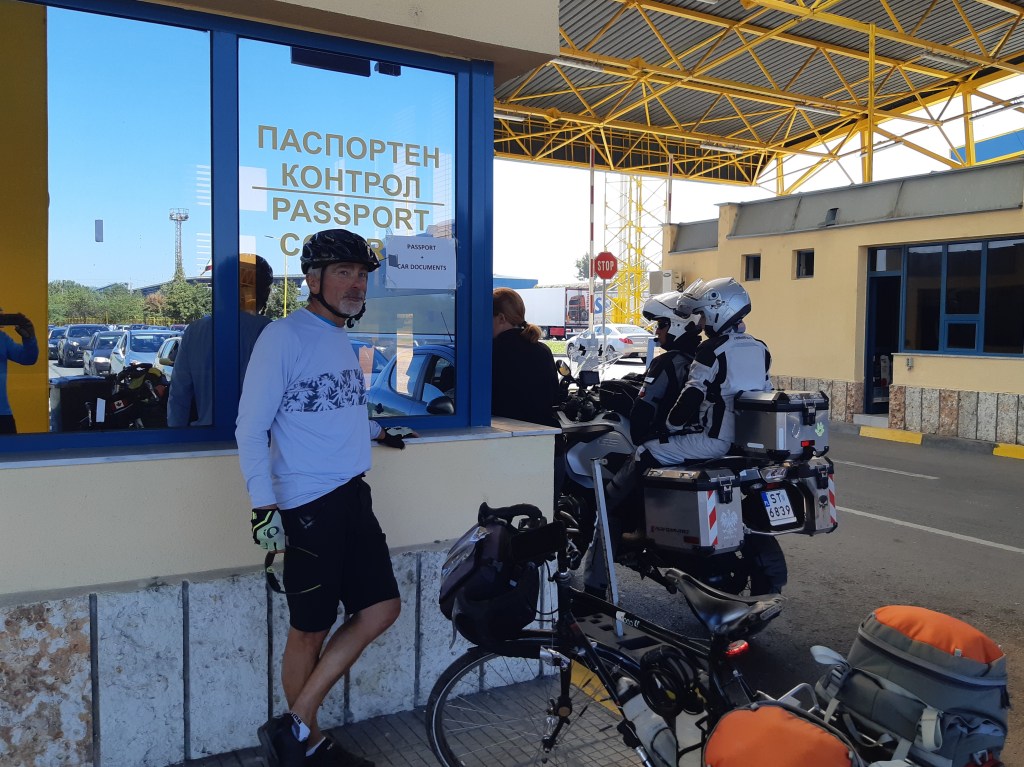
From Yambol to the Turkish border was mostly on really quiet country roads but when we rejoined the highway for the final stretch to the border, we quickly ran into lots of truck traffic. 7km away from the border the trucks were stopped, dead stopped, with the drivers out of their vehicles sitting on chairs or doing truck maintenance. Fortunately they had pulled onto the shoulder allowing us to pass, while dodging into the gaps between trucks to avoid the few oncoming cars and trucks coming out of Turkey into Bulgaria. It was a big border crossing with 4 checkpoints that took about an hour to get through – the customs and immigration personnel were amused to process a couple of cyclists!

We followed a new highway with super wide, smooth shoulders all the way to Edirne. What a transition from the previous countries -mosques with Imans calling to prayer 6 times a day, modern shops everywhere and the smell of roasting meat from donair stands permeating the air.

Despite dozens of phone shops we were unable to purchase a new sim card because of system problems caused by communications a 5.4 earthquake a day before.

How do you say that again in Bulgarian?
Hello!
Bulgarian flowers in bloom. They cover the countryside in some areas.
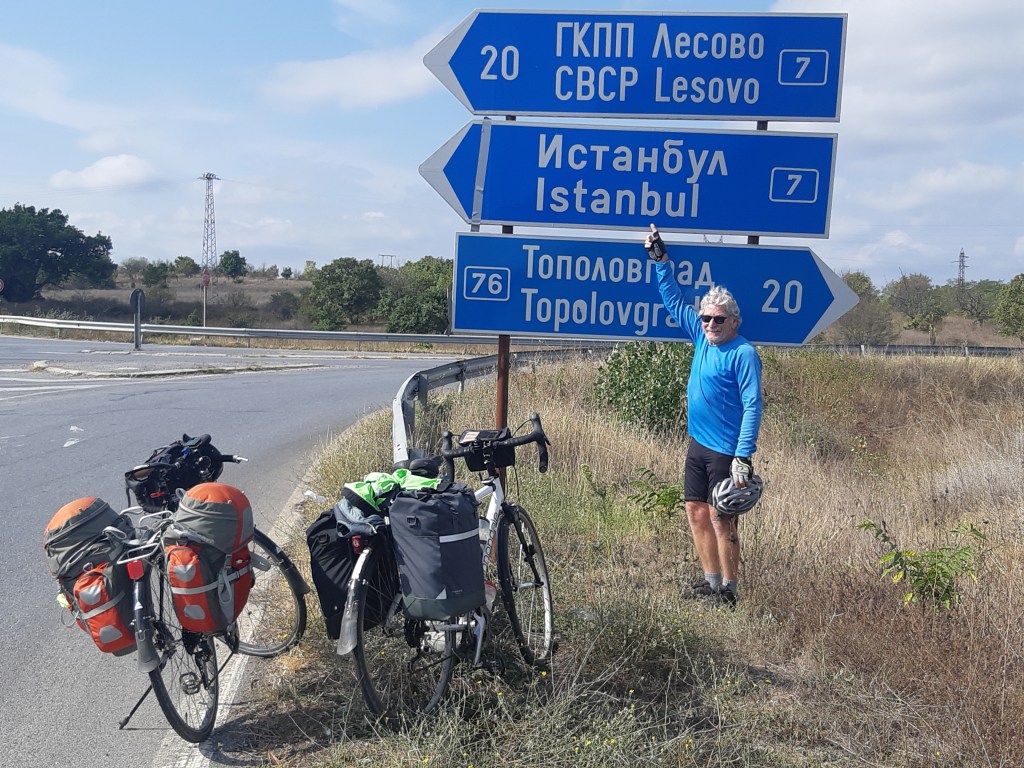
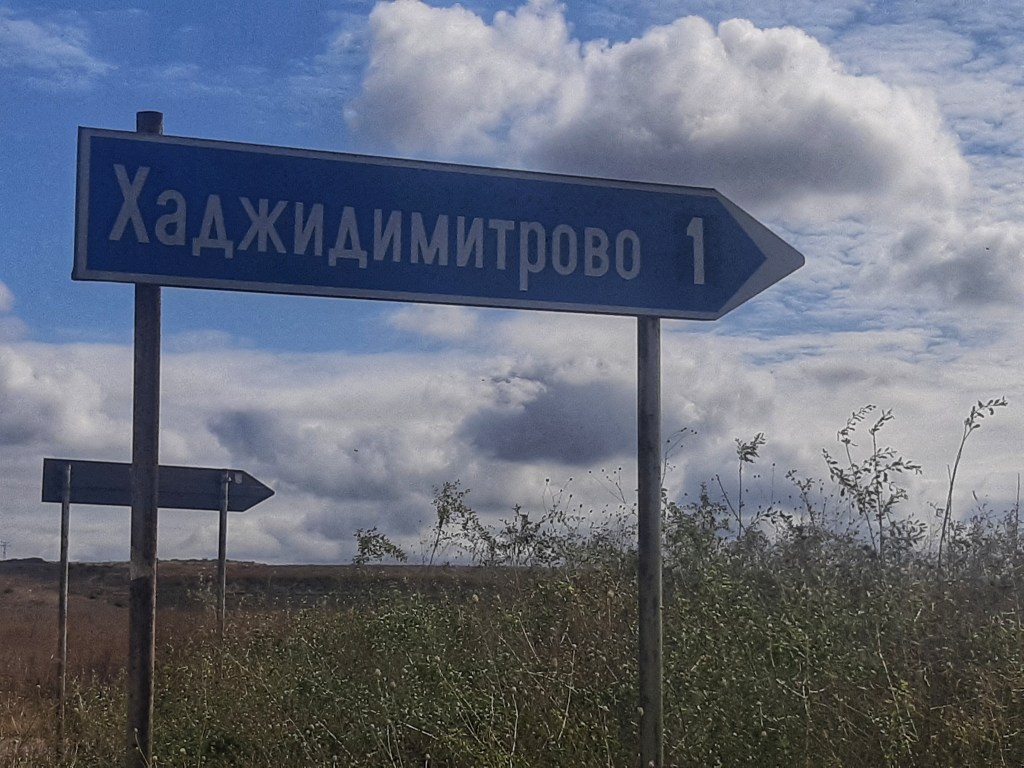
The first sign we have seen to our destination!
The lineup of trucks waiting to cross into Turkey was 7km long
But now it is our turn to pass trucks instead of them passing us!
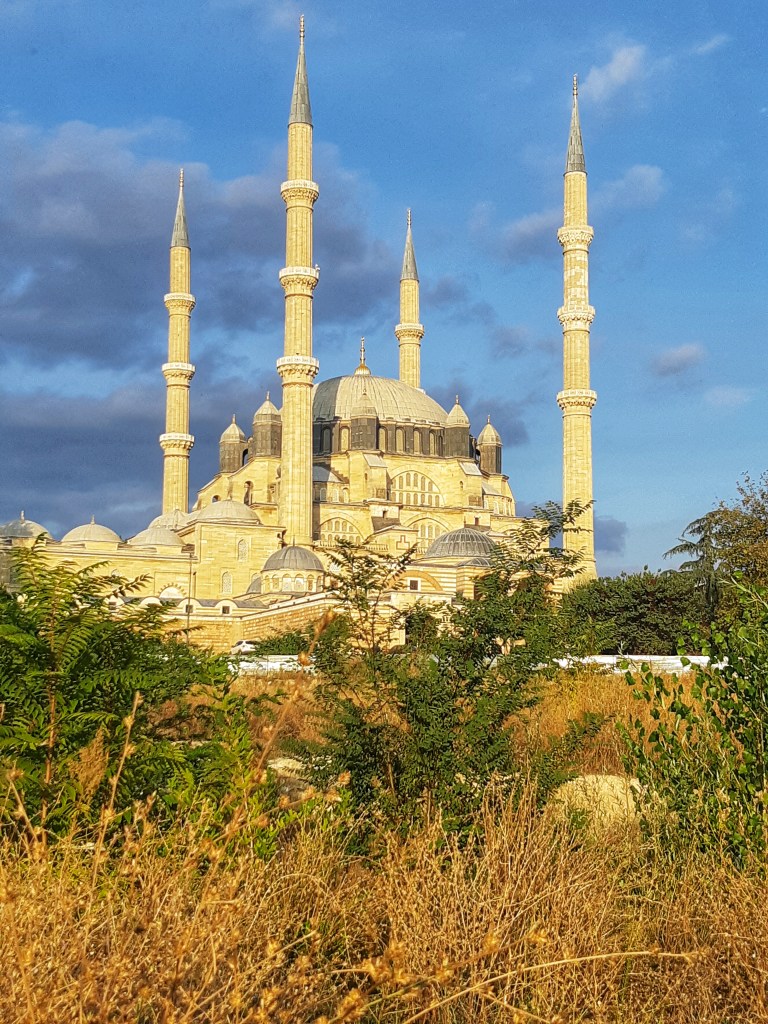
The mosque in Edirne
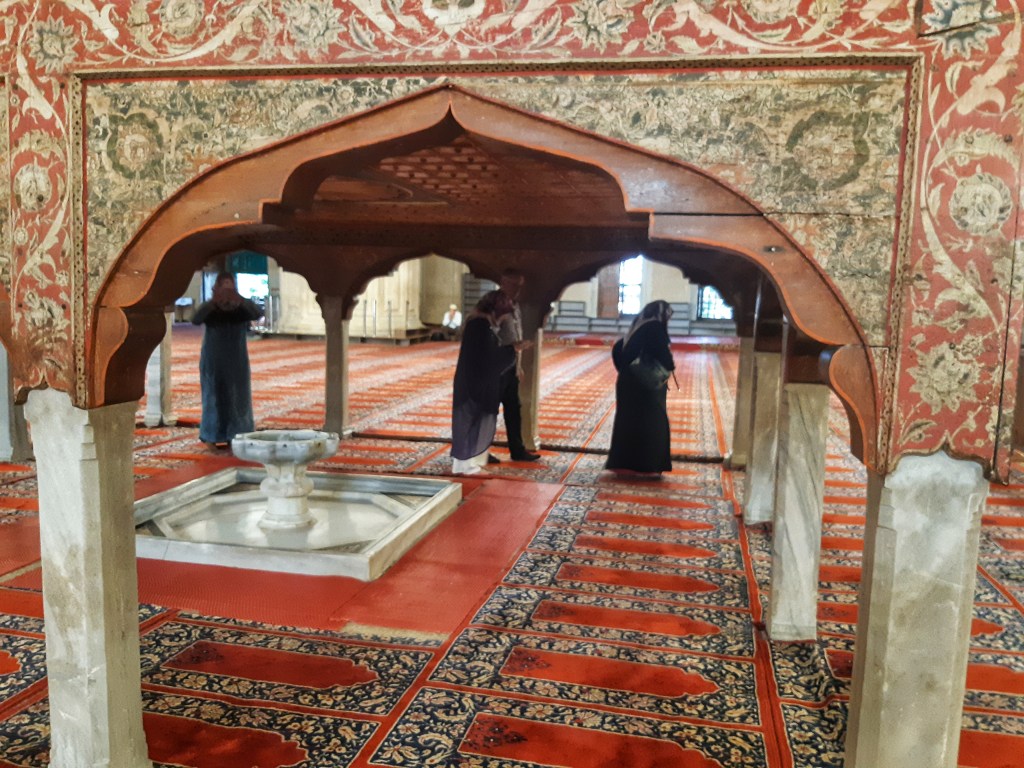
We are now in a Muslim country and churches have been replaced by mosques. Each of the little carpet rectangles is for a single person during prayer. This mosque could hold thousands.
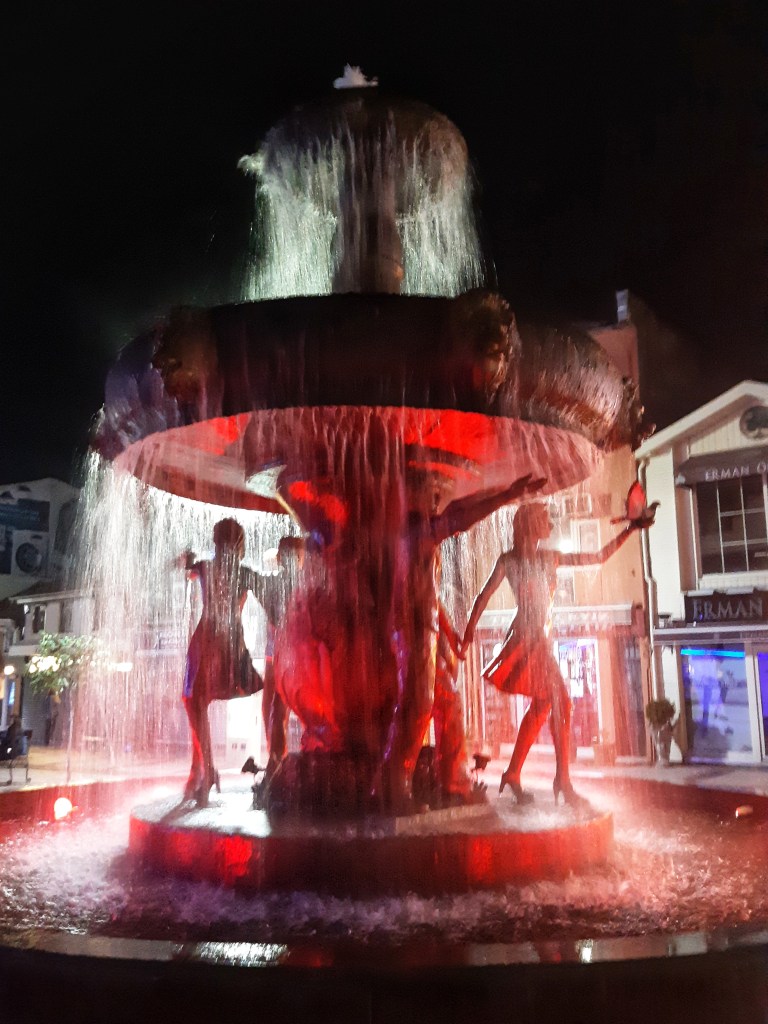
Nice to see a fountain with a modern twist! Two couples dancing, I guess it is to show how happy people are in Turkey?
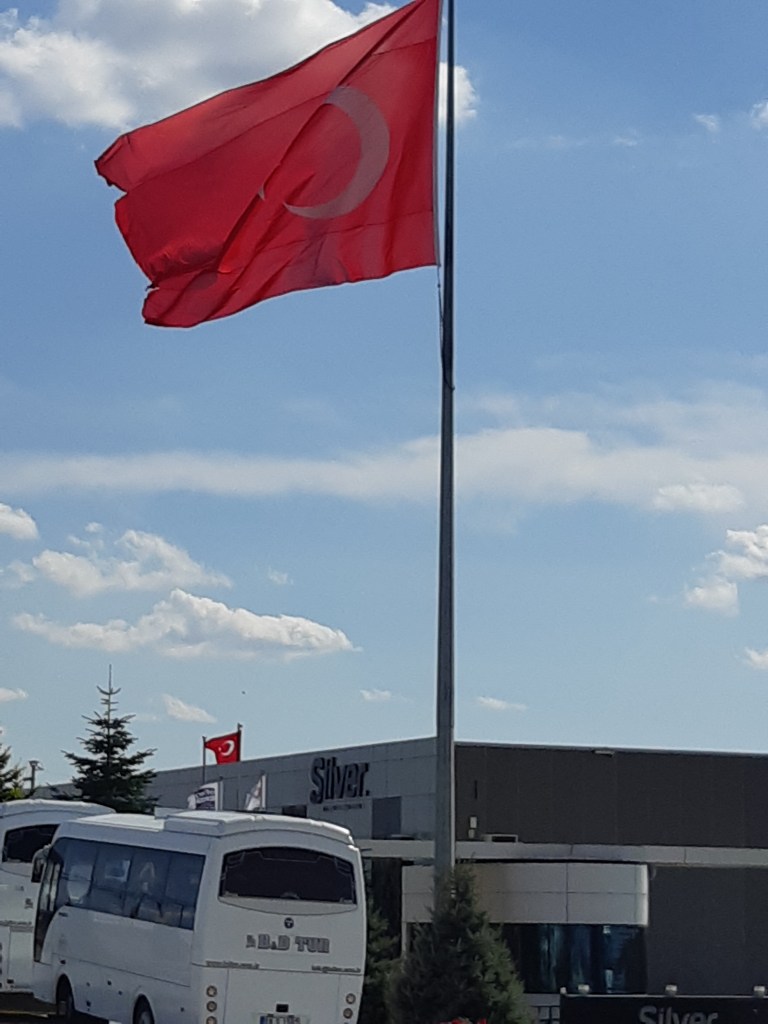
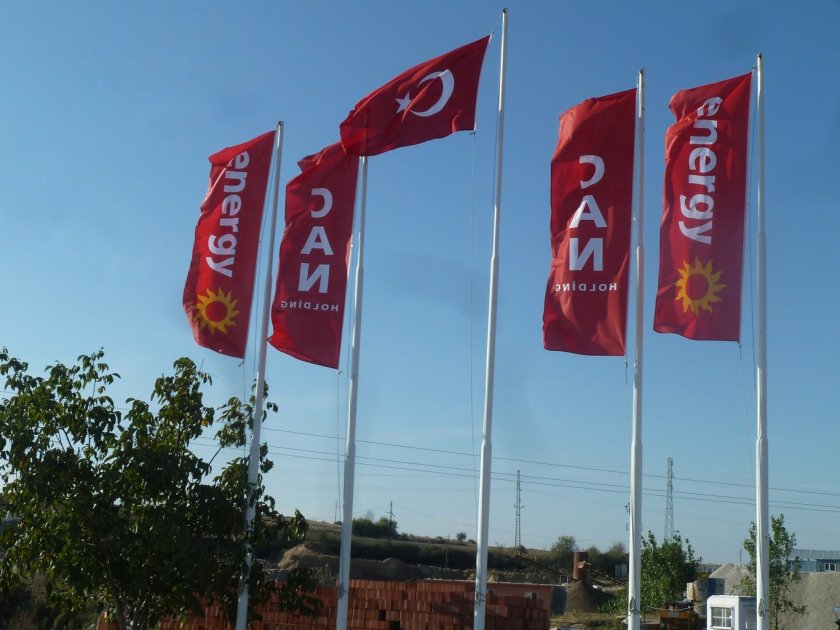
The Turkish flag

Edirne to Corlu 129km. 22.6 km/hr

A long, hot day on the highway but at least it was an excellent road with smooth surfaces, a 3 metre wide shoulders and a good tailwind. We stopped in Corlu and picked up sim cards, but because of ongoing system problems due to the earthquake it took 1.5 hours. It was difficult to be without a phone for a day as we are dependent on them for navigation and accomodation.

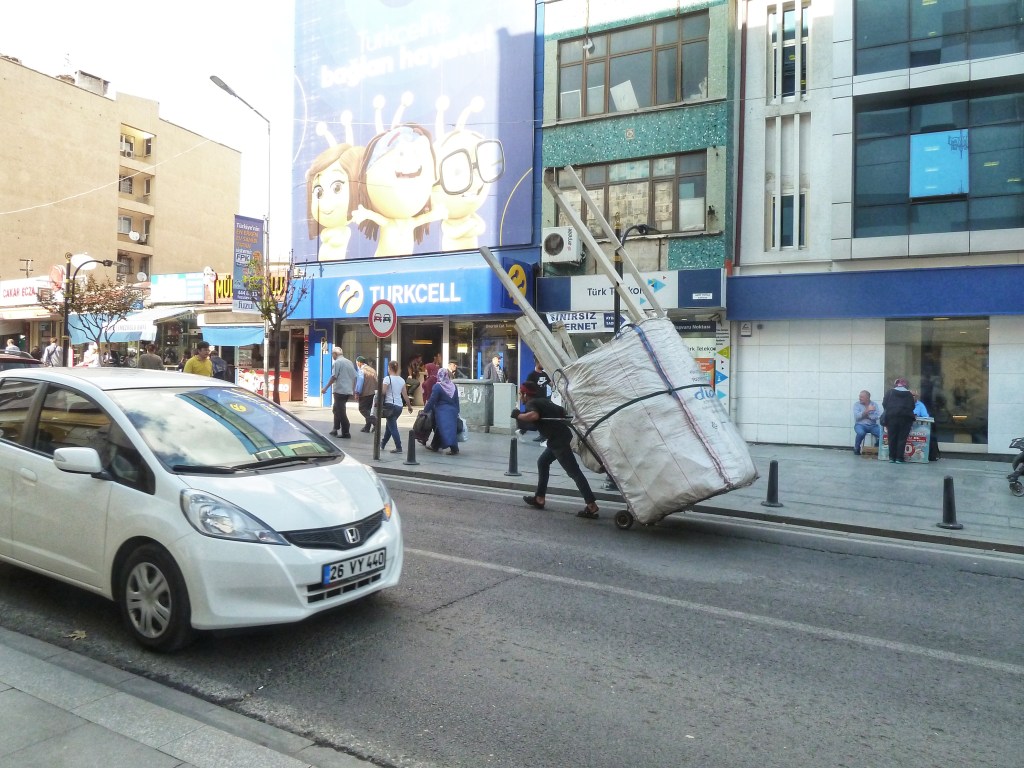
When you go from Eastern Europe to Turkey it is like a light switch being thrown.  The other countries we have been through change a bit from each other, Turkey changes dramatically:

  • There are metal detectors in the big supermarkets.
  • Beer, when you can find it, costs more than at home.
  • There is much more of a police presence, both in the towns and on the highway.
  • Crosswalks are dangerous.  Even the locals don’t cross until it is clear.
  • There are no church bells, just calls to prayer 6 times a day (although some sources say 5)
  • There are so many stores selling delicious sweet things. I think a profession as a dentist would be great!
  • People are twenty pounds heavier than Canadians on average
  • Red lights for cars are optional
  • Men are in every cafe drinking tea, not coffee
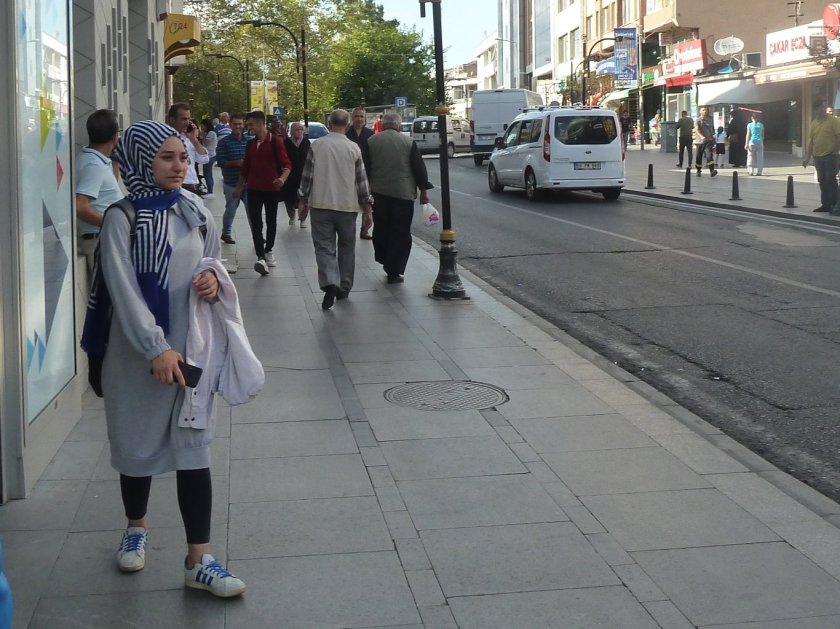
  • Half the women dressed traditionally, the other half western
  • There are shoulders on the highway!

But the biggest thing is the mass of humanity walking through the center of towns, with tiny streets in all directions selling everything imaginable. It is hard to believe who buys all this stuff and how the vendors make a living, as we have seen few people in the shops.

This was our penultimate riding day. Tomorrow Istanbul!

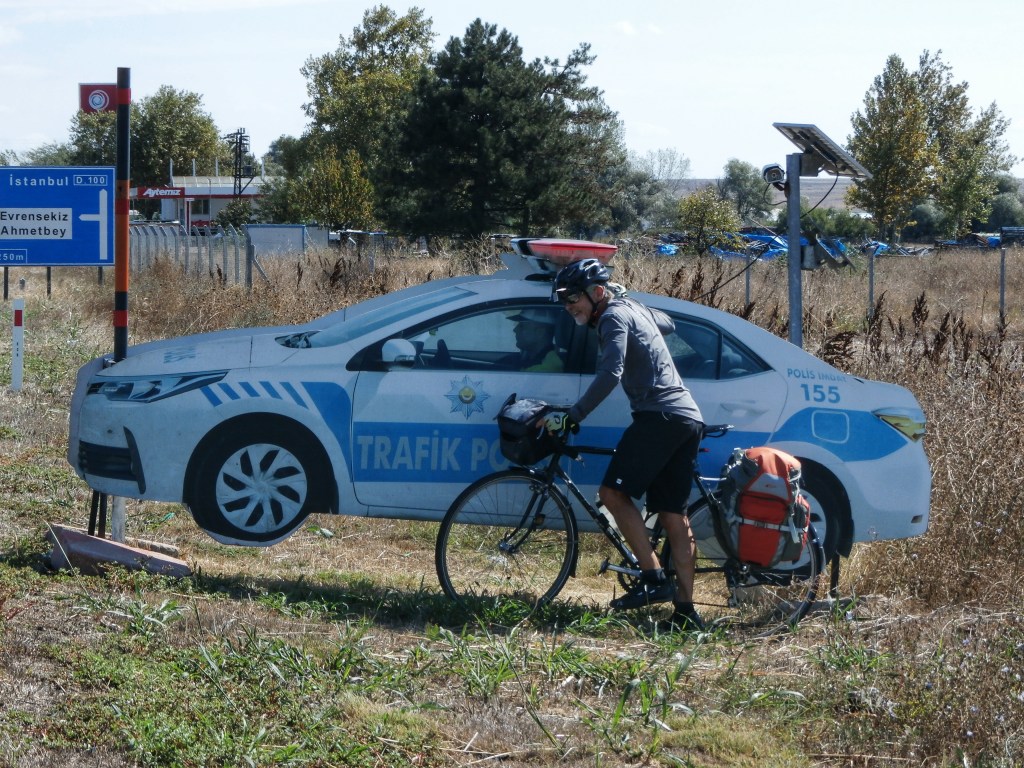
A cutout police car sitting on the side of the highway, sometimes they have red and blue lights flashing. Maybe we should get a few of these for the Malahat?
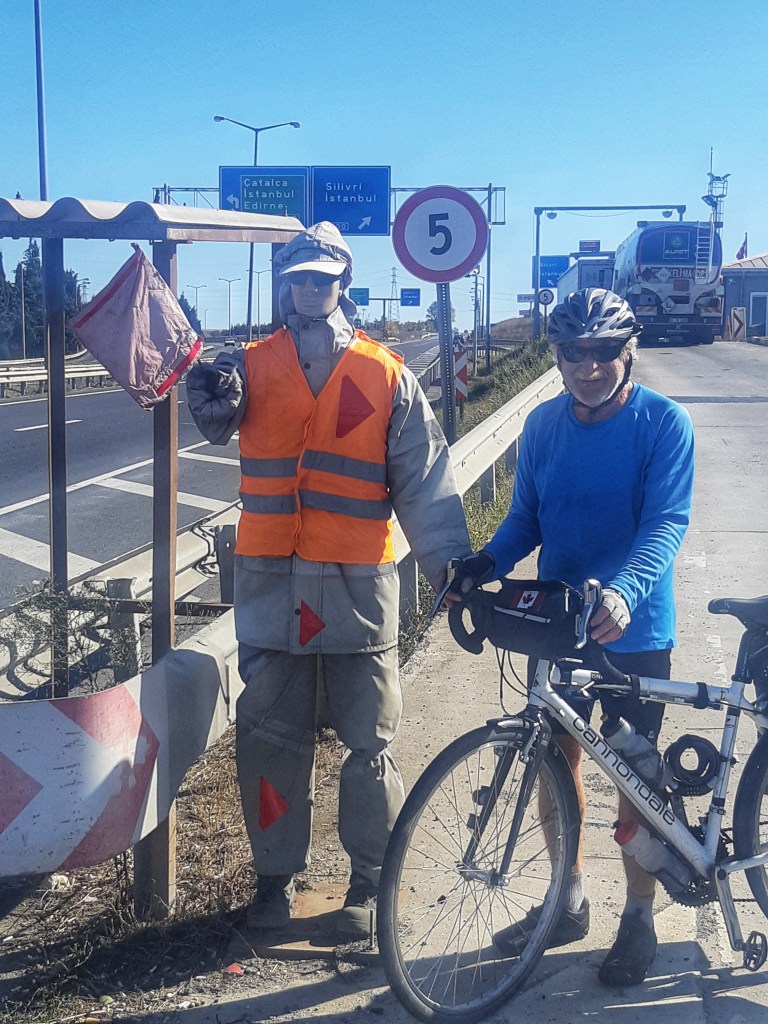
A mechanized flagman waving for cars to slow down. Often after these there is a radar trap but I did not see anyone getting stopped so I guess they work.
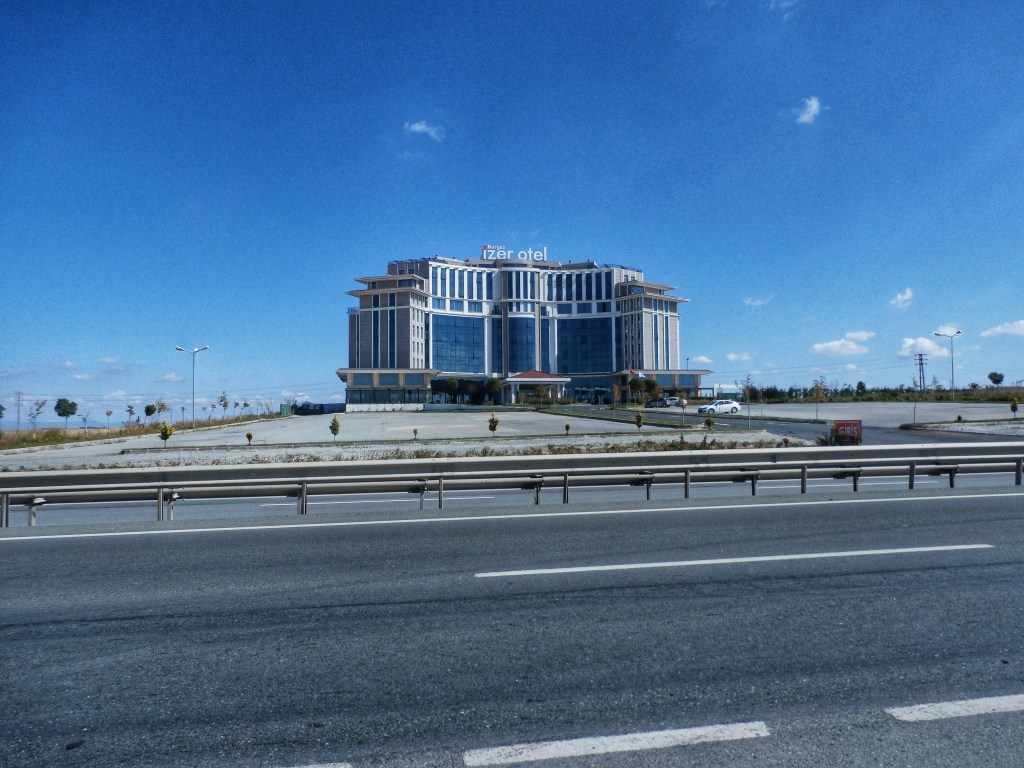
If you build it they will come? A hotel in the middle of nowhere, note the empty parking lot, not the first we have seen.
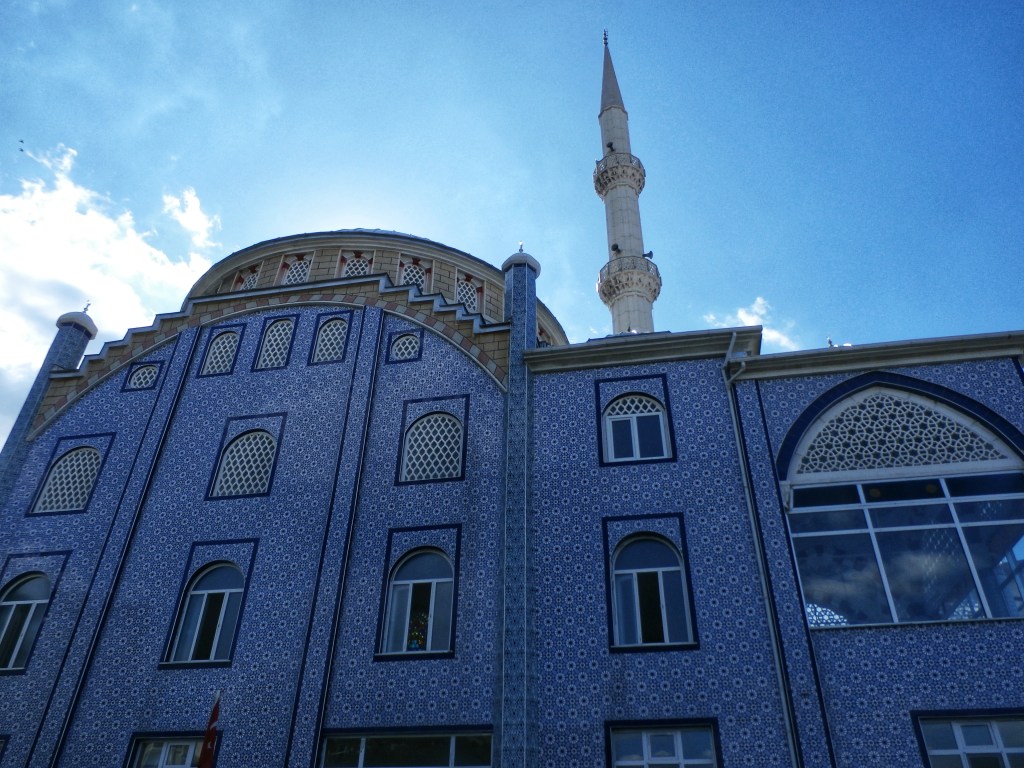
A beautiful mosaic mosque in Corlu
The old and the new in Corlu

Corlu to Istanbul 78km 16.2 km/hr

The early morning start for our last riding day was delayed by a flat tire on my bike, the first either of us have had. Overall we have been lucky – we are both using Schwalbe Marathon tires, and although heavier than conventional tires, they are very durable.

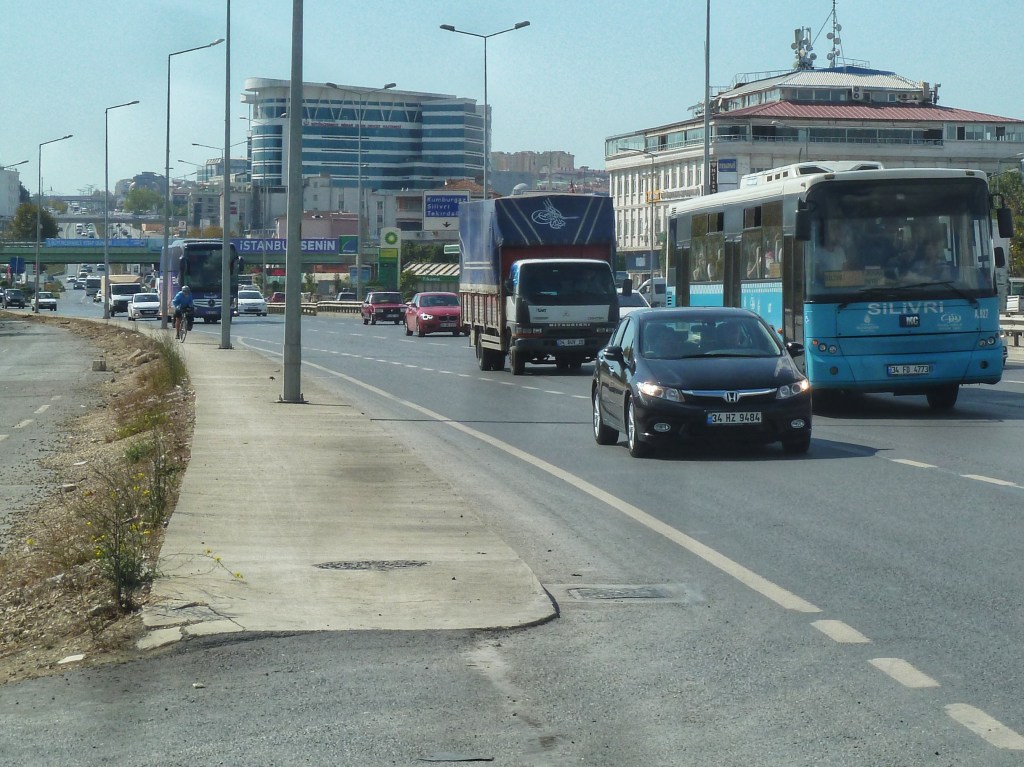
About 60km away from Istanbul Central the traffic started picking up significantly and got to the point where we got off the highway and searched side roads even though they were much slower and longer. We were both very conservative in our last day of riding, not wanting an incident on our final day with the crazy Turkish drivers.

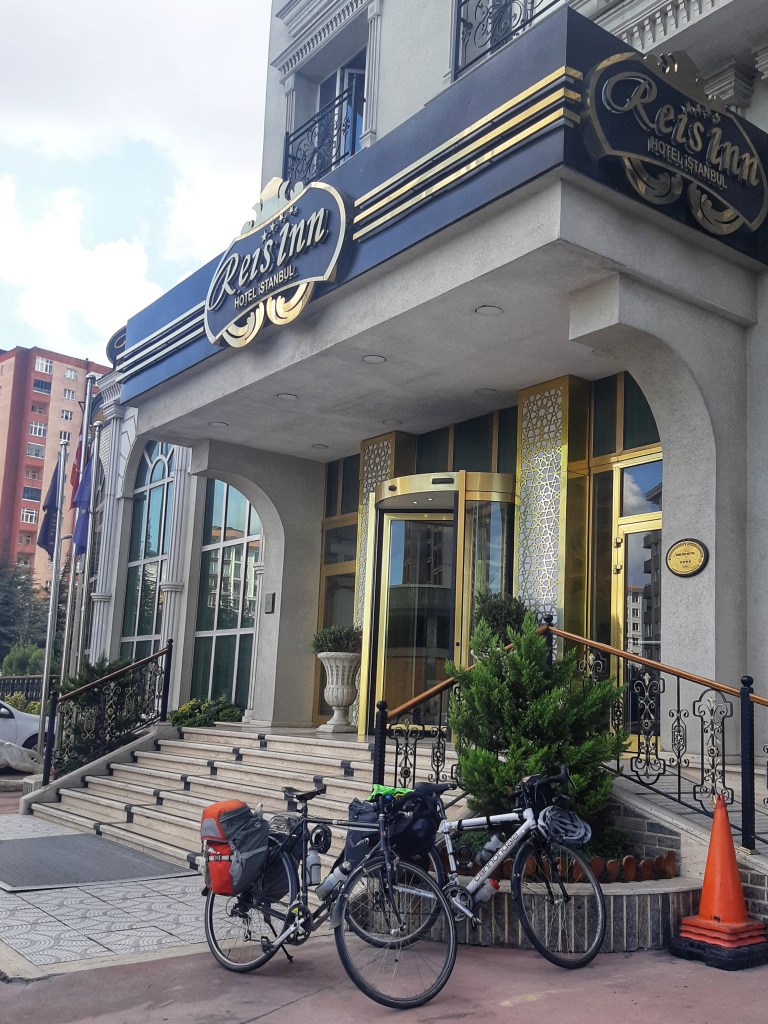
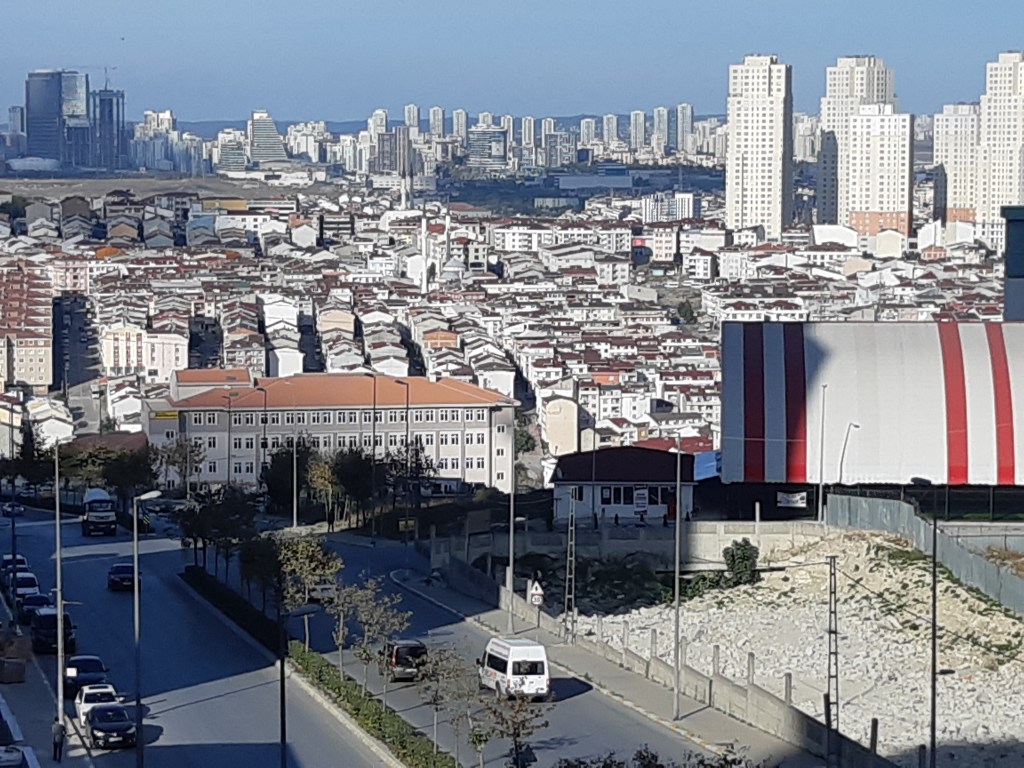
We arrived at our hotel in Buyukcekmece late in the afternoon, hot and tired but glad to to be here. Buyukcekmece is a district of Istanbul, still 35km from Central but this is as far as we are riding – there is no way we are going to ride through traffic again like today, we will take a taxi to the Airbnb for our stay near Taksim Square.

Total distance ridden: 3497 km.

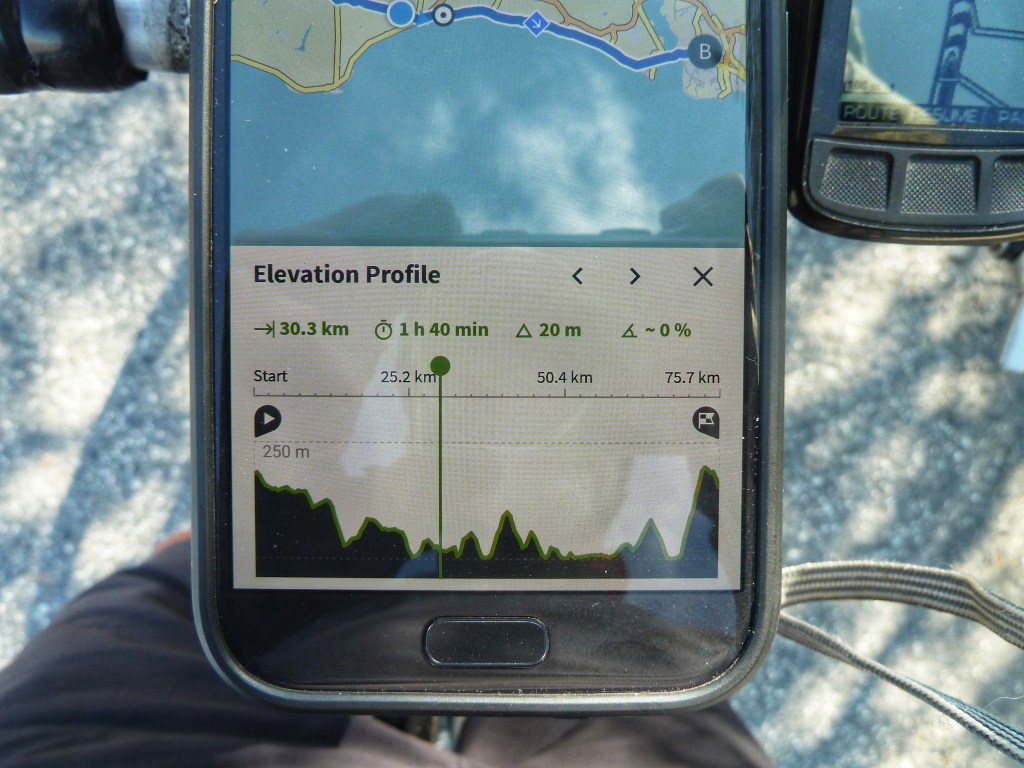
Elevation profile for the day. The last hill is in Buyukcekmece and it was too steep to ride up (20% ?) Note, the display compresses the profile and makes the hills look steeper than they are.
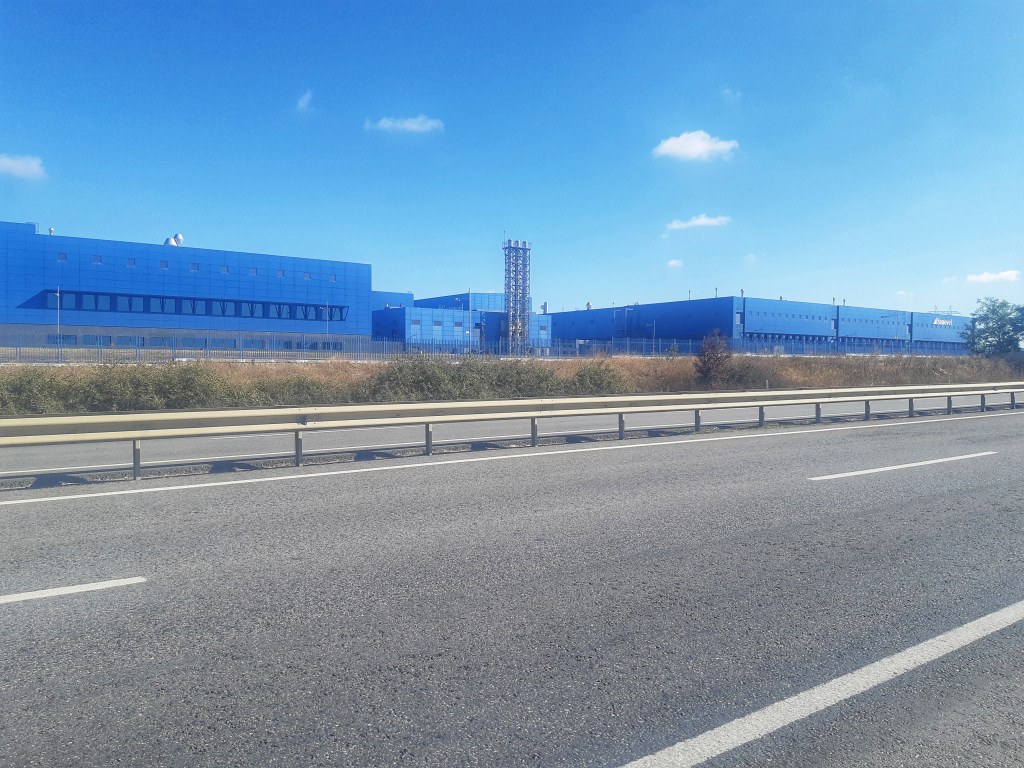
We rode through a 20km stretch of nothing but modern manufacturing plants with names I have never heard of. I did Google this one and it is pharmaceuticals.
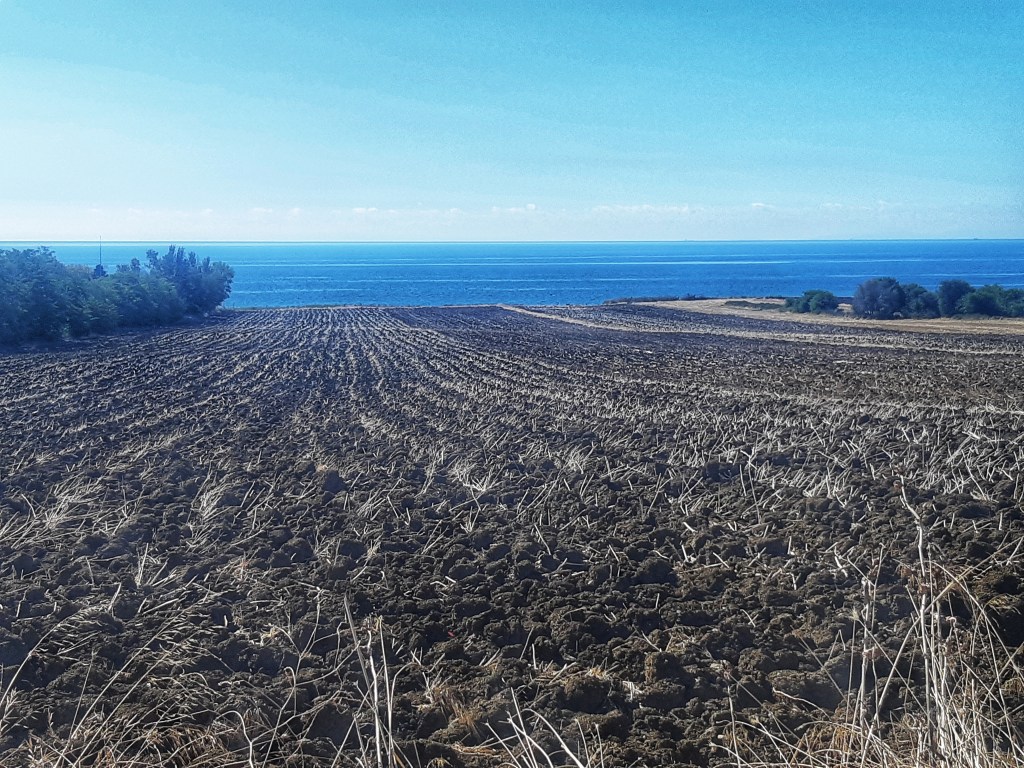
Sea of Marmara. Nice to see the sea again after nearly 2 months.
Sure beats riding on the highway!
Coming into Buyukcekmece. This sidewalk and shoulder quickly disappeared.
This was just plain mean to see as we walked a kilometer up the last hill to our hotel in 30 degree heat
Finally after 3497 km, the end of the ride! Our 4 star hotel here in Buyukcekmece cost $52 CDN a night – including breakfast.
View from our balcony and we are still 40km away from central Istanbul. We will taxi there tomorrow – it would not be a fun ride!

38. Hard Brexit

One of the busiest land crossing into the EU is between Turkey and Bulgaria. Turkish operators want to push around 60,000 trucks into the EU each year. But taking products by truck in and out of the EU is not easy, even though Turkey is part of a Customs Union which means there are no duties owed on the materials being carried.

Well we saw one of those crossing points when we went from Iambol, Bulgaria to Edirne, Turkey. On the way to Turkey the line up was 7 km long, the line up in the other direction was relatively short at 4 km. They say the record into the EU is 17 km with a 30 hour wait. Estimates are 3 billion Euros lost in trade a year because of the beurocratic hassle.

Apparently the Turkish drivers have to get a permit for each country they cross. To cross Austria only 18,000 permits are given and they were all taken 18 days into January. So all the others have to put their trucks sealed on a train to get to Germany. Or so goes the articles that you read. So far, at least as far as I know, the UK is not part of the Customs Union.

So Boris. Have you really thought long and hard about a Hard Brexit? Or just about becoming Prime Minister.

The Dark Ages of American Currency

We are all familiar with how archaic the American approach is to their currency. They still have pennies. They are worthless. A study found that 100% of the time in multiple different circumstances nobody will bend over to pick up a penny. But they still have them.

They don’t have chips in their credit cards. The reason is they thought it would slow the consumer down too much when buying stuff. And in the US the consumer is king. So ‘tap’ has come to their rescue which will allow them to now have the security of chips.

They have tried several attempts to get rid of their one dollar bills, like every other country in the world with their low value bills. The reason is coins last way longer. Their efforts have always failed.

Their bills are still made out of cotton and linen and this is my beef. I have a US account that accumulates money from my time working in the US. So I took a bunch of cash out of it and brought it along to convert into whatever. I had it in a plastic zip lock bag along with some Canadian cash. The bag got some moisture in it. I’m on a bike and sometimes it rains and the bloody bag had a hole in it. The US cash got mildew on it. The Canadian cash which is from the 21st century and made from a polymer did not. No body will take the US cash because it is ‘ruined’. At the moment it is like their pennies, worthless.

Half and Half

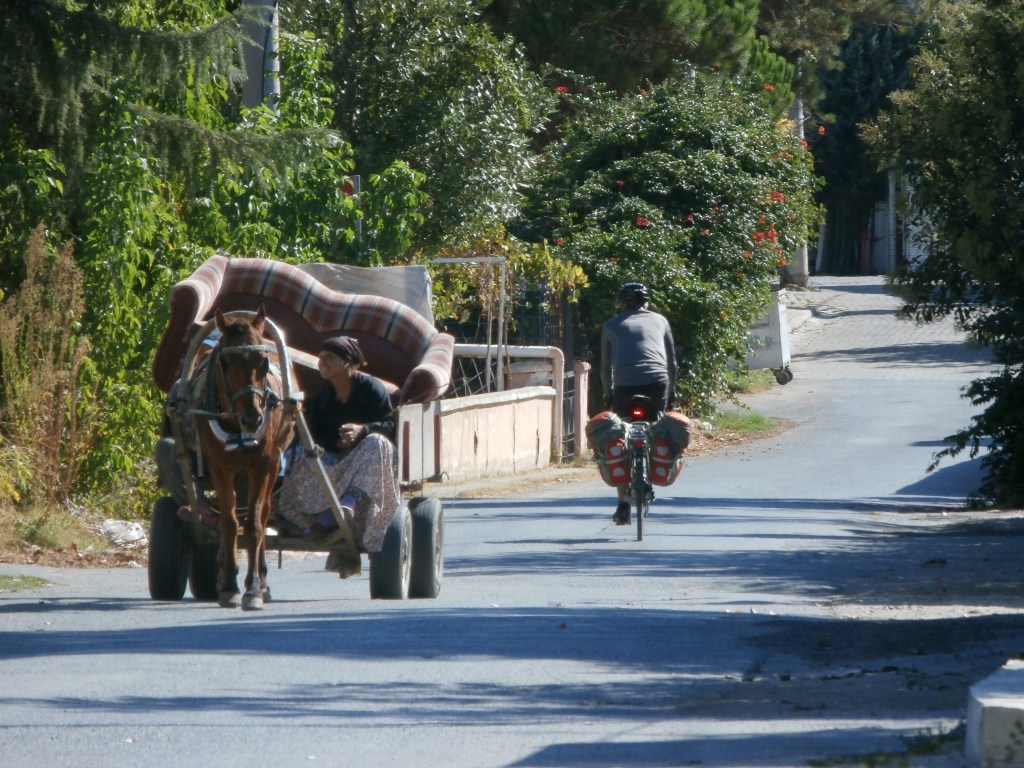
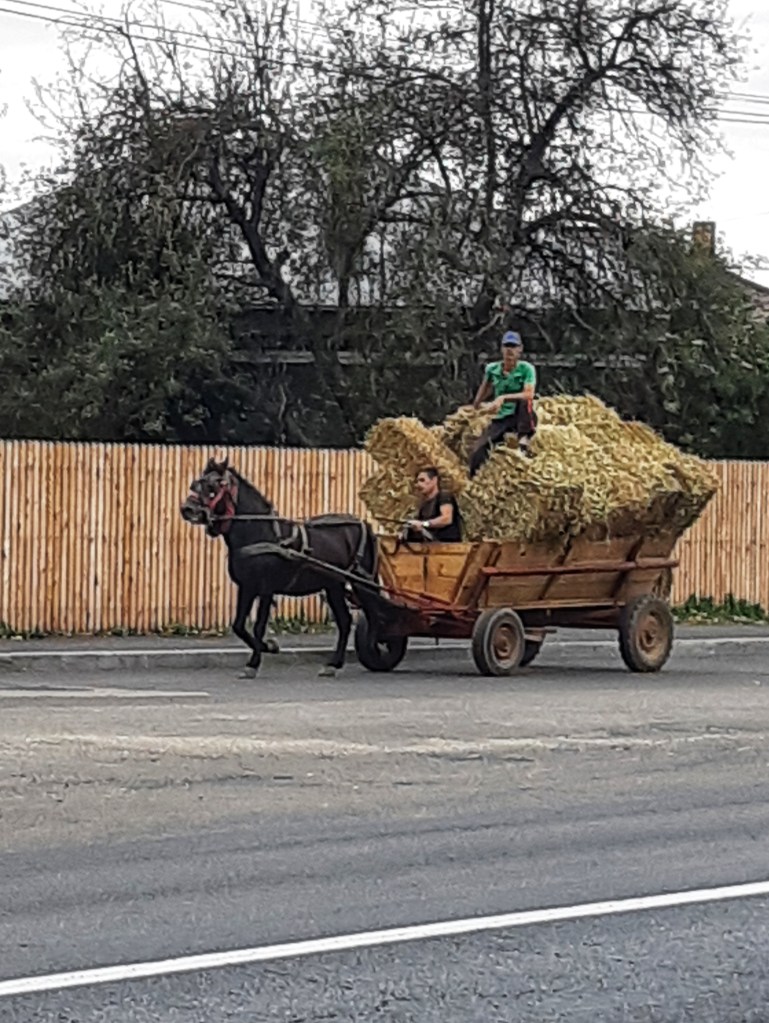
In Romania what was noticable was the juxtaposition of the old and new. People riding down the road with a horse pulled wagon getting out of the way of a Scania semi truck.

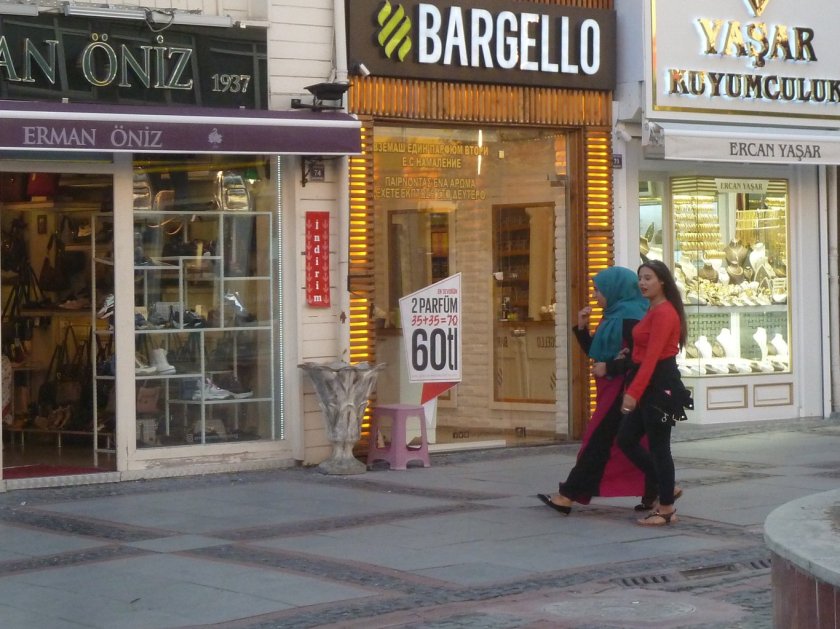
In Turkey it is the juxtaposition of the conservatives and the liberals, which is noticable in the groups of young girls walking around. One group will be in jeans and t-shirts and the next in a hijab, both the headscarf and a overcoat type garment. I’d say the split is about half and half but it really depends on where you are at. Occasionally a group can be mixed but the norm is not. Quite interesting but not sure what to make of it.

The men, of course, all look the same in t-shirts and jeans.

Allah is Merciful

When coming from Iambul to Edirne it was 114 km with a headwind, 30 degrees and 755 meter climb. It was hard, not Ron Jewula hard, but hard. We knew the next day going from Edirne to Corlu would also be a challenge with 130 km, 1200 meters of climbing and another warm day.

But then the wind turned around and it came from behind. Allah is merciful.

37. Bulgarian Backroads

By Dennis

Bulgaria, unlike its next door neighbour to the south, Greece, is not a popular destination for a lot of people, but I have always wondered what it is like. Besides Greece, it is surrounded by Serbia, Macedonia, Romania, Turkey and the Black Sea as its eastern border. It is an old country having broken away from the Byzantine Empire over 800 years ago and then freed itself from Ottoman rule in the 1800’s. It was ruled as a communist authoritarian dictatorship, with a strong Soviet influence through most of the 1900s but became a democracy in 1989 (albeit with mainly communist parties). Although it is Europe’s 16th largest country it only has 7 million people, the majority of whom live in its capital Sofia and surrounding area. It is widely acknowledged to be the most corrupt country, and the poorest country in the EU, with 20% of its population making the minimum wage of $1.75. The working hours for some are long – the receptionist in our hotels worked 12 hours a day, 6 days a week and spoke 5 languages, and I imagine she was being paid the minimum wage. Bulgaria is in a state of demographic crisis with a negative population growth since the 1990’s and over 1 million young people leaving the country by 2005. Its birth rates are amongst the lowest in the world and cannot keep up with the replenishment rate, while its death rates are amongst the highest due to an aging population, poverty and poor health care (and probably because 45% of men and 25% of women smoke).

But it is an interesting country. In the last 30 years it has transitioned from a mainly rural society with agriculture as the main economic driver, to an industrial and services economy with scientific and technological research well supported by the government. The literacy rate is 98%, its students rank amongst the highest in the world in terms of reading, out ranking Canada and Germany. It’s gender equality index ranks 18th in the world. It has many English speakers, especially amongst the young, the people are the friendliest we have encountered, and compared to Romania the roads are better and they have more coffee shops!

Bucharest to Ruse. 78km 20.4km/hr.

It was easy getting out of Bucharest early Sunday morning, with the exception of one taxi driver who just about hit me as he came up on the inside of a car that had stopped for me. Although Romania in general has good drivers, in Bucharest they seem to be of a different breed. One can never be too proactive.

The ride was along a good highway with the widest shoulders we have seen in Romania, which isn’t hard as the majority of roads do not have shoulders or if they do, the shoulders are in poor condition often full of potholes or breaking away.

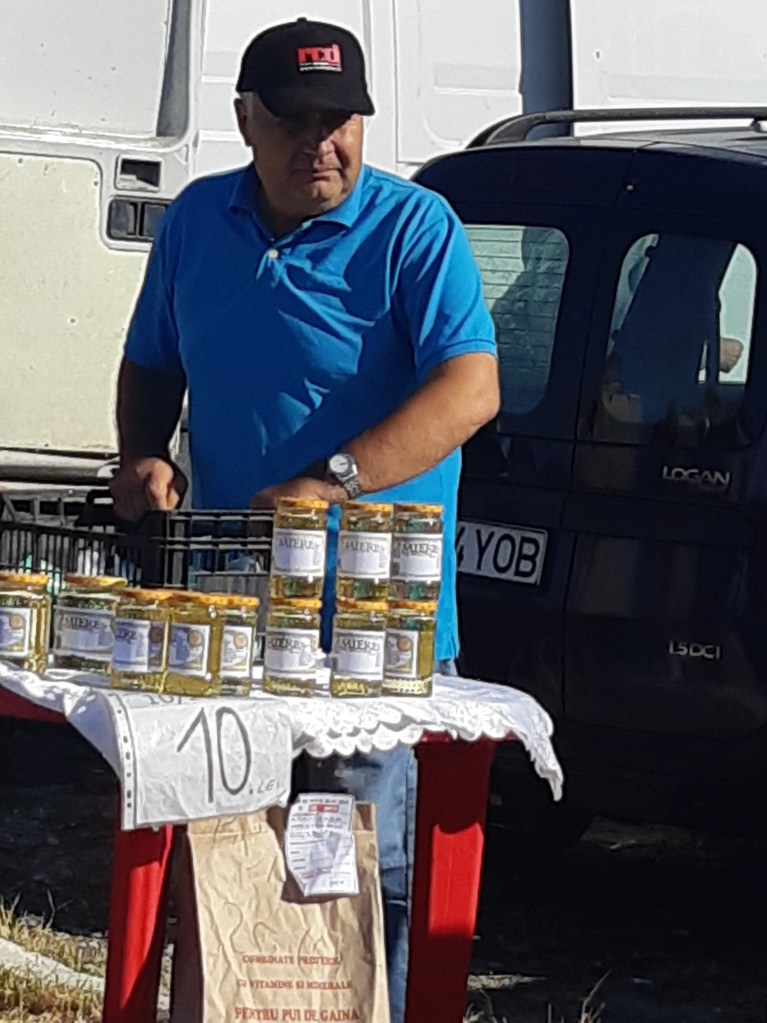
More random acts of kindness occurred for us when we stopped in a large farmer’s market on the way to Ruse. I had some Romanian lei to get rid of and saw a nice bunch of plums at 4 lei/kg (about $1.25), but not wanting a kilo of plums I handed him a 1 lei bill. He scooped up 6 plums and handed them to me, refusing payment. A little further on a man was selling jars of honey, and I was looking at them from a distance wondering if they were really jars of honey. The man walked up to me a shook my hand, pointed to the Canadian flag on my handle bar bag and handed me a jar of honey. What is it? Do they think we look tired and hungry? Old and infirm? Or is it part of their culture?

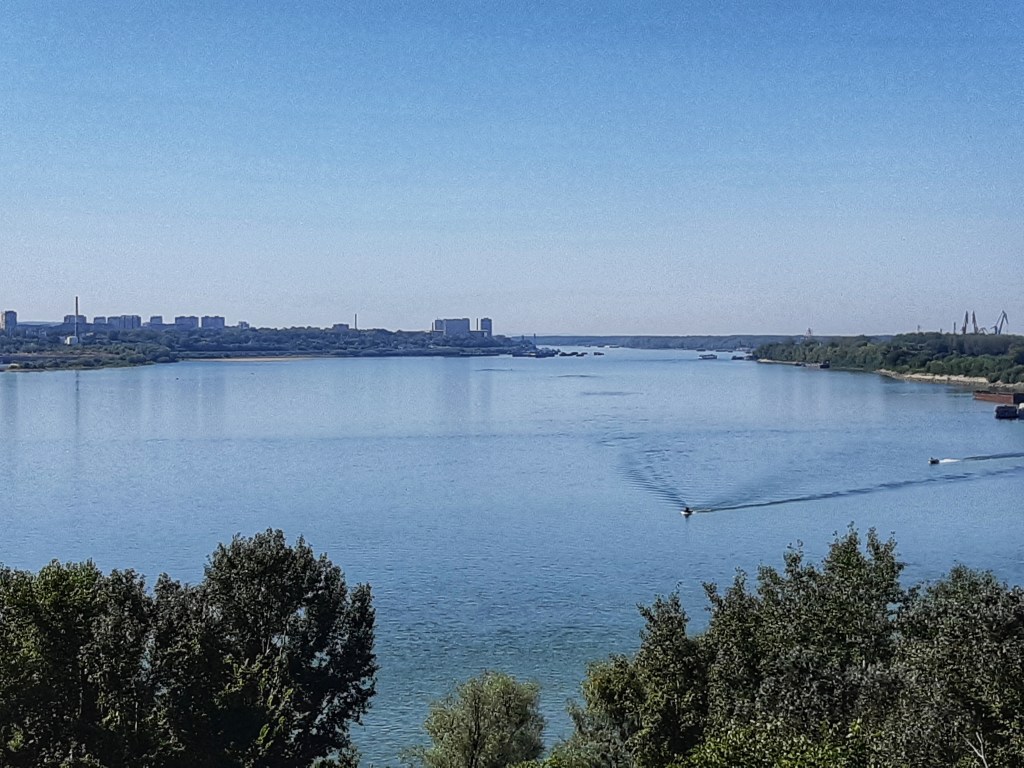
We left Romania by crossing over the Danube on a long, high bridge and entered Bulgaria at Ruse, a lovely small city of 200,000. I was a little disappointed in the Danube as we were picturing a clean flowing river where we could sit on the bank and have lunch, instead it was a muddy, grey colour with heavy industrialization lining it’s banks.

The kind gentleman who gave us a jar of honey.
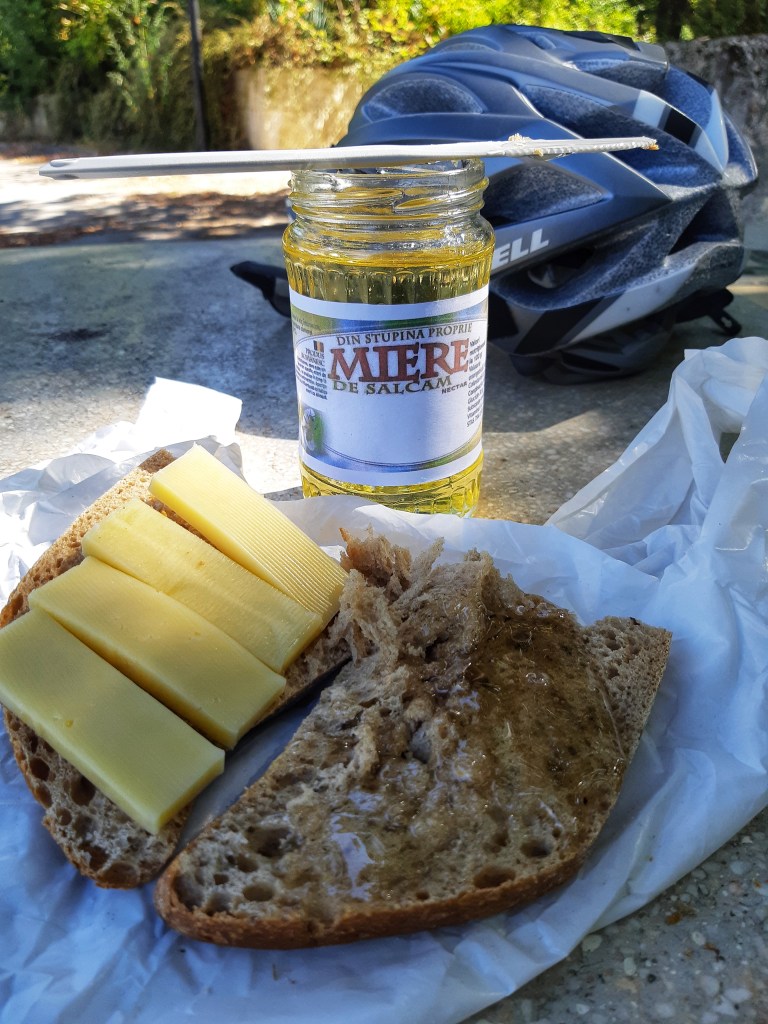
Cheese and honey sandwiches for lunch!
The blue Danube
Crossing into Bulgaria
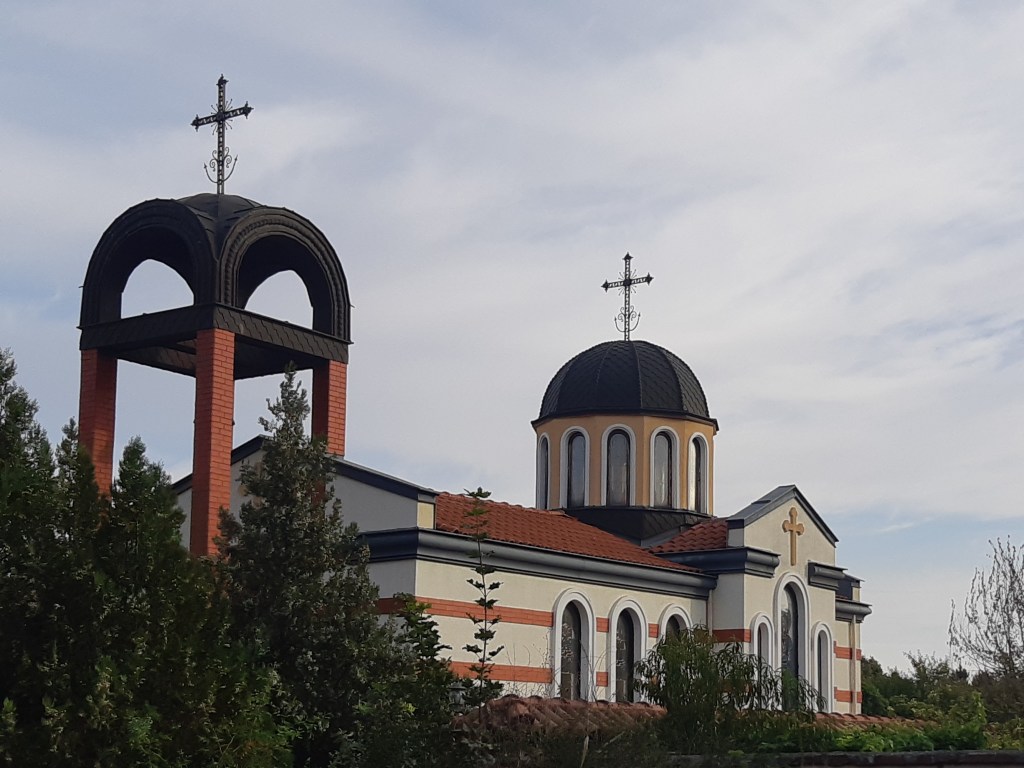
Eastern Orthodox church on the way to Ruse

Ruse to Veliko Turnovo. 111km 19.7km/hr

It was a long day with 1050 meters up and 790 down and started with a cool 7 degrees. The first half the ride was on a hilly, rough “highway” with little traffic, but the second half was on a busy highway with no shoulders and lots of trucks buzzing by. Although most Bulgarian truck drivers are pretty good, we have adopted a strategy of getting off the road and stopping when two trucks in opposite directions are passing us at the same time. Better safe than sorry when you are tired.

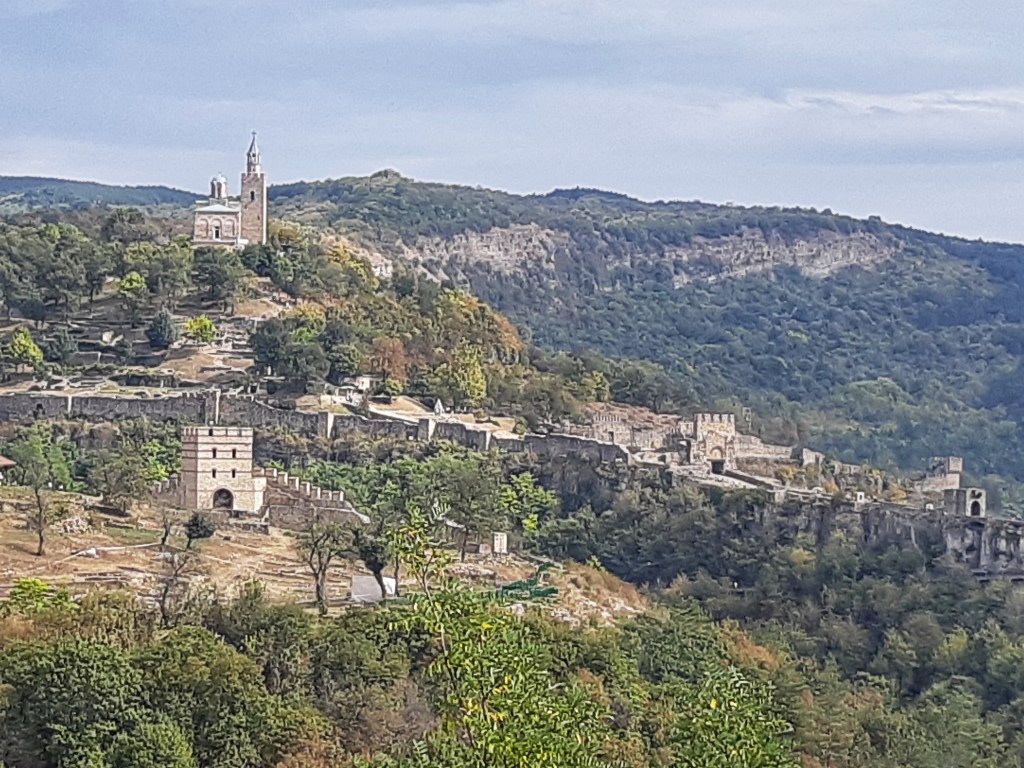
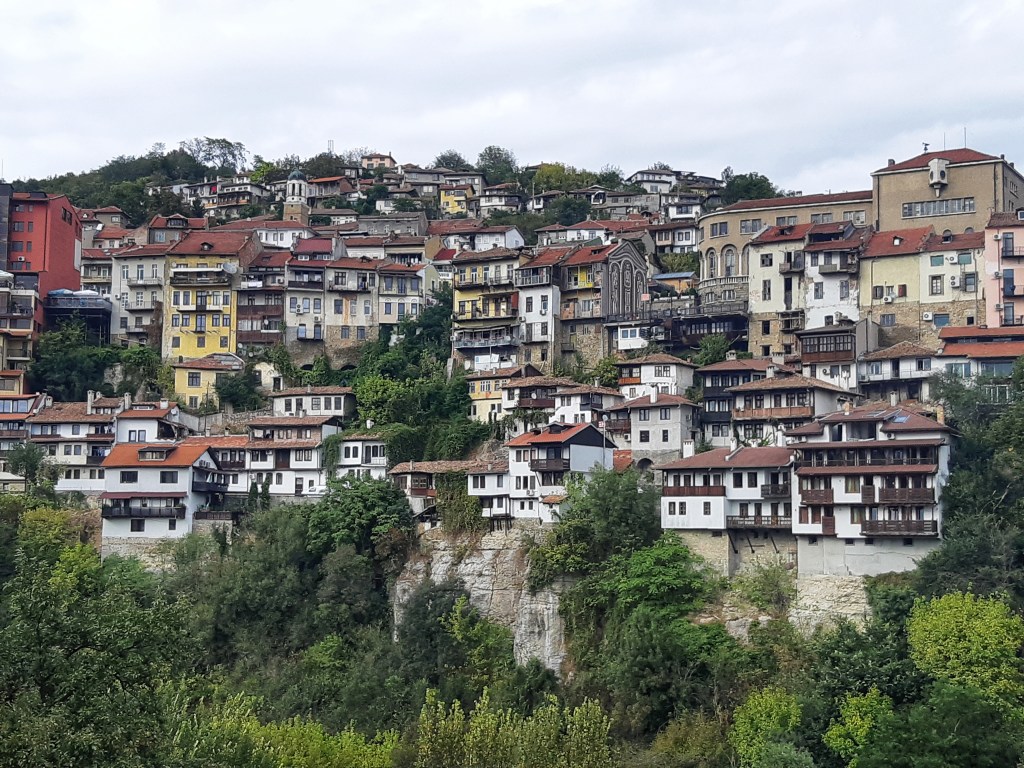
Veliko Turnovo is a town built on a hillside and seems to be popular with Eastern European tourists, drawn by it’s picturesque setting and fortress on a neighbouring hill.

On the way to Veliko Turnovo
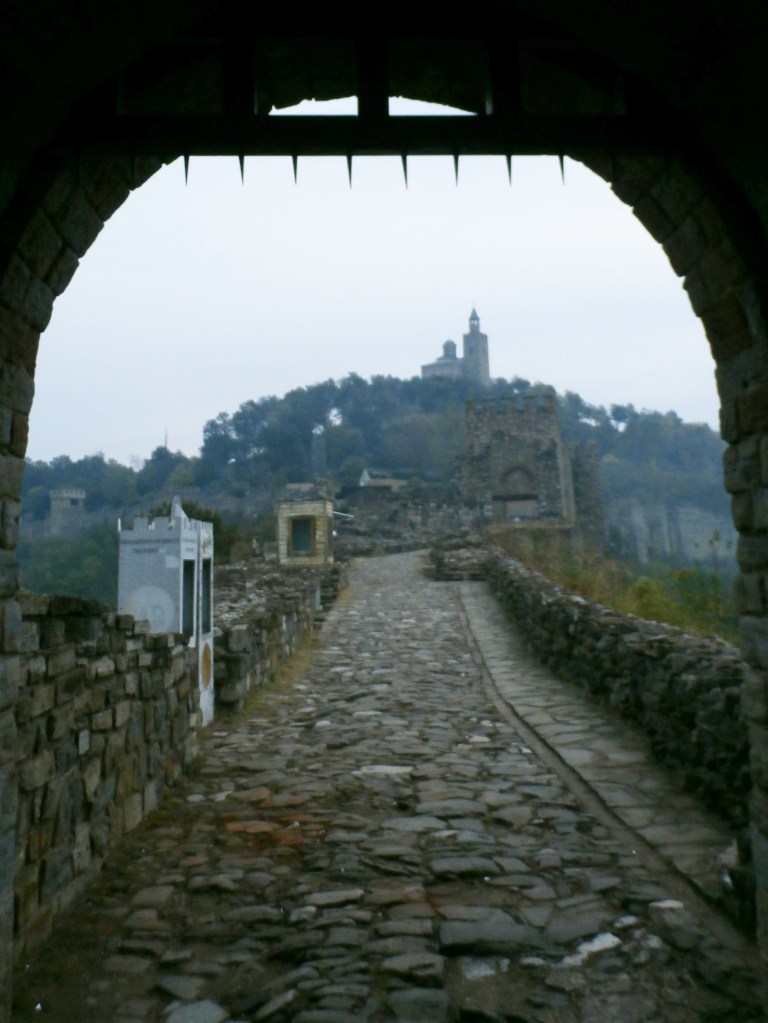
The Fortress at Veliko Turnovo
Veliko Turnovo
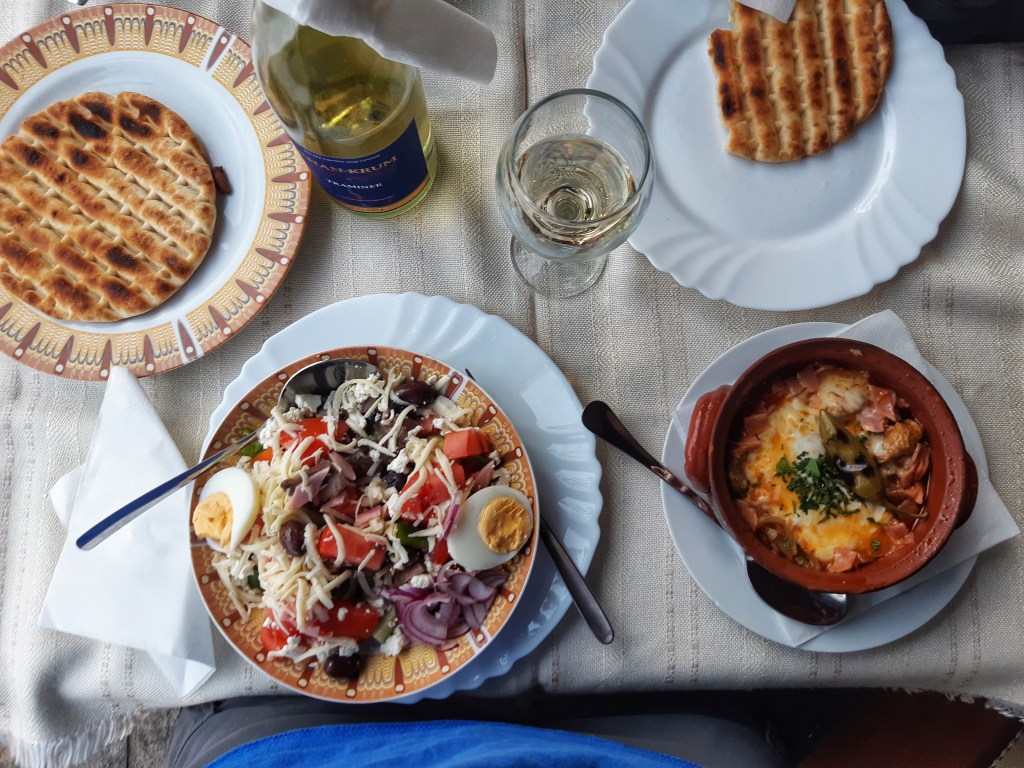
Dinner with a bottle of Bulgarian Traminer. Very good!
The Fortress
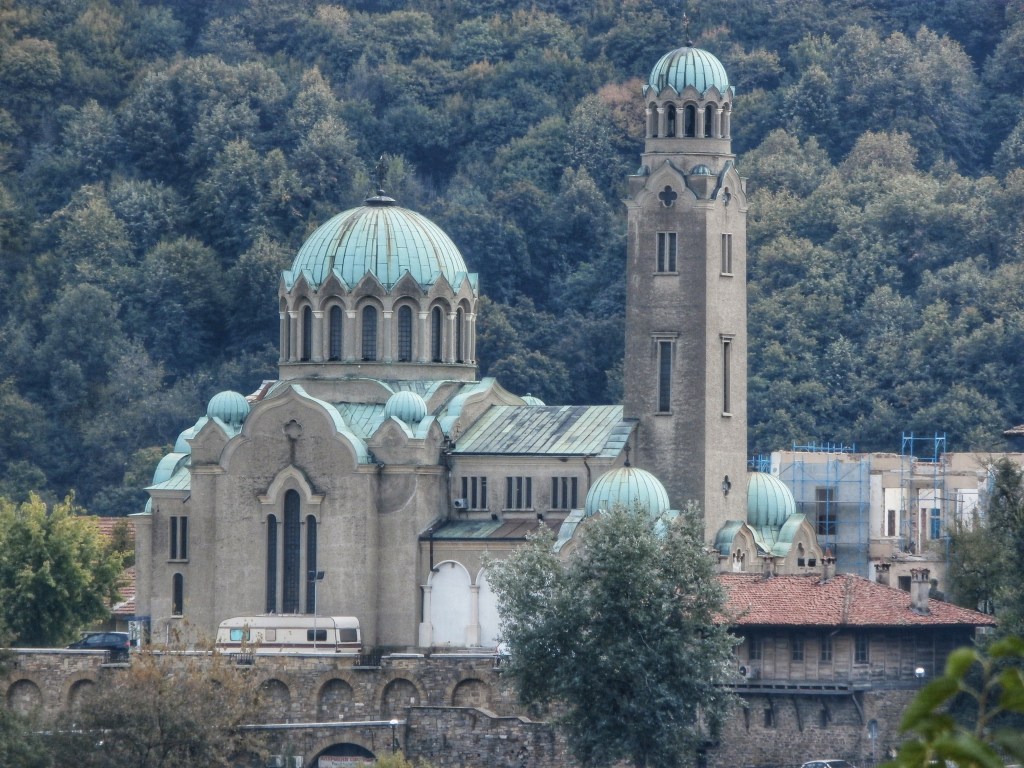
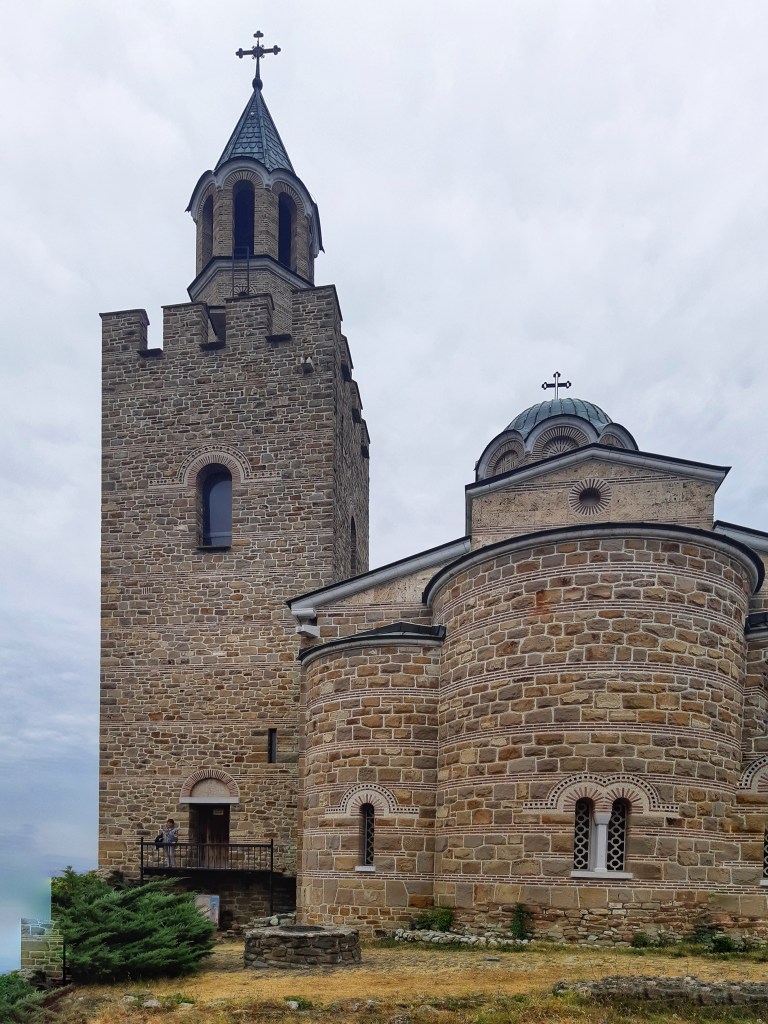
The Fortress church
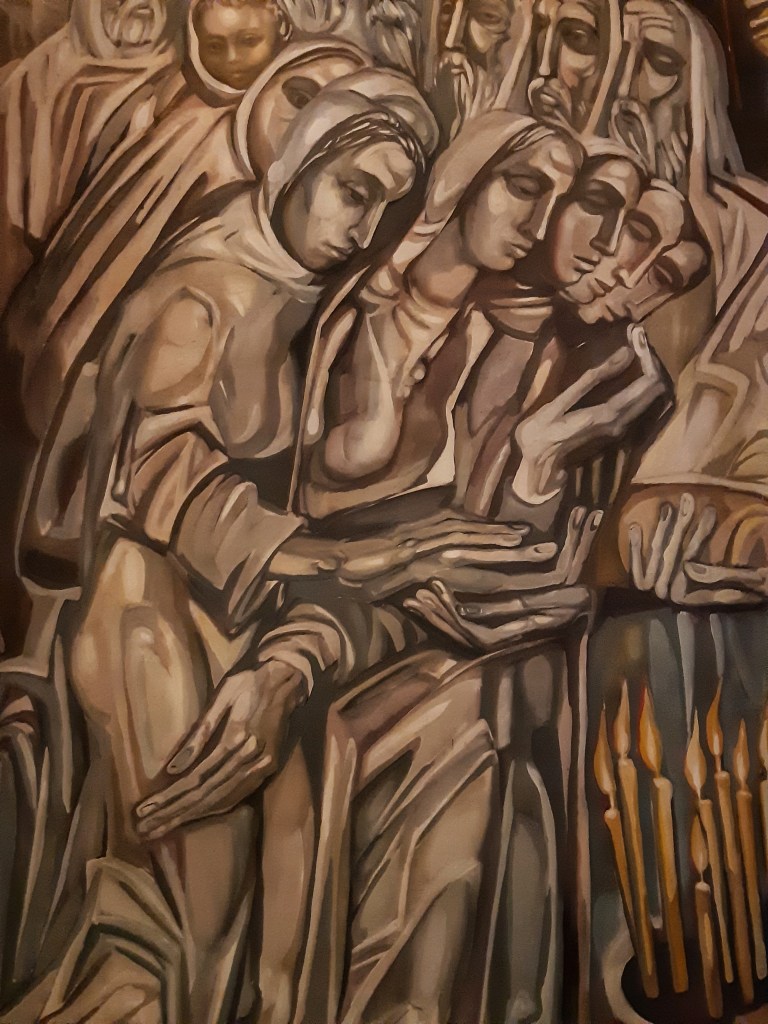
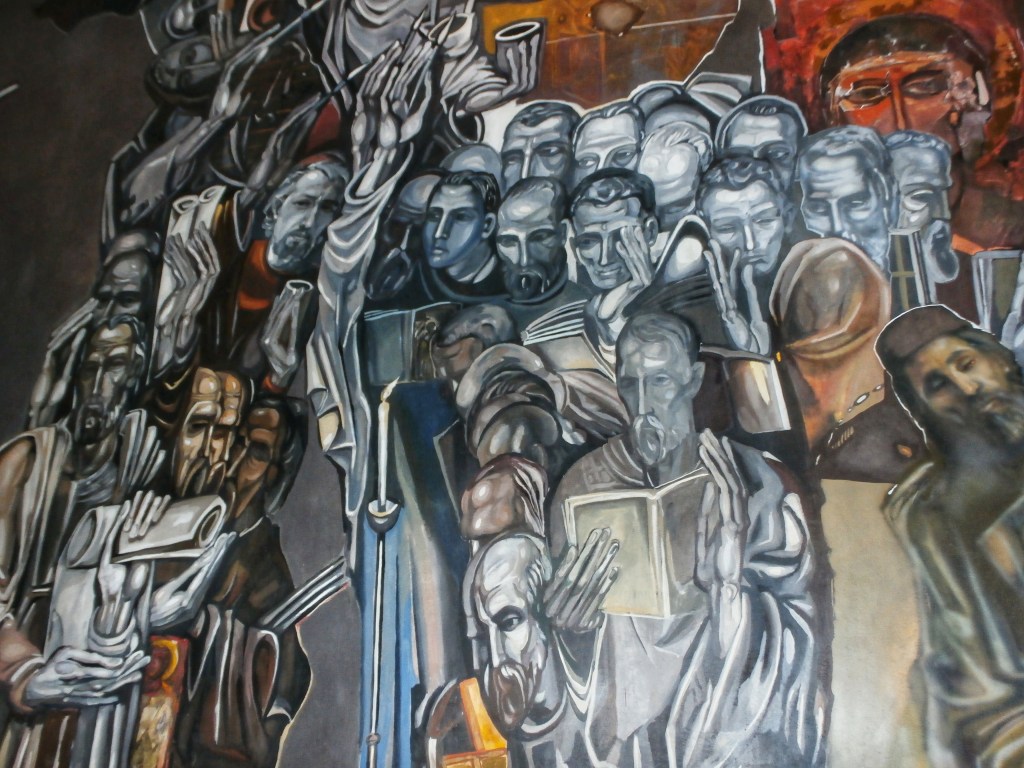
Modern Byzantine art inside the church

Veliko Turnovo to Pilitsi. 58km 17.7km/hr.

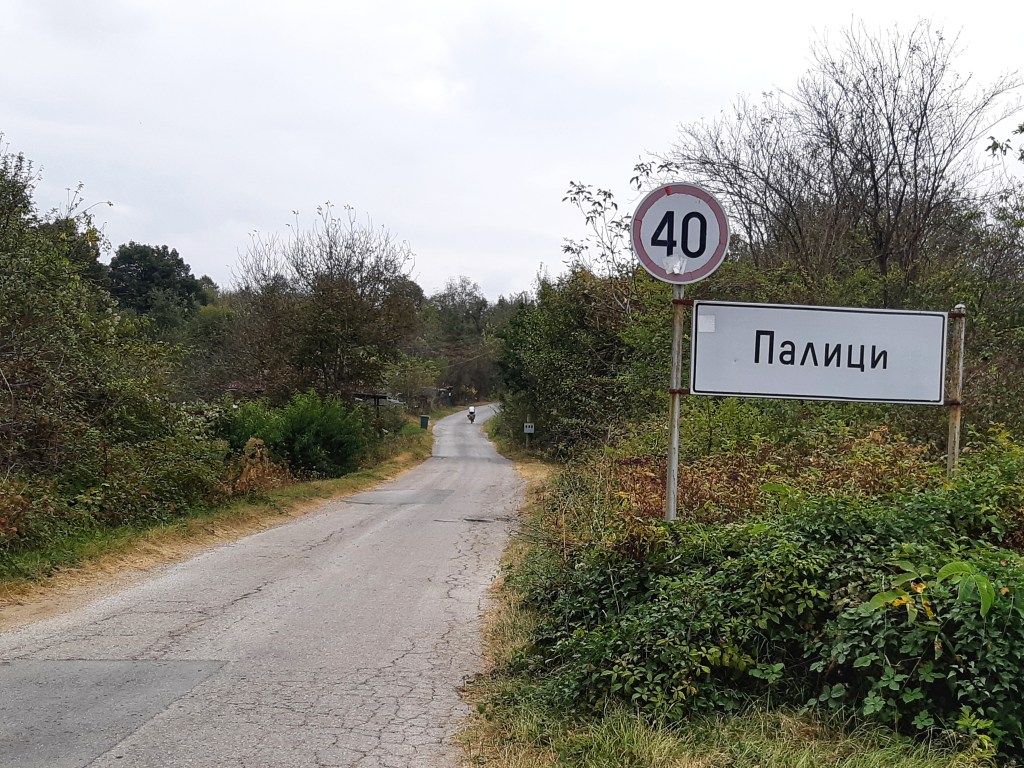
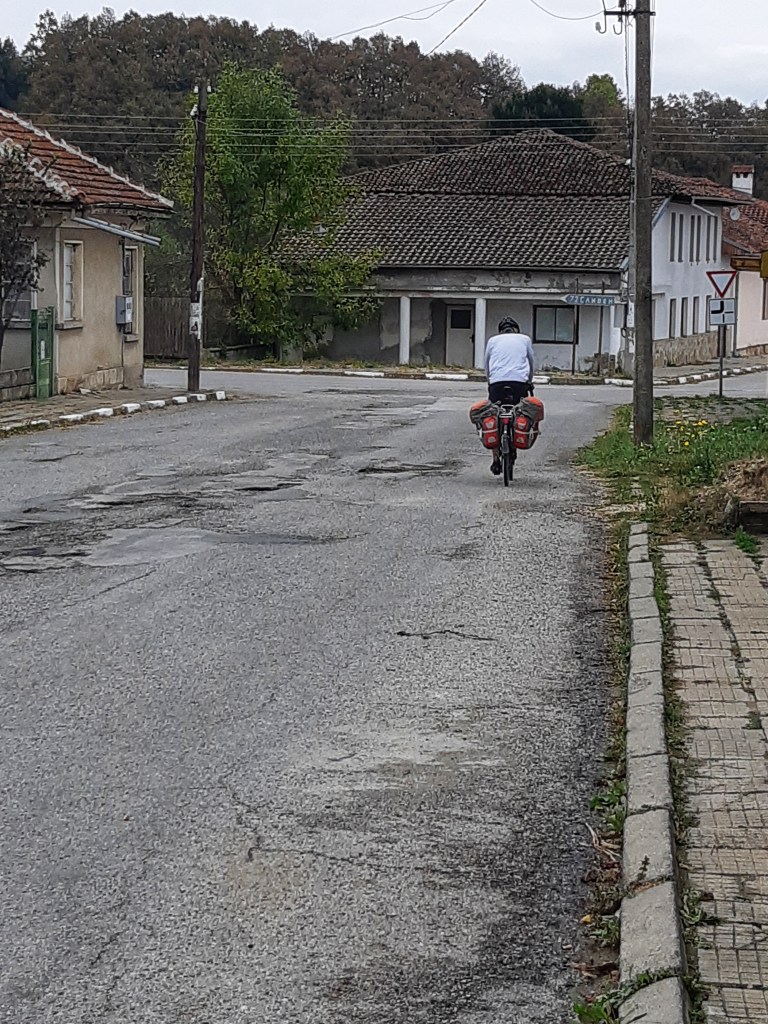
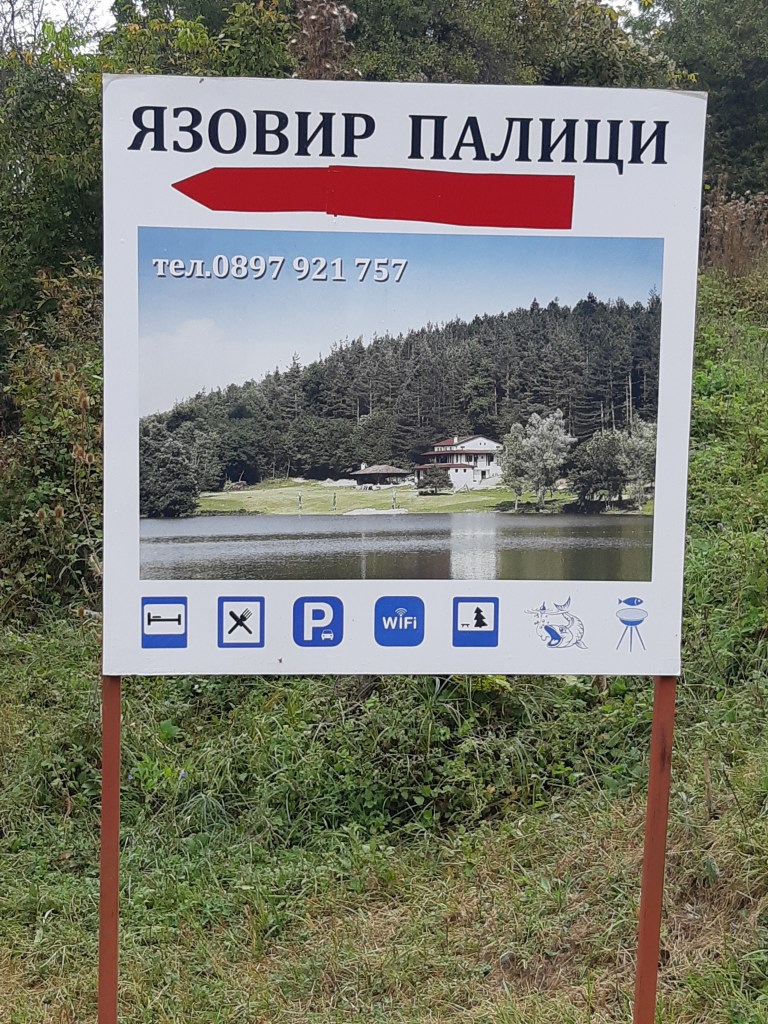
A short but hilly ride on a quiet country road giving us a good glimpse of rural Bulgaria. We decided to make this a short day in order to avoid a single 140km day with two big hills, but the options of where to stay for the night were very limited. Our accomodation is at a “resort” about 5km beyond Palisti, which has a population of about 40.

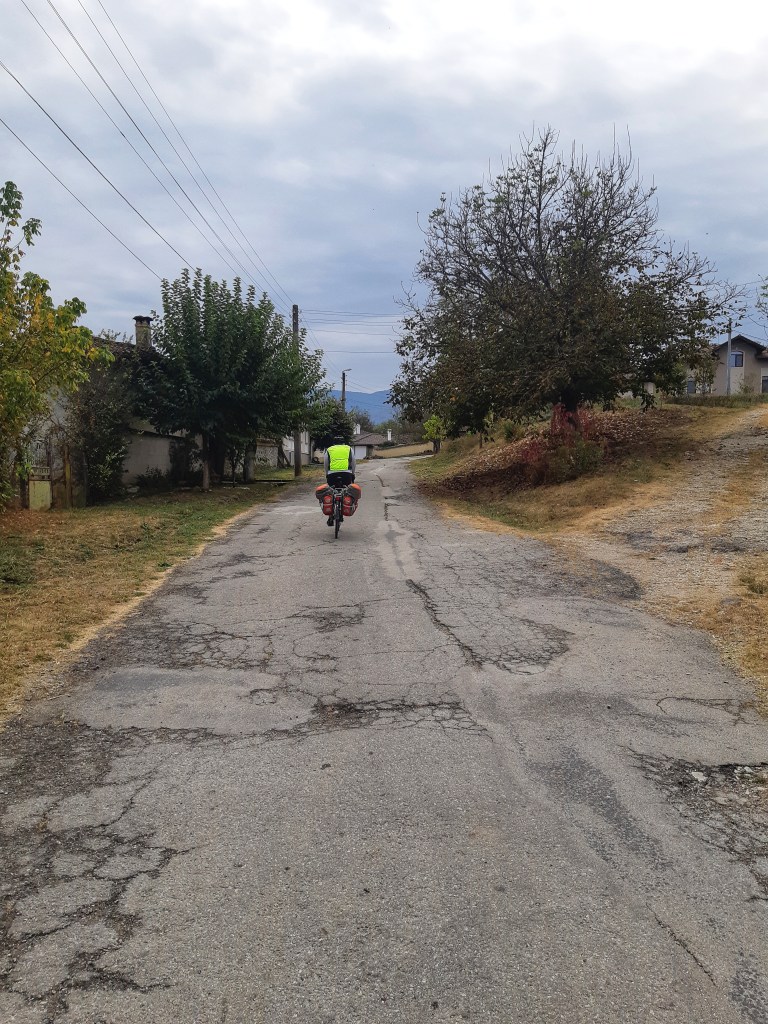
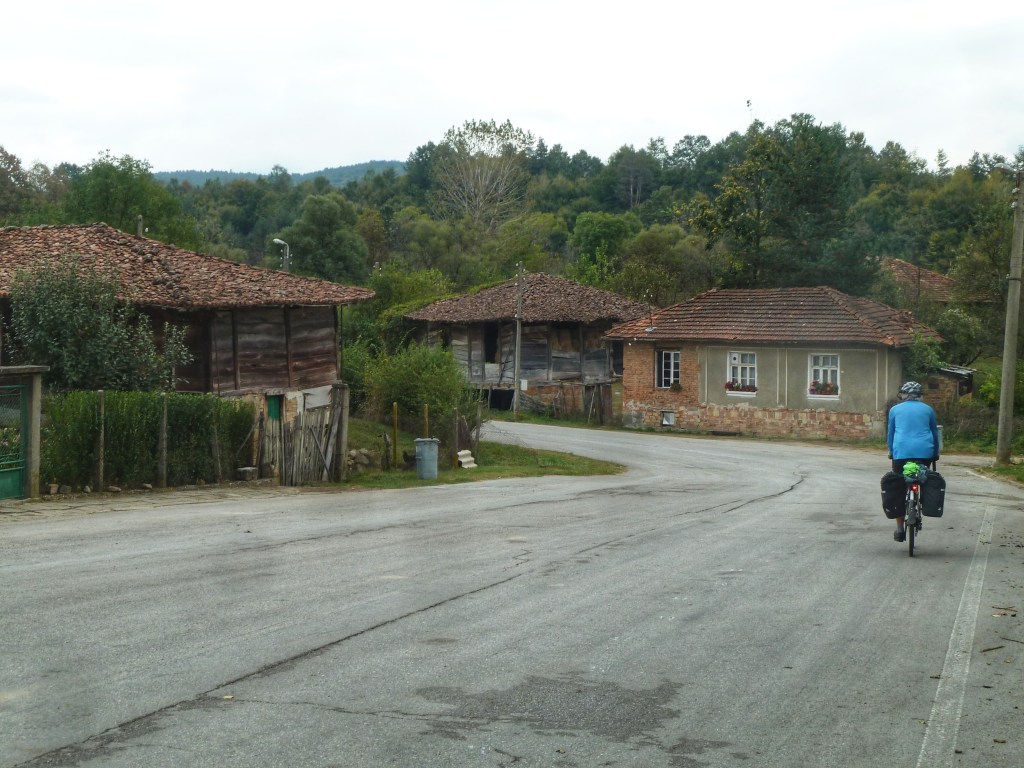
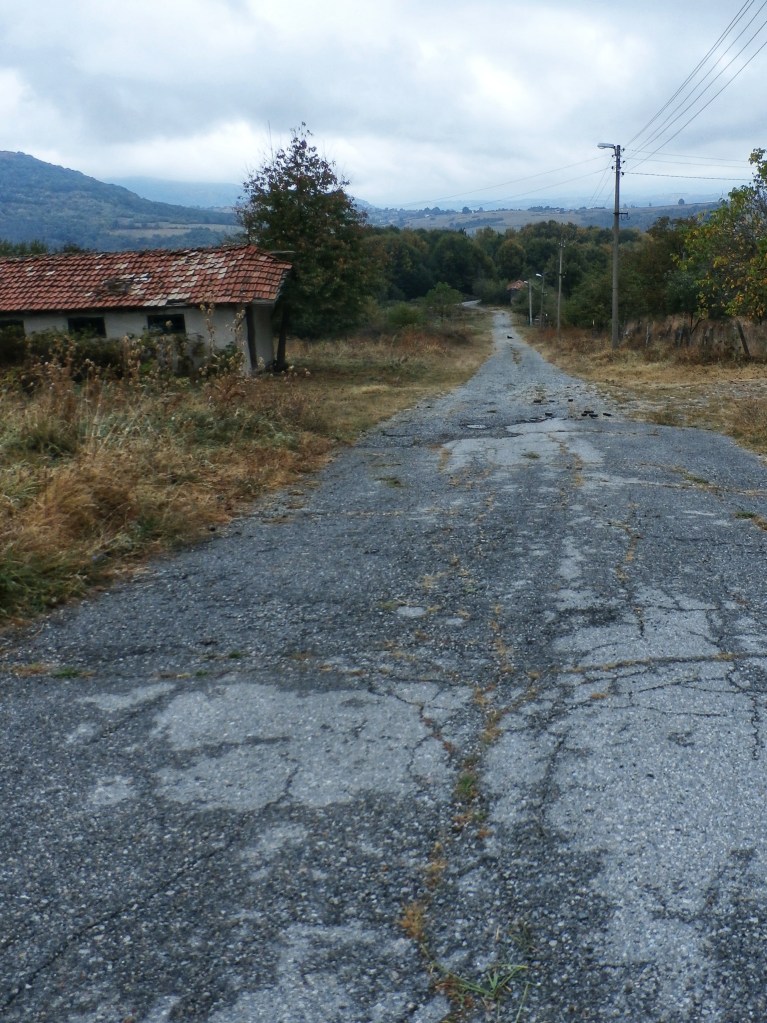
In the small towns the roads are not the greatest
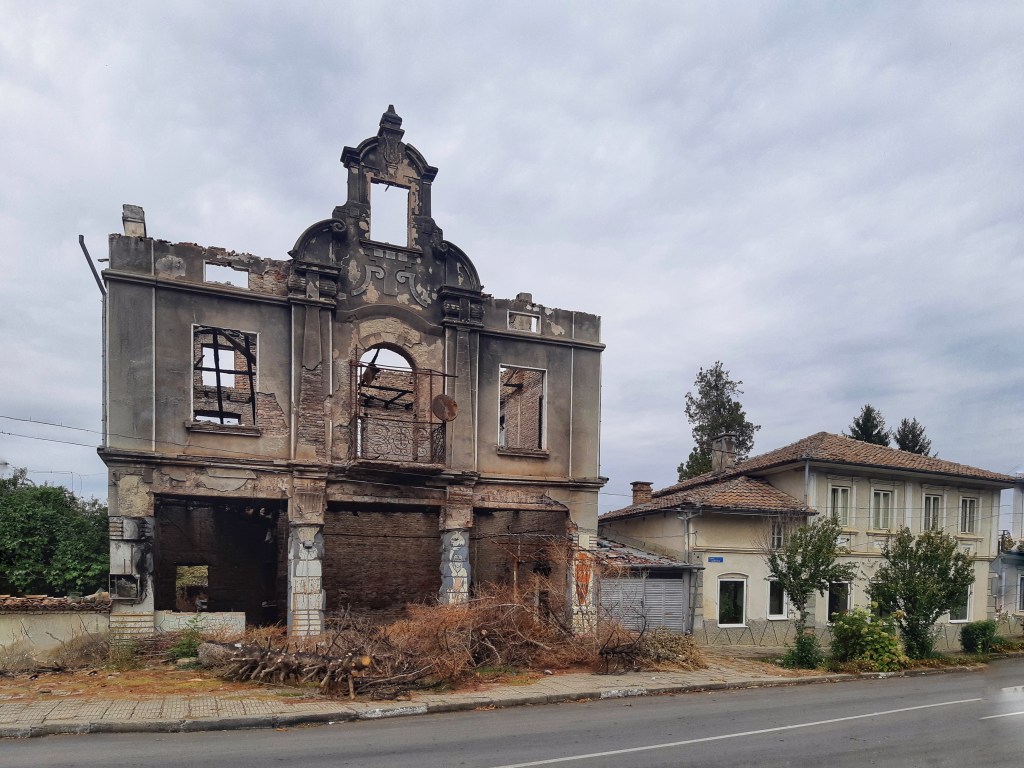
Lots of ruined buildings in the small towns
We still have to get up these hills today
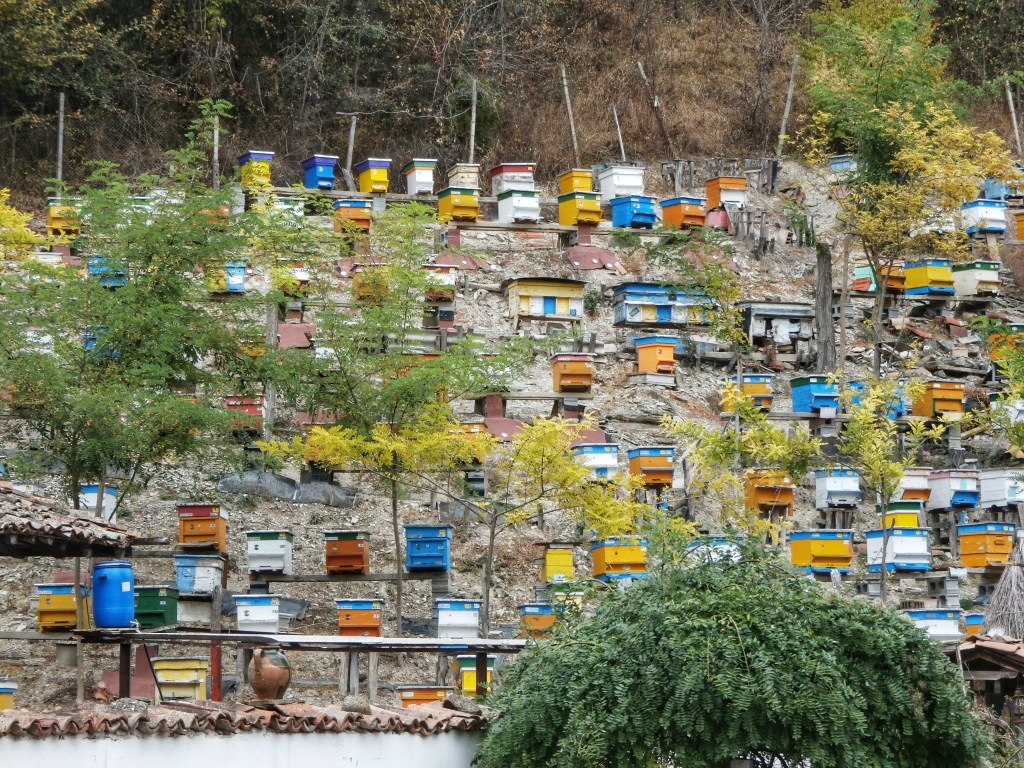
Bee hives
Palisti
Population 40 and not a soul to be seen
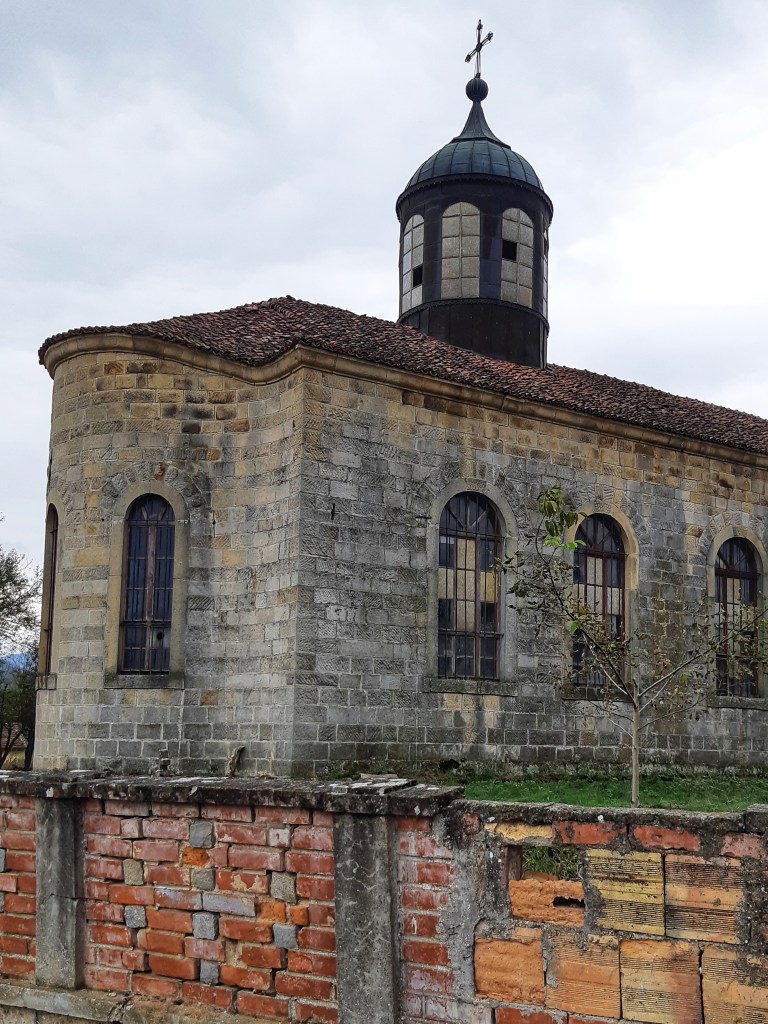
But it has a church
Our “resort” for the night

Palisti to Yambol. 90km 17.5km/hr.

A tough day, it took us 3.5 hours to do the first 25km due to a 10km 2000 foot climb. The “included breakfast” at the resort where we were the only guests, consisted of a small glass of herbal tea and a few slices of white bread with melted salty cheese on top. It did not fuel us sufficiently for the climb. But at least the road for most of the day was devoid of traffic, as we travelled through a sparsely populated area of Bulgaria.

This will be our last day in Bulgaria, tomorrow Turkey!

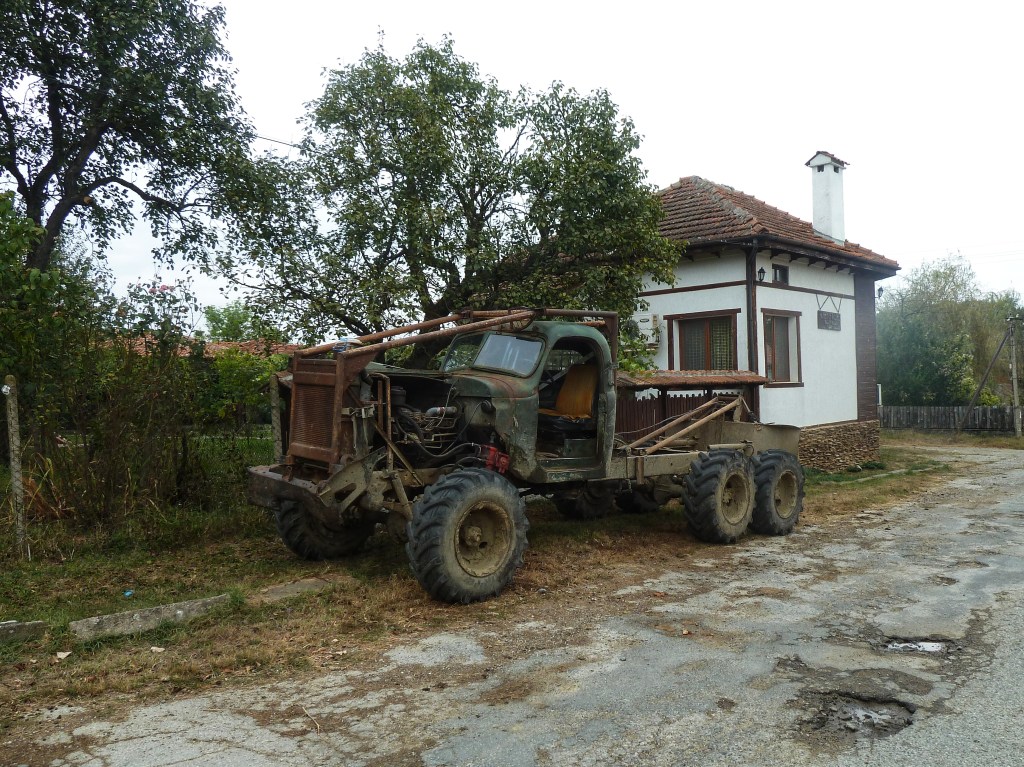
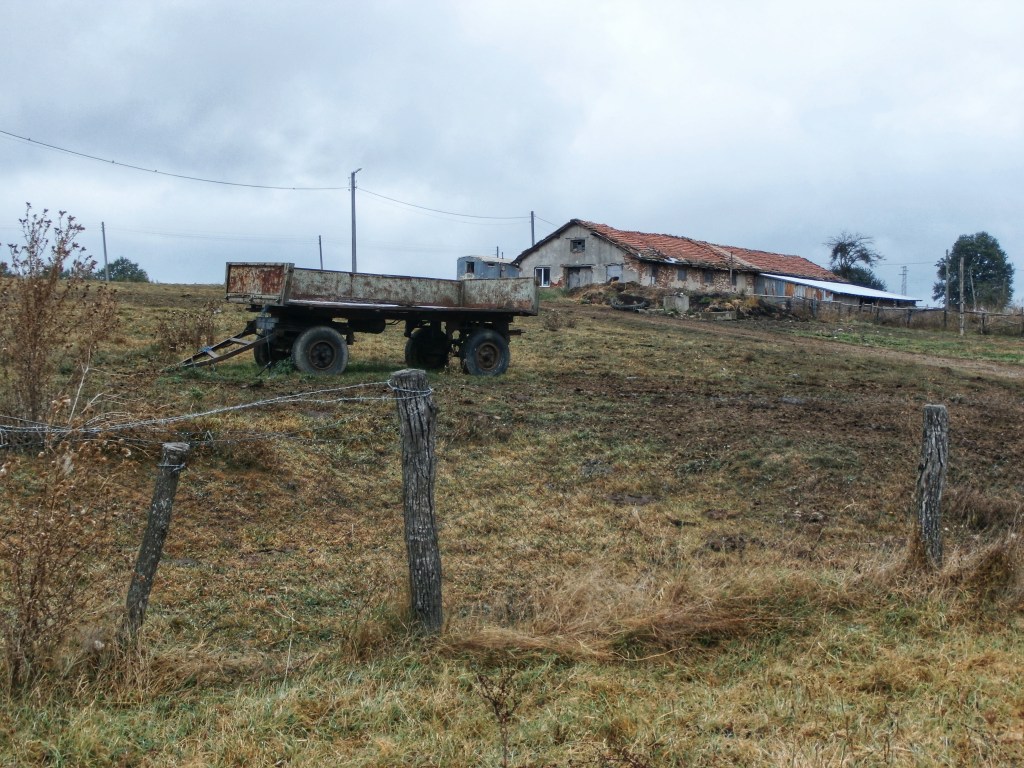
Lots of these old vehicles still around. I think they are Russian.
Another town with no one to be seen
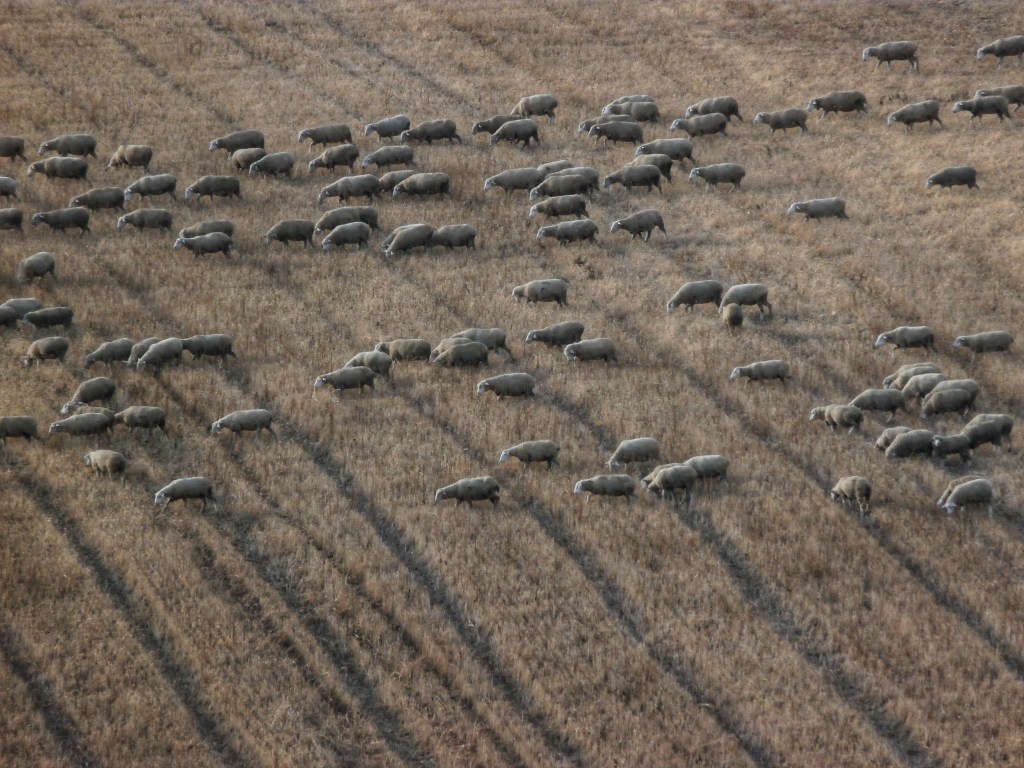
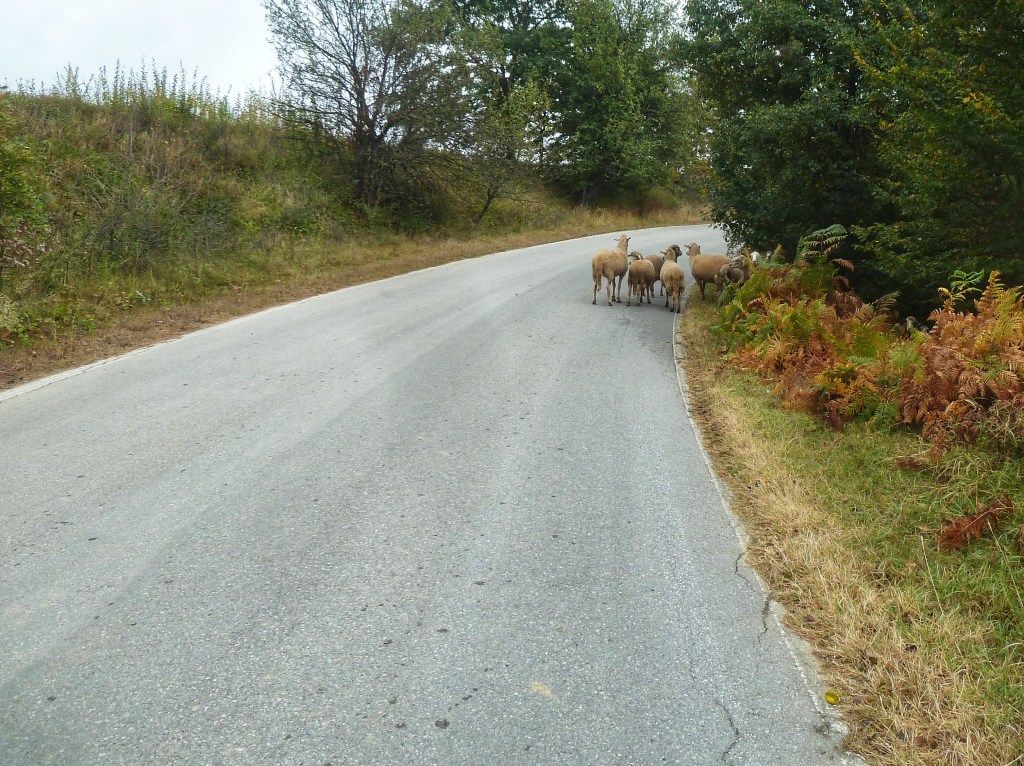
There is so little traffic on this road that the farmers let the sheep run freely
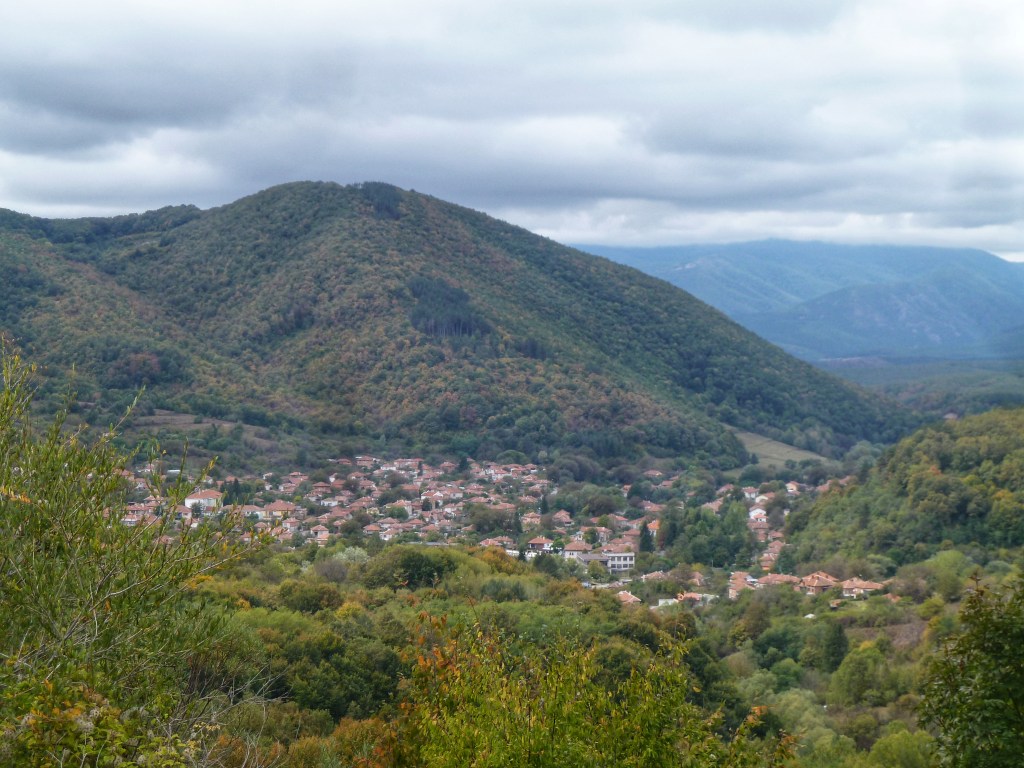
Typical Bulgarian village nestled in a valley. At this elevation they get about 2 feet of snow in the winter.
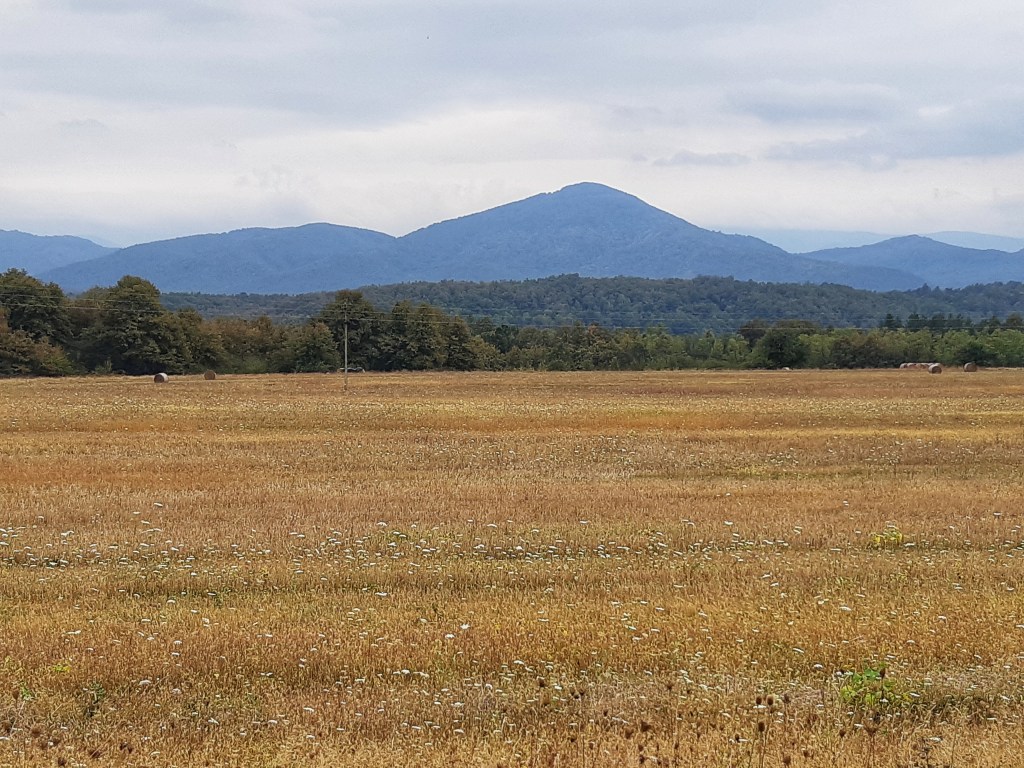
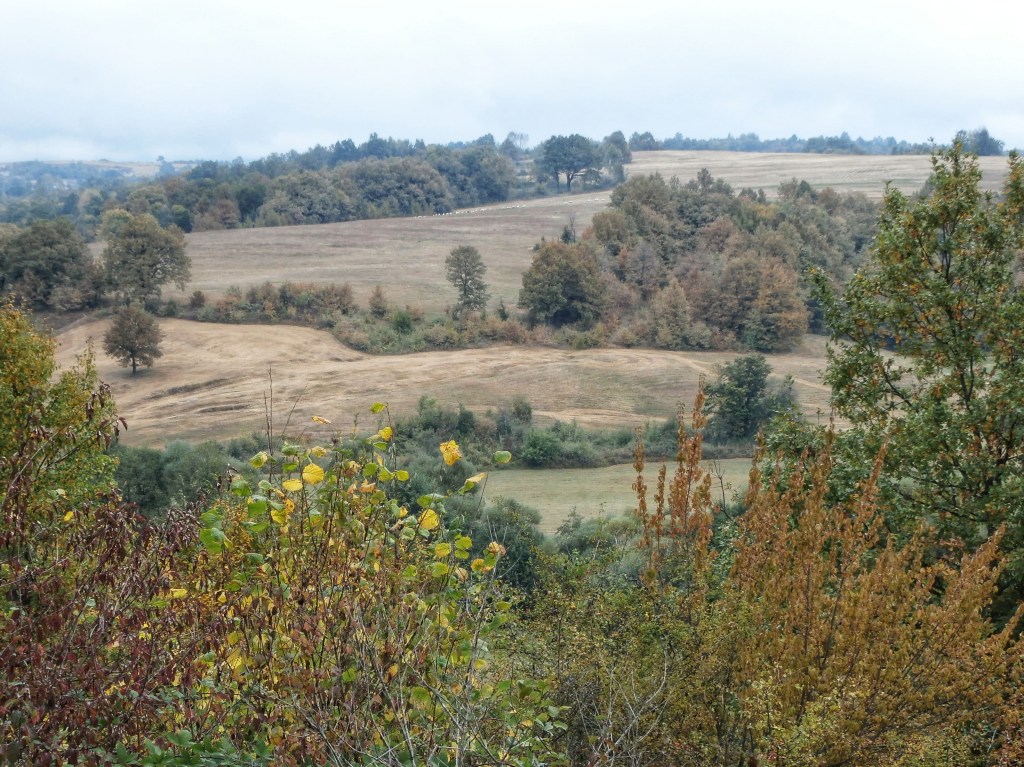
Rolling hills with no houses
A rugged road
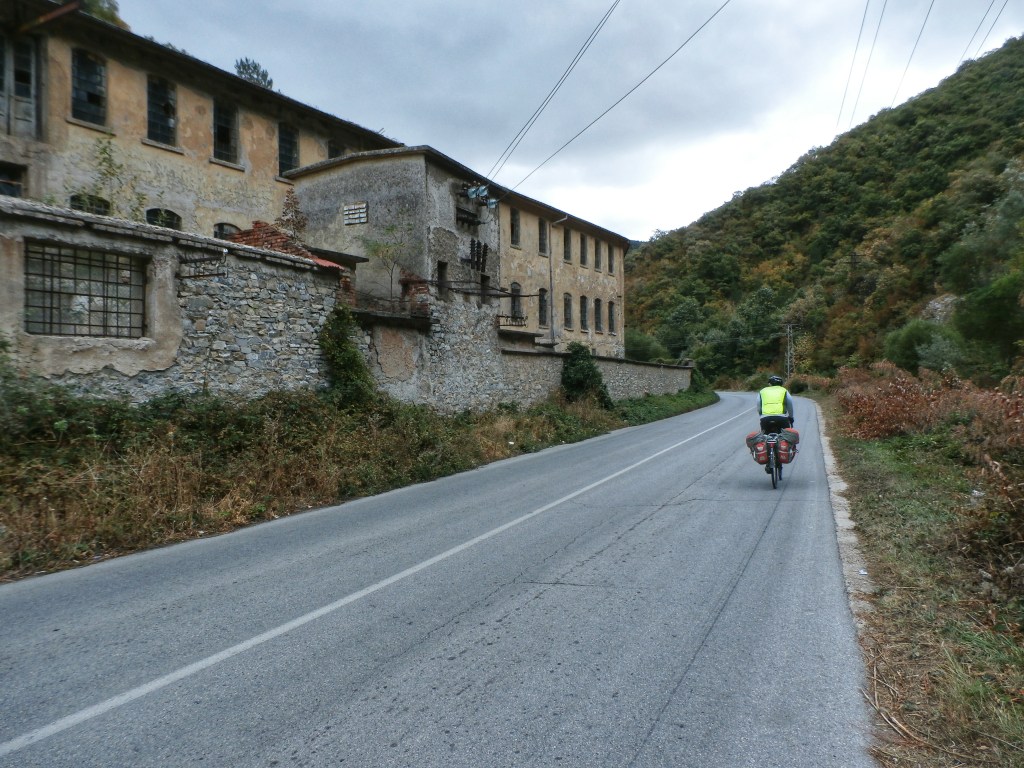
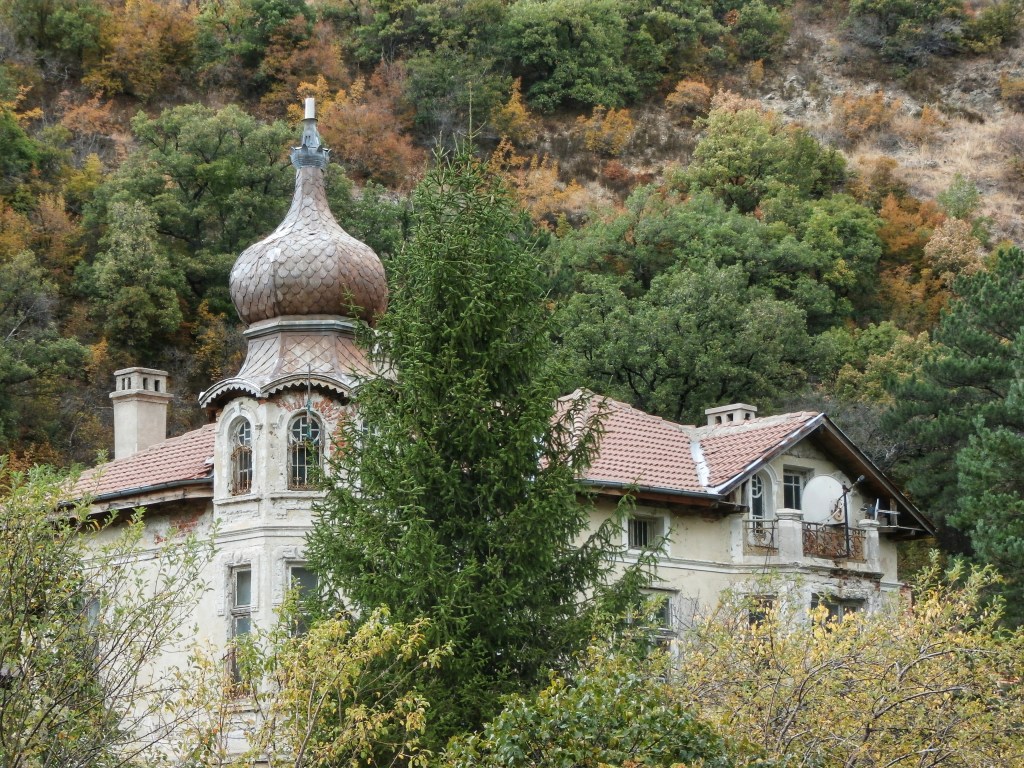
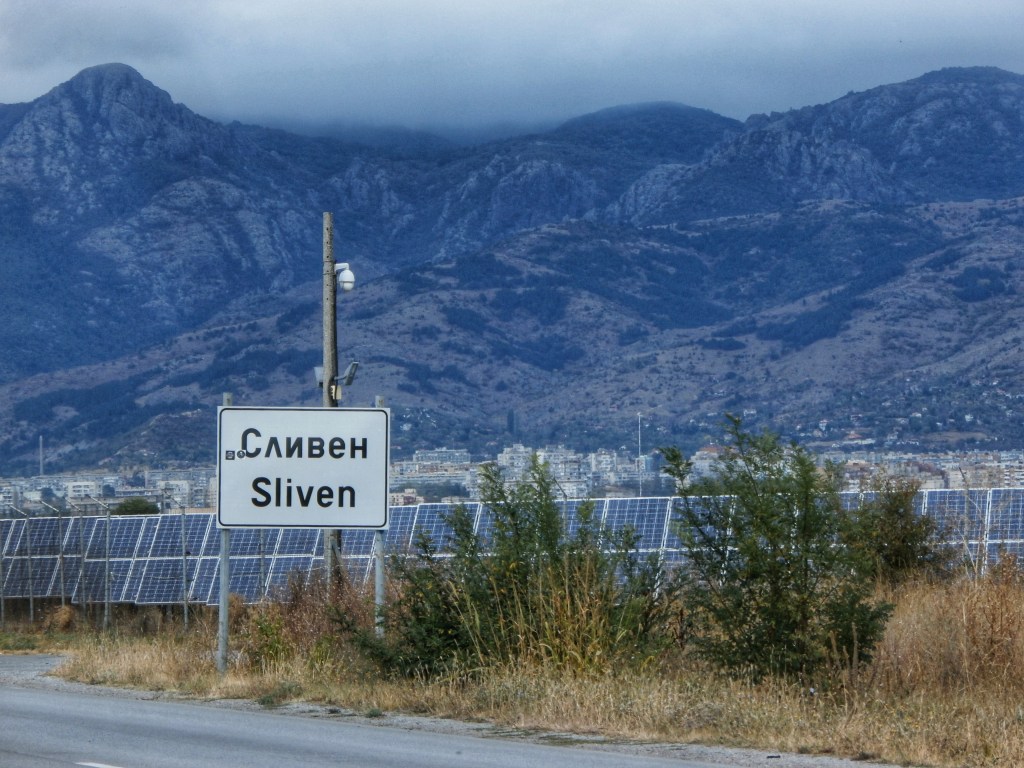
Abandoned factories near Sliven left over from the Soviet industrialization days
Looking back to the hills we came over today

36. So You Want to be a Rock and Roll Star

By Don

So you want to be a rock and roll star
Then listen now to what I say
Just get an electric guitar
Then take some time and learn how to play

Roger McQuinn and Chris Hillman wrote these lyrics in around 1966. You know Roger McQuinn and Chris Hillman, as in The Byrds.

Now the key phrase in this song is “take some time and learn how to play”. The point being that if you want to be a rock and roll star you should know how to play an instrument, even if that intrument is your voice. Now why am I telling you all this? Well we will get back to it.

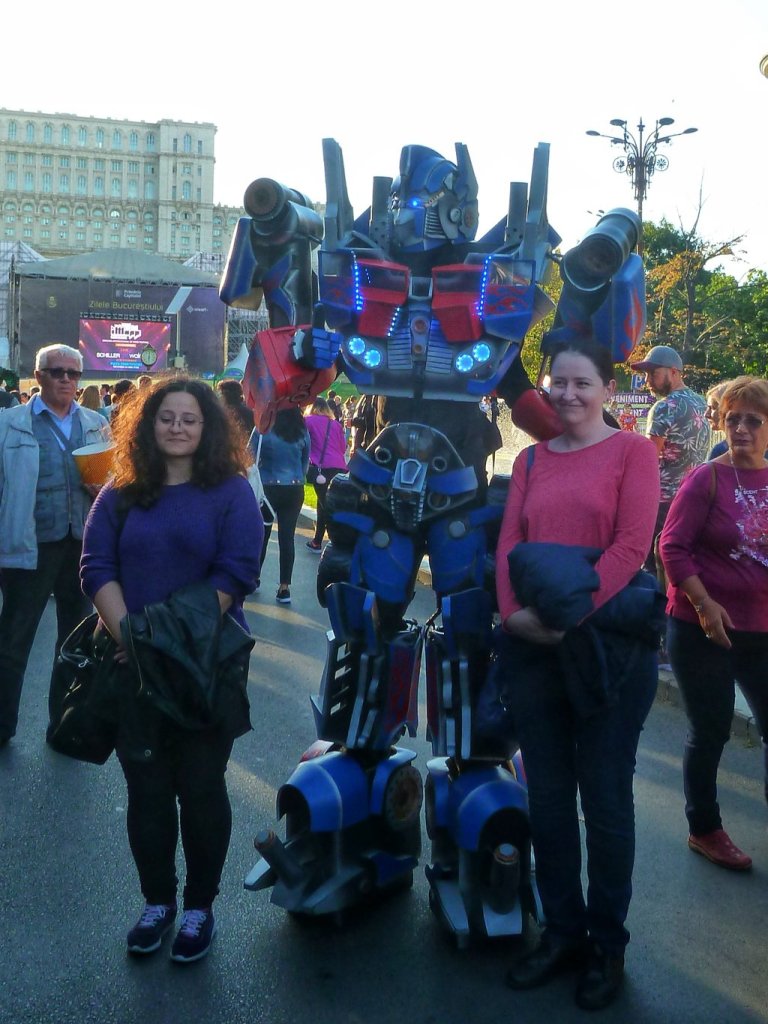
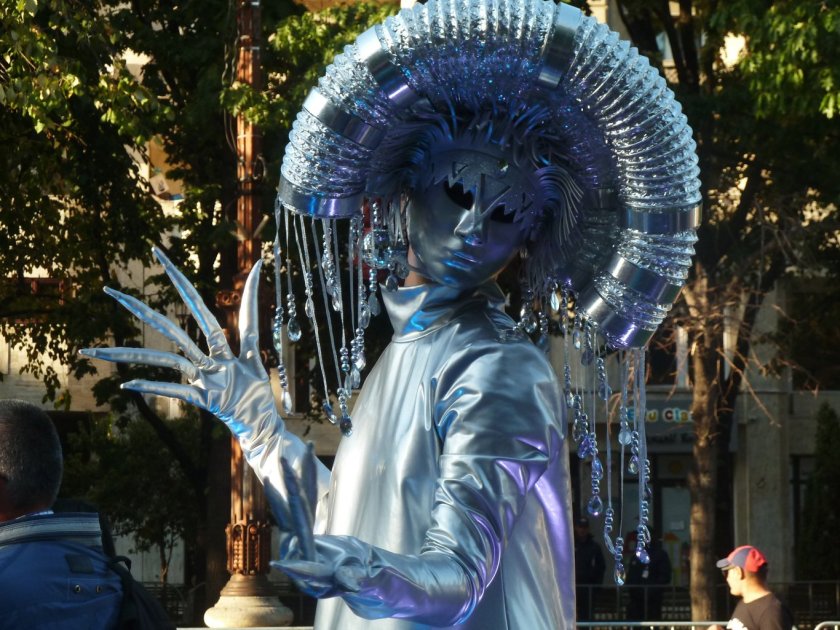
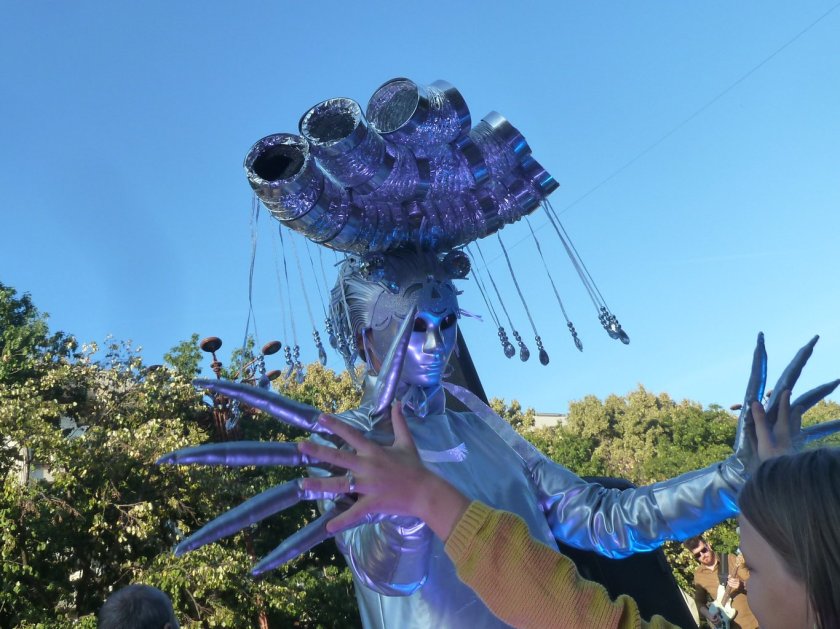
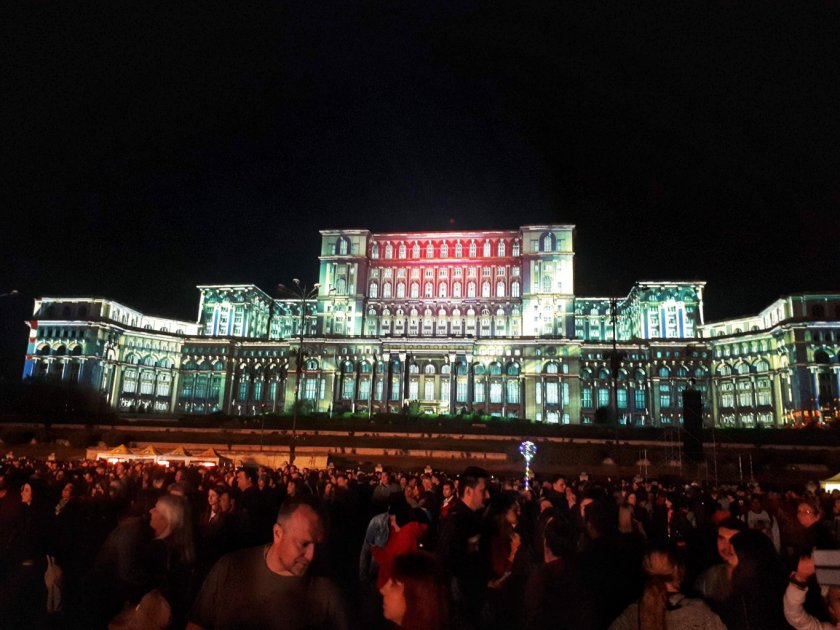
We were quite lucky in our timing to visit Bucharest, as on the weekend we were there they celebrated Bucuresti Days which is to say they celebrated their city. Lots of activities of which many were focused on the street in front of the place we were staying which was a long boulevard that ran from a large array of fountains at one end to the Palace of the Parliament at the other. In front of the Palace a large stage had been set up and for two days they had been doing sound checks that reverberated all the way down to our apartment, which was a km away. Big stuff coming.

We had been told that there would be a concert on Friday, then Saturday late afternoon and finally on Saturday evening. I think we walked down a total of 3 times trying to see if a concert was happening to find nothing. But finally we hit pay dirt on the 4 attempt on Saturday evening. Of note is that on the Saturday all the way up and down the boulevard there were buskers, bands, food stands and thousands of locals milling about so it wasn’t any hardship.

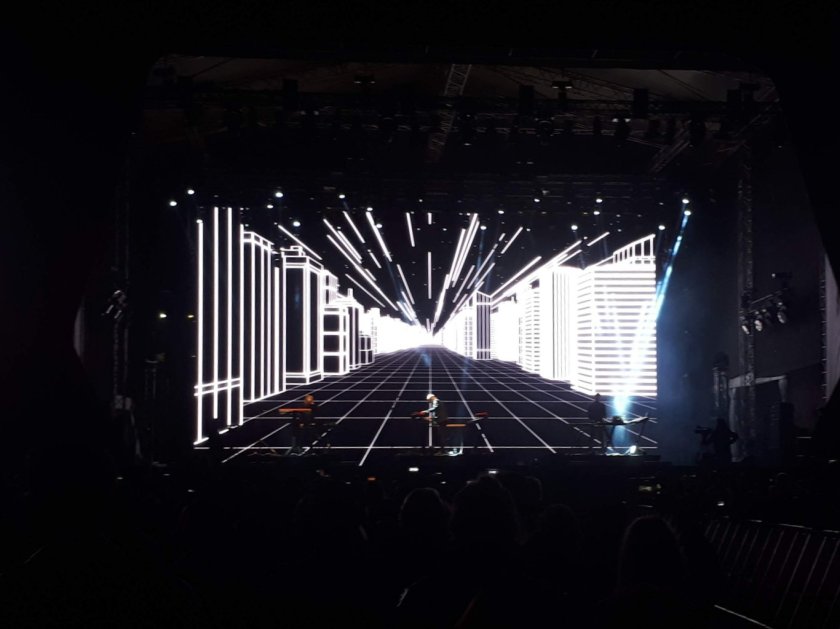
When the concert finally began there was a warm up band that played mostly crooner type music. They played it very well (interestingly not a Romanian band, the singer sounded American). Then the big event which was a band, and I use the term ‘band’ in the loosest of sense, called Schiller. Now Schiller plays Electronica, and like ‘band’ we are using ‘plays’ also in the loosest way. I’m not an Electronica fan but, well it was free. And so…

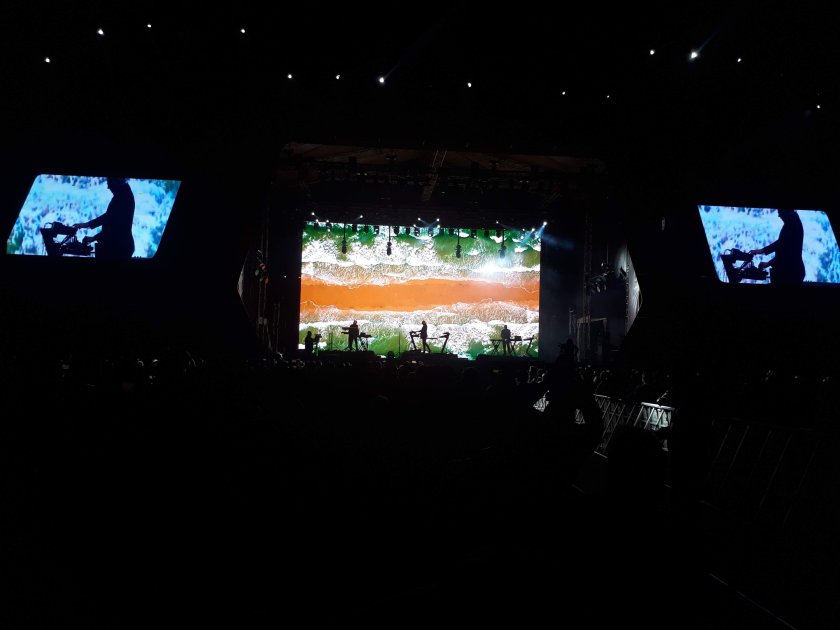
Well the set up. Massive stage, huge array of speakers so that people circling in the space station could hear, big screens to allow for full visual effects, and did I mention security like you were going to see the Pope? Anyway on either side of the stage they had big screens so that you would see close ups of the ‘musicians’ while they ‘played’.

In the end it was definitely a spectacle. The visual effects were quite stunning. The sound was full, the beat rhythmic and trance inducing. The young audience seemed to be really enjoying it.

A bit more of the set up. Schiller consists of three people with 4 or 5 keyboard synthesizers and a few computer screens. No drums, no other instruments. Because of the close ups shown on the side screens you could see what these ‘musicians’ were actually doing. And it was close to nothing that resembled playing an instrument. The drumming was all loops, the music was all loops, and the melody, when there was one, would be very simple played with one hand, but mostly they would just touch one key and then play with dials with the other hand. Computers did almost all of it. For much of a ‘song’ two of the members wouldn’t barely touch a keyboard, just changing a base note of a chord every minute or so. There didn’t seem to be any correlation between what you were hearing and what they were doing. The young people liked it all the same. Have I become my dad?

In 1963 Bob Dylan wrote:

Come mothers and fathers
Throughout the land
And don’t criticize
What you can’t understand
Your sons and your daughters
Are beyond your command
Your old road is rapidly agin’
Please get out of the new one
If you can’t lend your hand
For the times they are a-changin’

I suspect Dylan wasn’t thinking about an age where musicians are actually just technicians. Not to say that to develop the visual effects and master the technology that generates full rhythmic sound without actually playing anything isn’t creative or taking skill. But are they rock and roll stars? I guess I shouldn’t criticize what I clearly don’t understand.

But I was entertained. And later they lit up the Palace with lasers, shifting colours and giving it a surreal feeling.

35. Bustling Bucharest

By Dennis

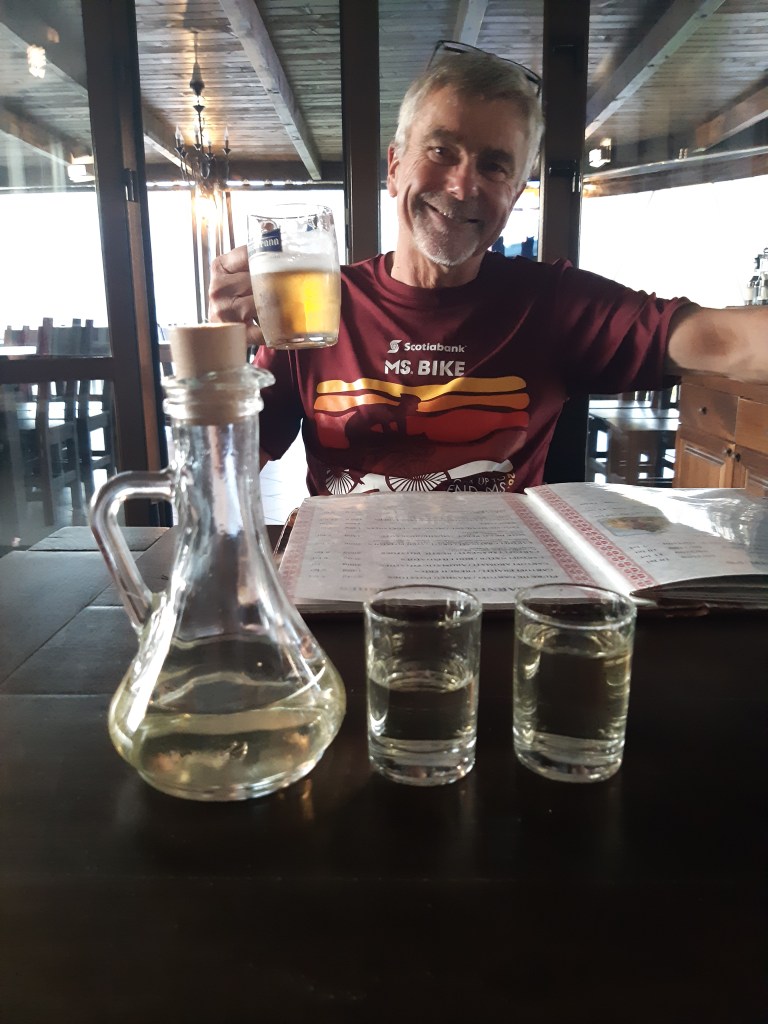
The day we came over the Transfagarasan was a long, tiring day of 103km to make it to our destination Corbeni, where we celebrated our milestone ride over a good dinner and bottle of tuica, a local spirit made of plums.
Don looking happy for getting over the hill.

Our next destination was Gaesti, 98km away, and the wind gods were good to us with a strong tailwind pushing us along at 30+ km/hr most of the way. We stopped in Pitesti, a small city to gets Don’s bike fixed and were informed that this was the home town of Bianca Andreescu (the Canadian tennis star who just won the US open). It is not the first time we have heard her name mentioned, the Romanians are proud of her!

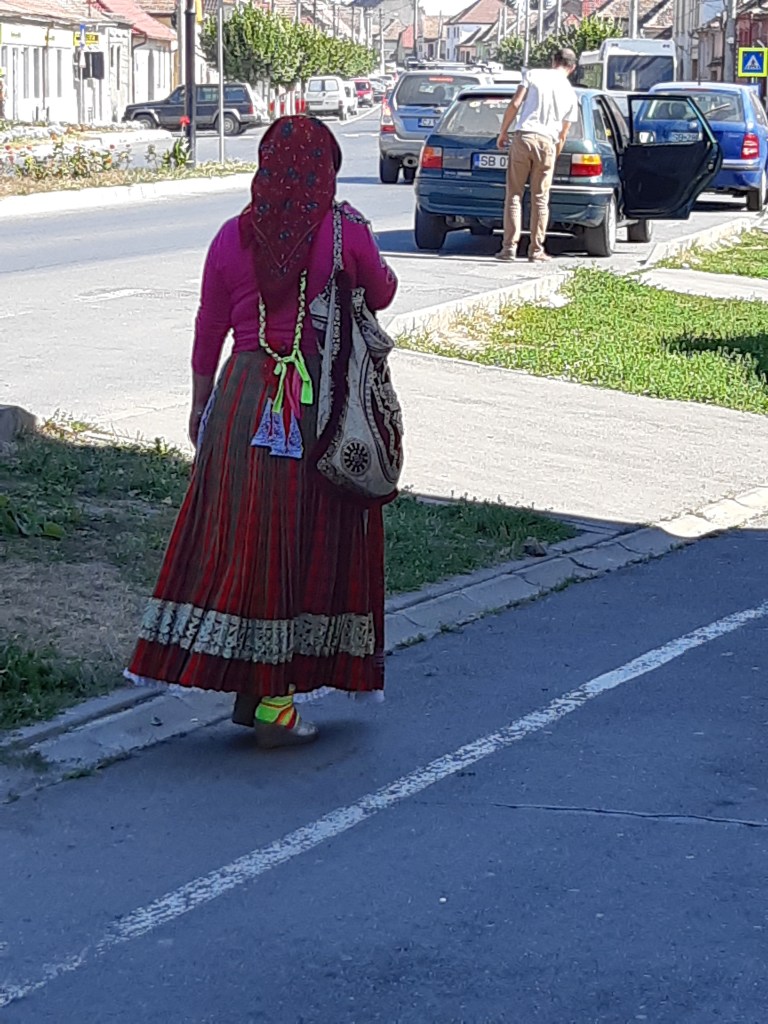
Gypsy woman. People in Europe thought these people came from Egypt, hence the term “gypsies”, but they originally came from Northern India. They are usually associated with Romania because Romania embraced them as immigrant workers, but there are gypsy communities all over Europe.
Common on the highways at this time of year with the harvest coming in
There are lots of roadside shrines
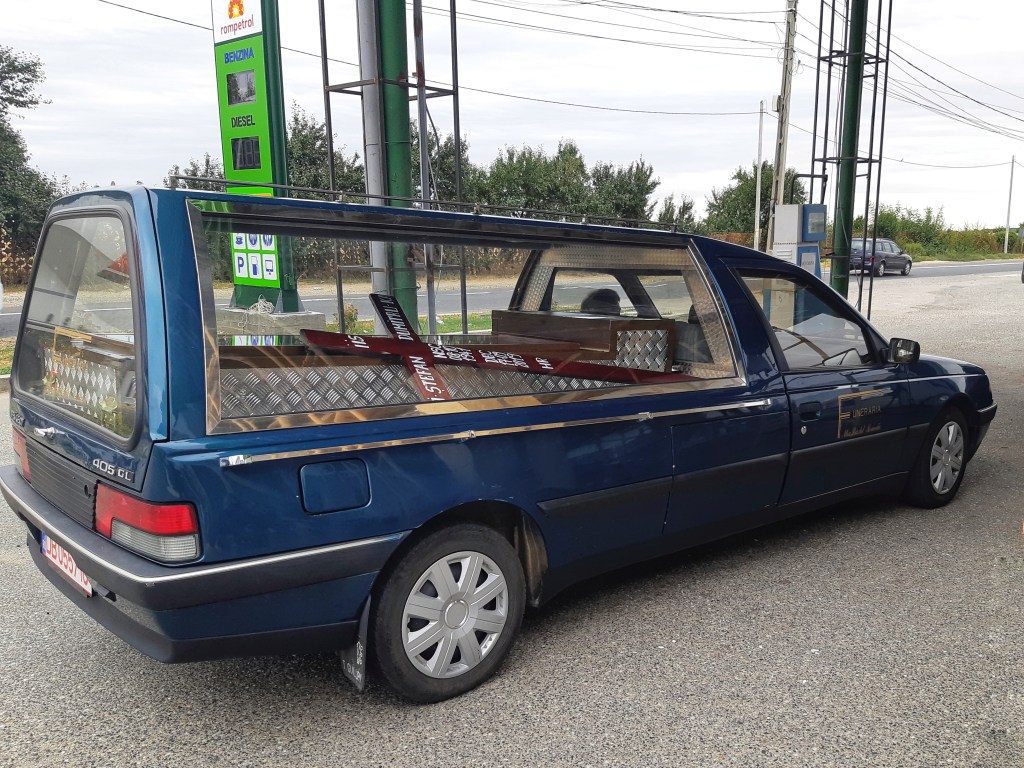
Another Hotel California in Gaesti…
Complete with hearse…
…and strange decor

I know I should have stopped at the roadside shrines to thank them for yesterdays wind, as the wind gods were no longer kind to us on our day riding to Bucharest, with 83 km of headwinds all the way on mostly busy roads with no shoulders and heavy traffic.

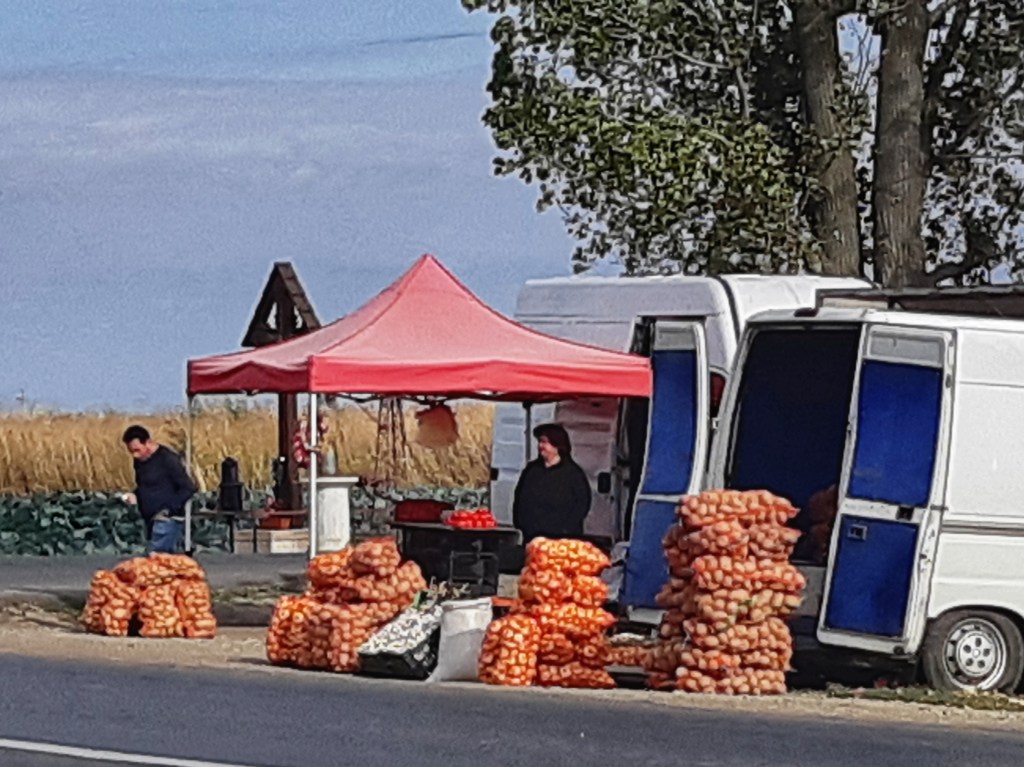
Harvest time. Potatoes and onions at a roadside stand.
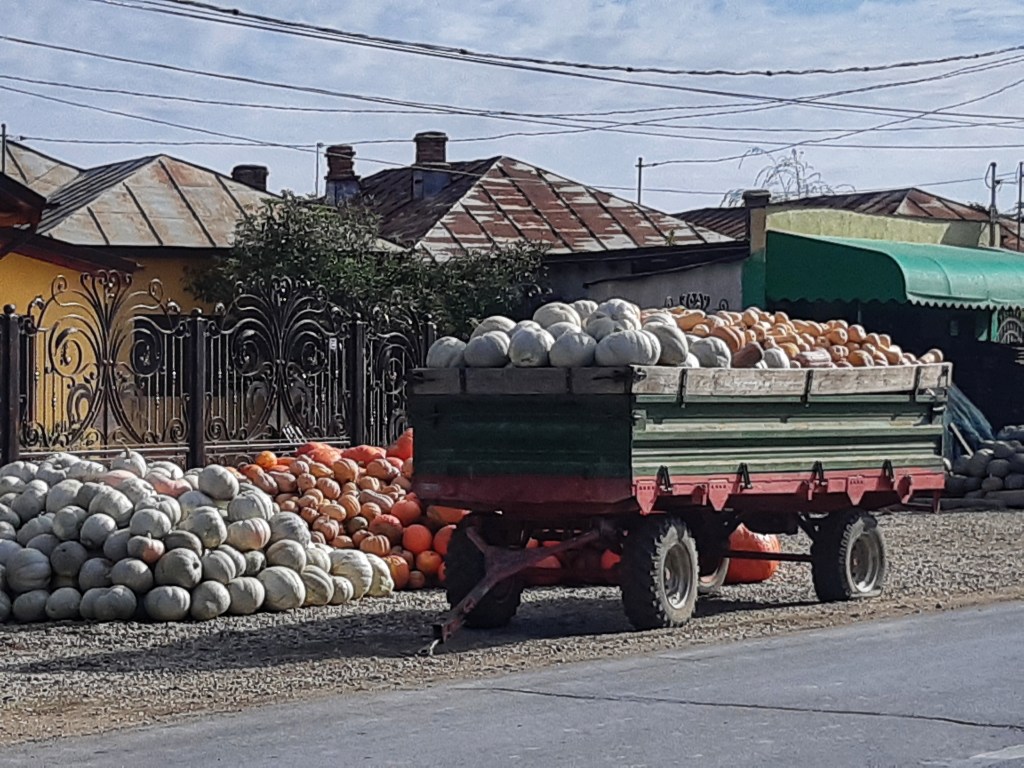
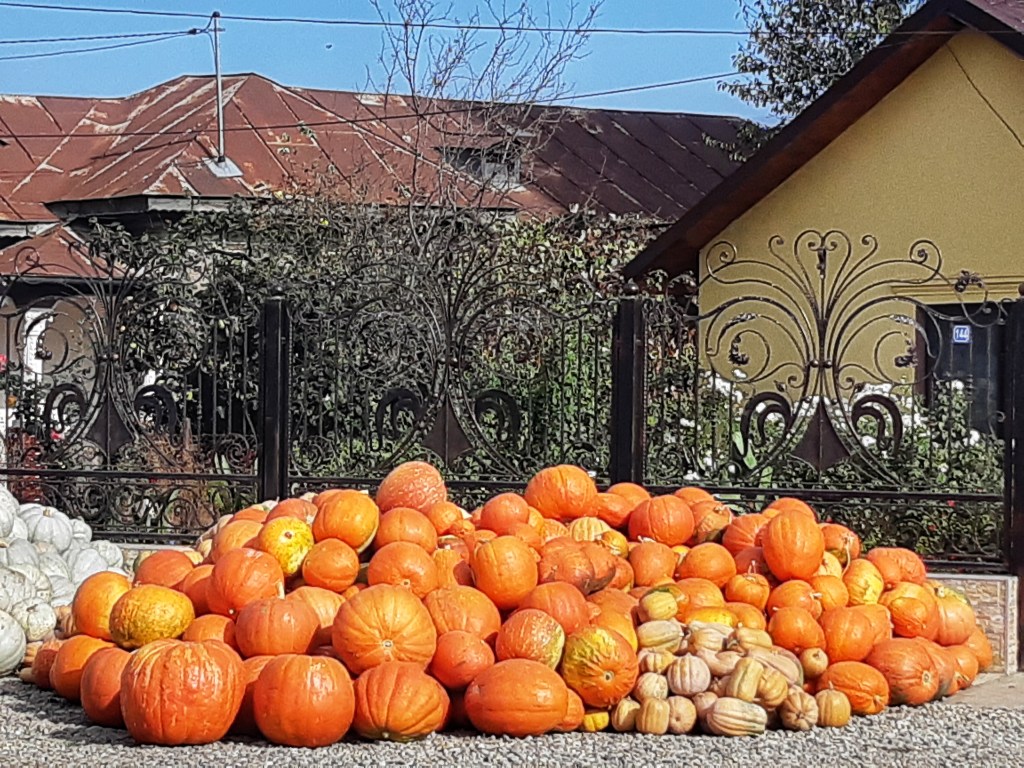
Squash for the winter. A couple of days later in Bucharest I bought a filo pastry stuffed with sweet mashed pumpkin. Delicious!
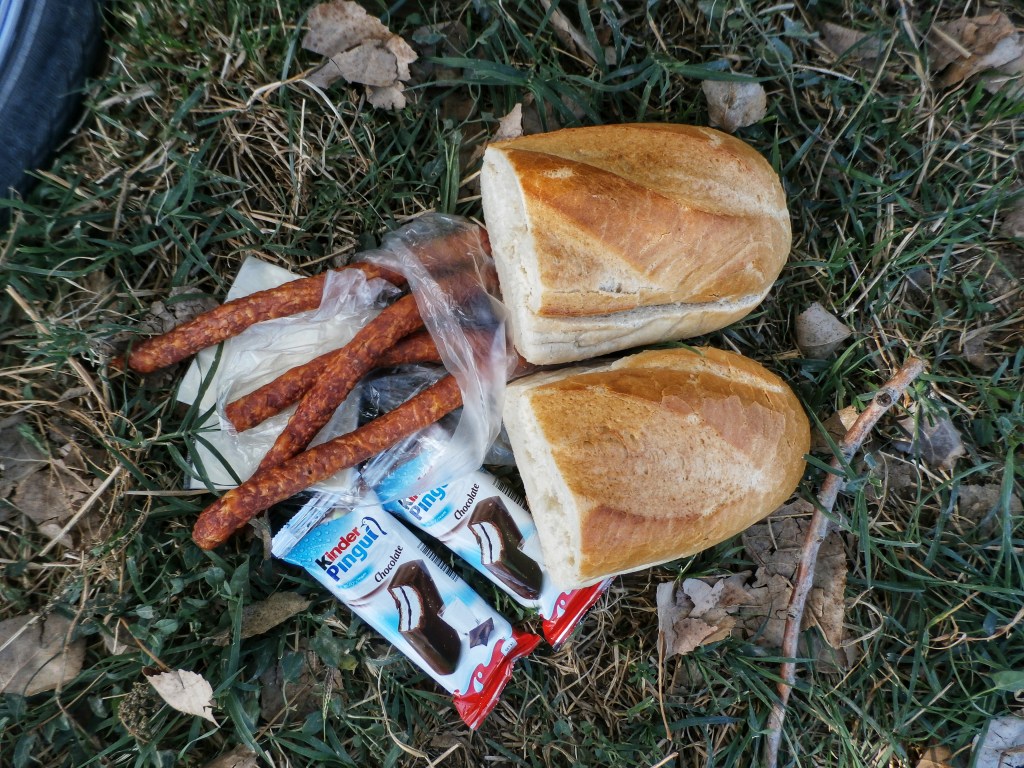
Random acts of kindness… We stopped in a small store to purchase some food for lunch (bread and sausage) and the lady refused payment and threw in 2 slices of cheese and 2 cookies. It seems the people in south Romania are much more friendly, as some of them even wave to us first as we ride by.
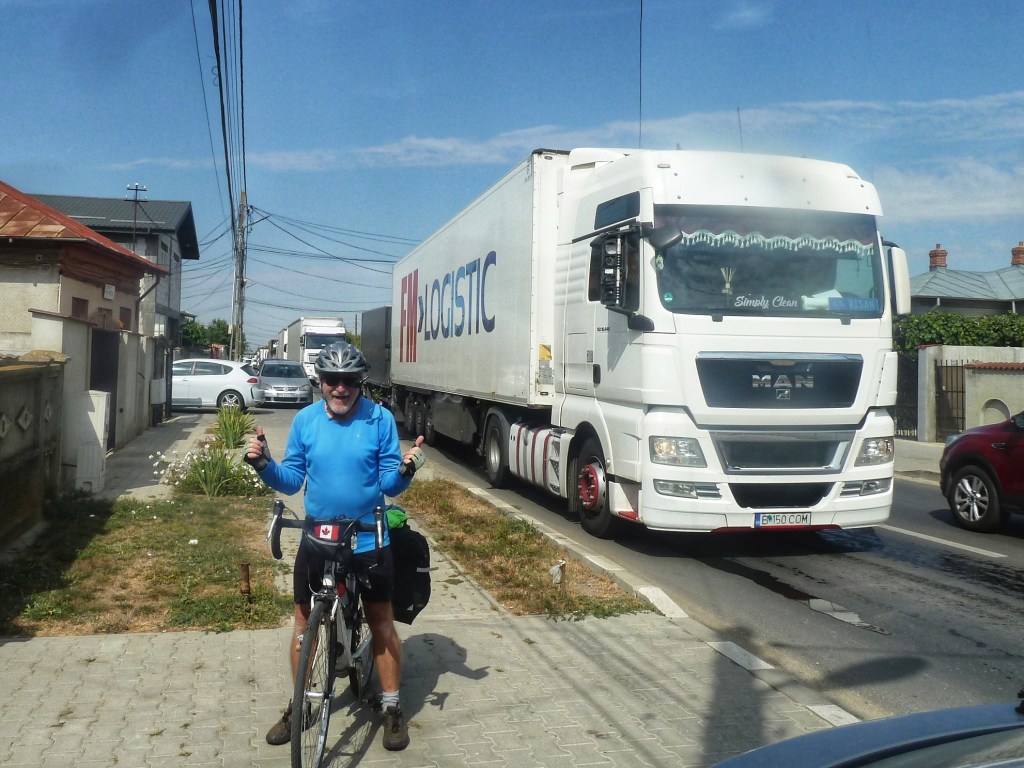
About 20k outside of Bucharest the traffic started stacking up. Prior to this sidewalk we had ridden a few kilometres in a ditch to get around the traffic, as the gap between the trucks and edge of the road was not big enough for our bikes.
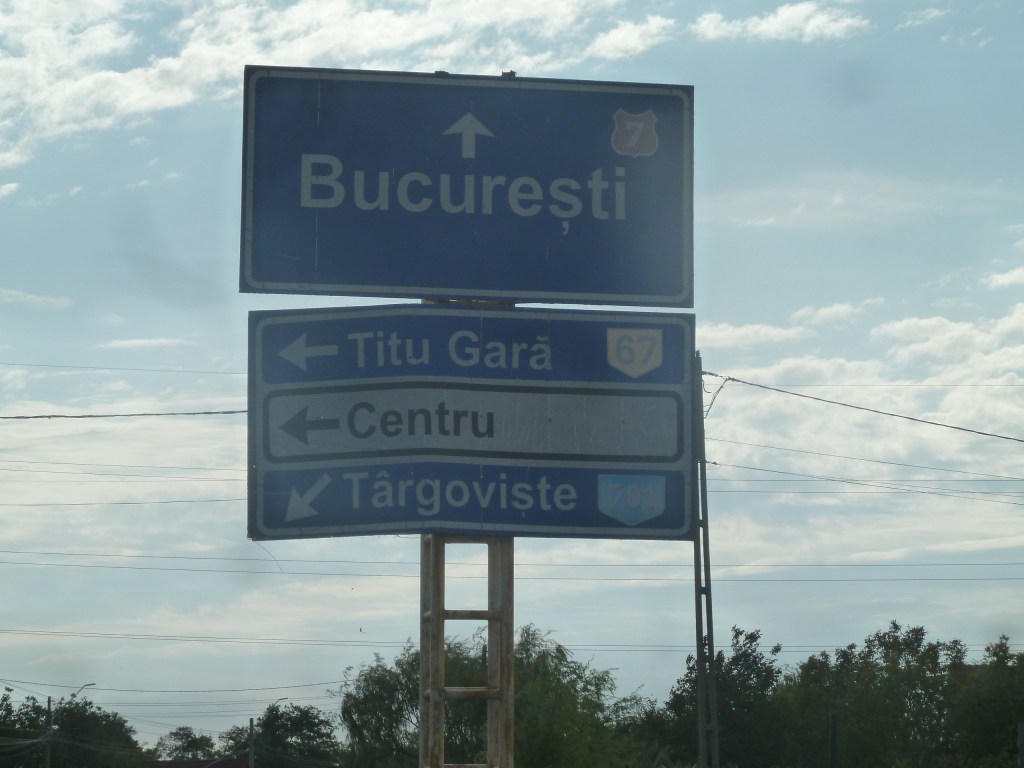
Finally!

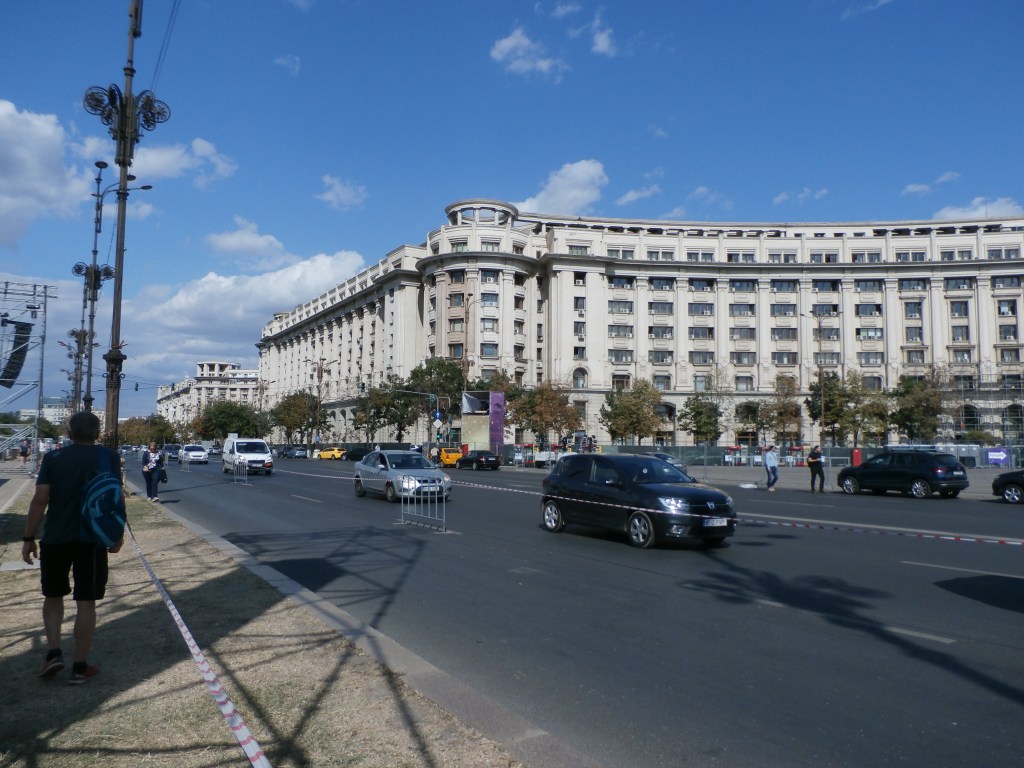
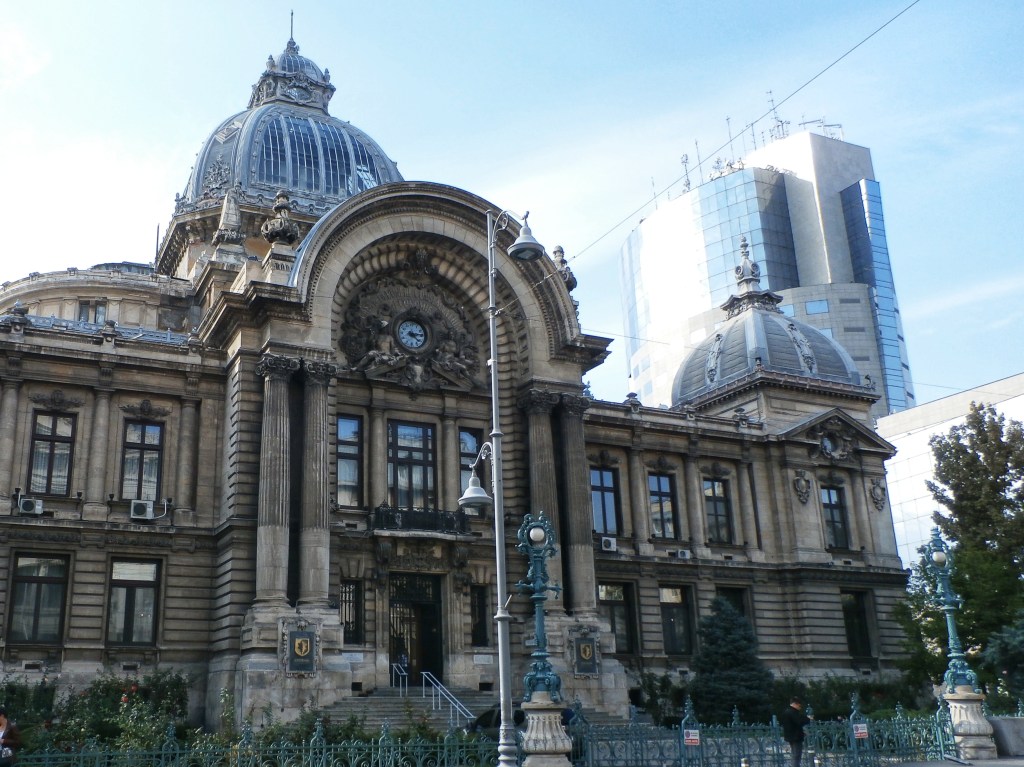
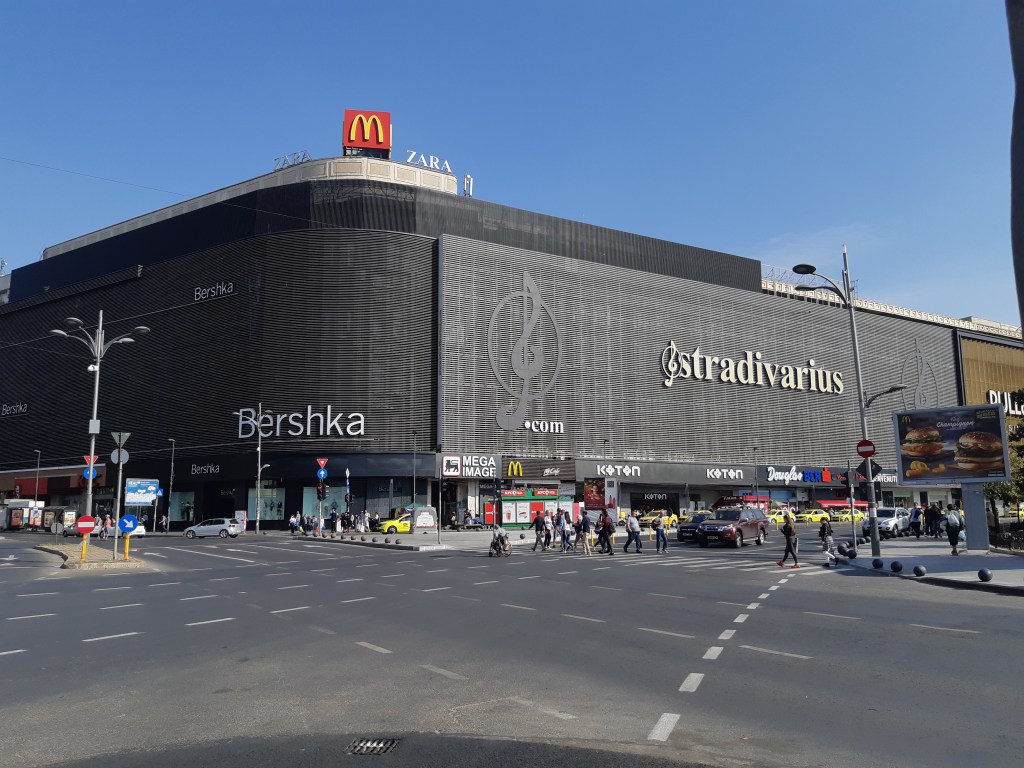
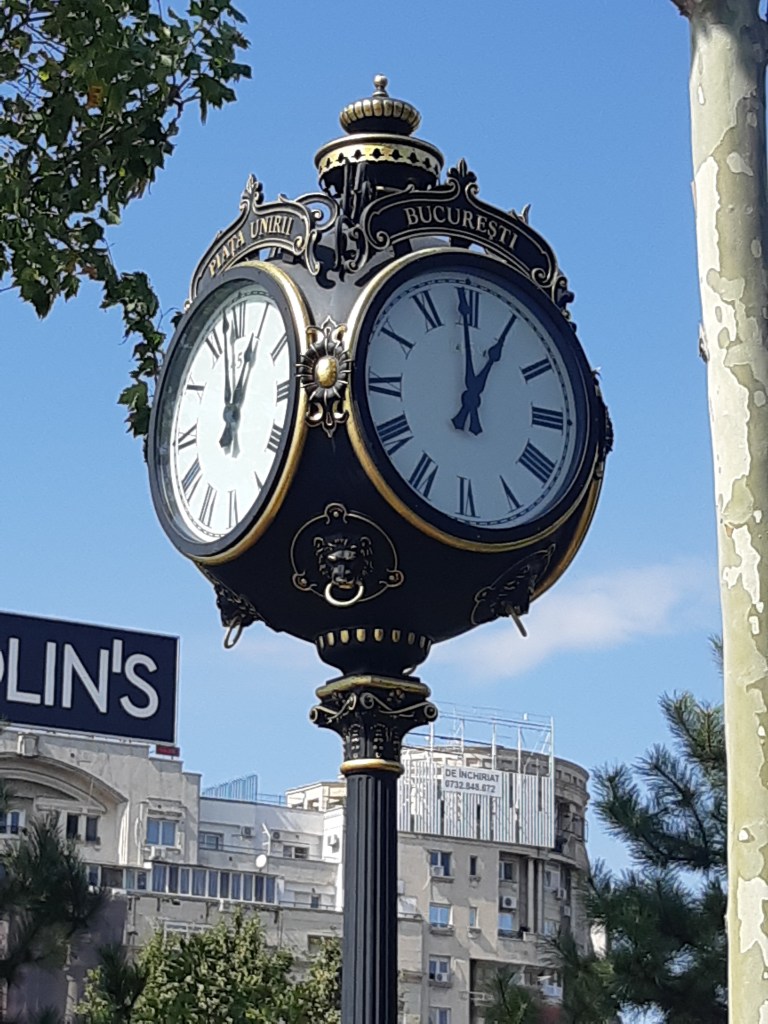
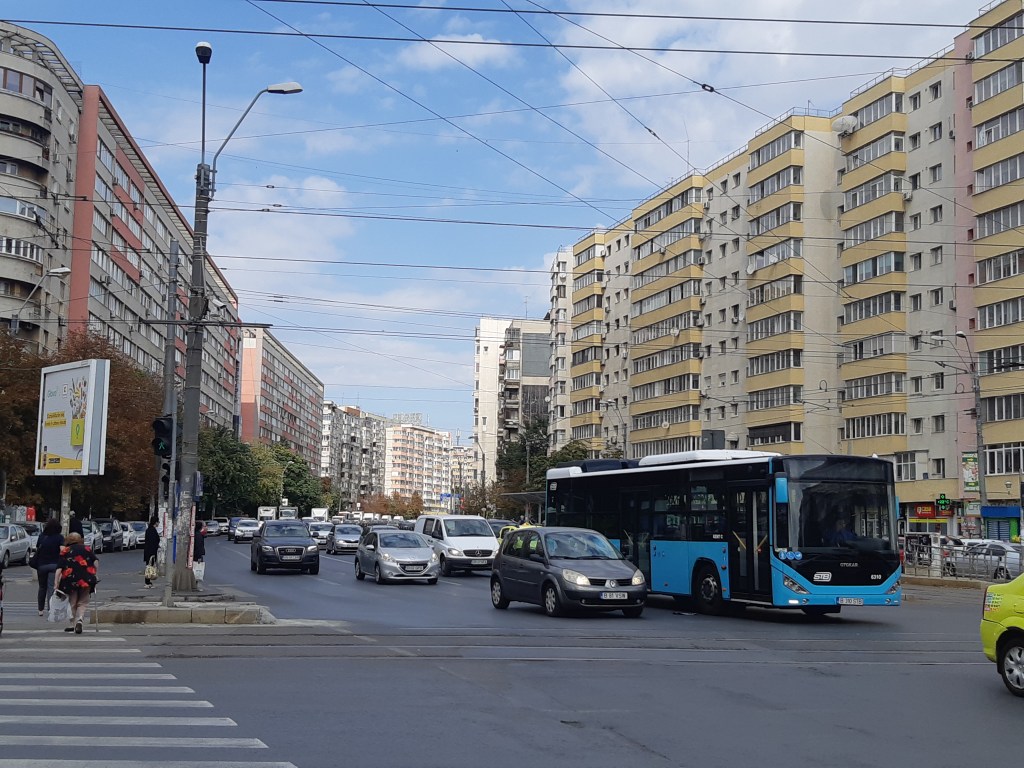
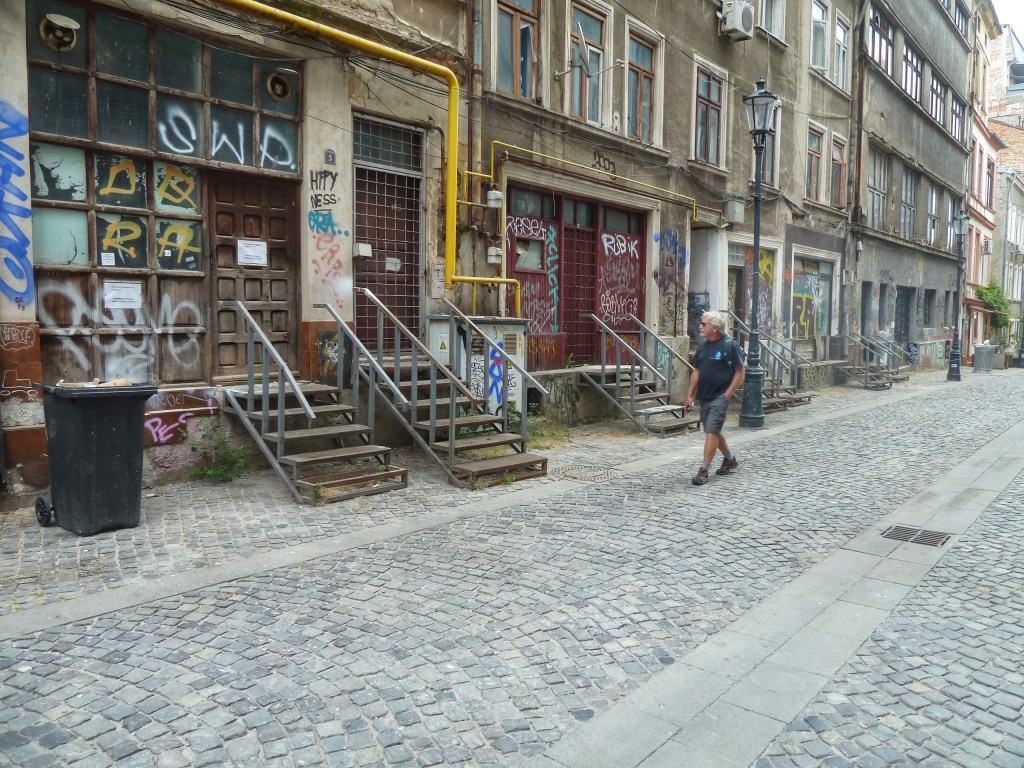
Bucharest is a bustling city of over 2 million people with an interesting mix of old and new. It is not hard to find an old church next to a steel and glass tower that both sit next to a communist style building. And although parts of the central area are run down, other parts have modern malls, fine restaurants, fast food outlets (and lots of patisseries!) and a plethora of trendy young people. The traffic is horrendous, cars double park and the few bicycle lanes are unused, but the city has character.
Lots of communist style buildings
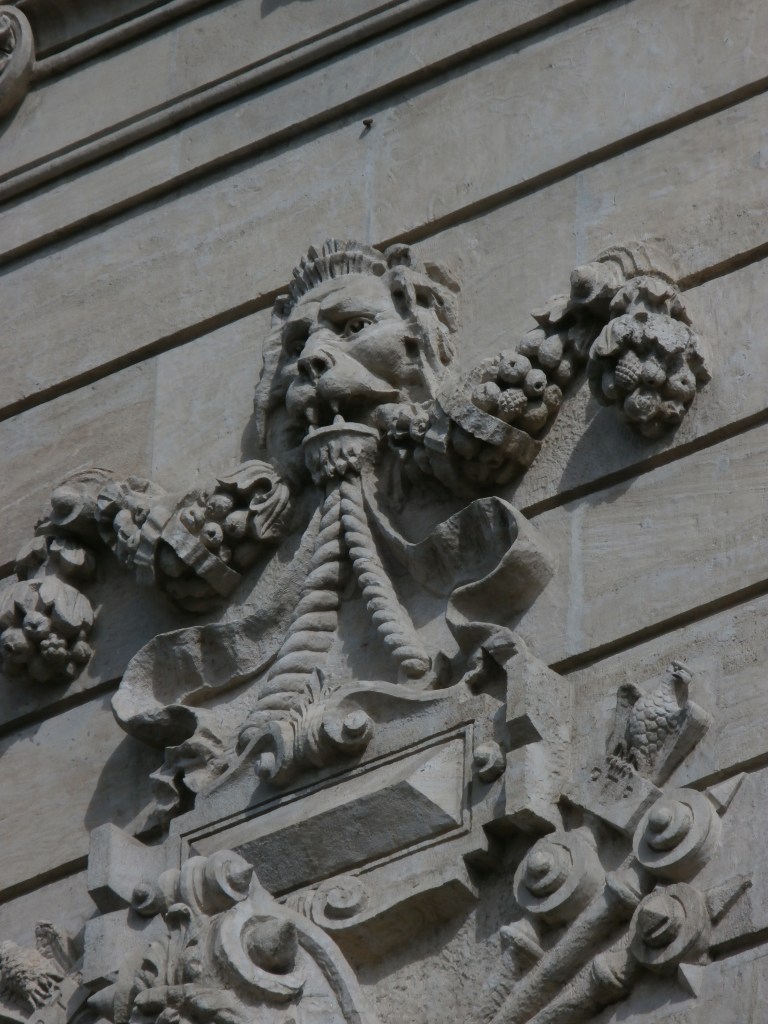
Many of the older buildings like this are banks
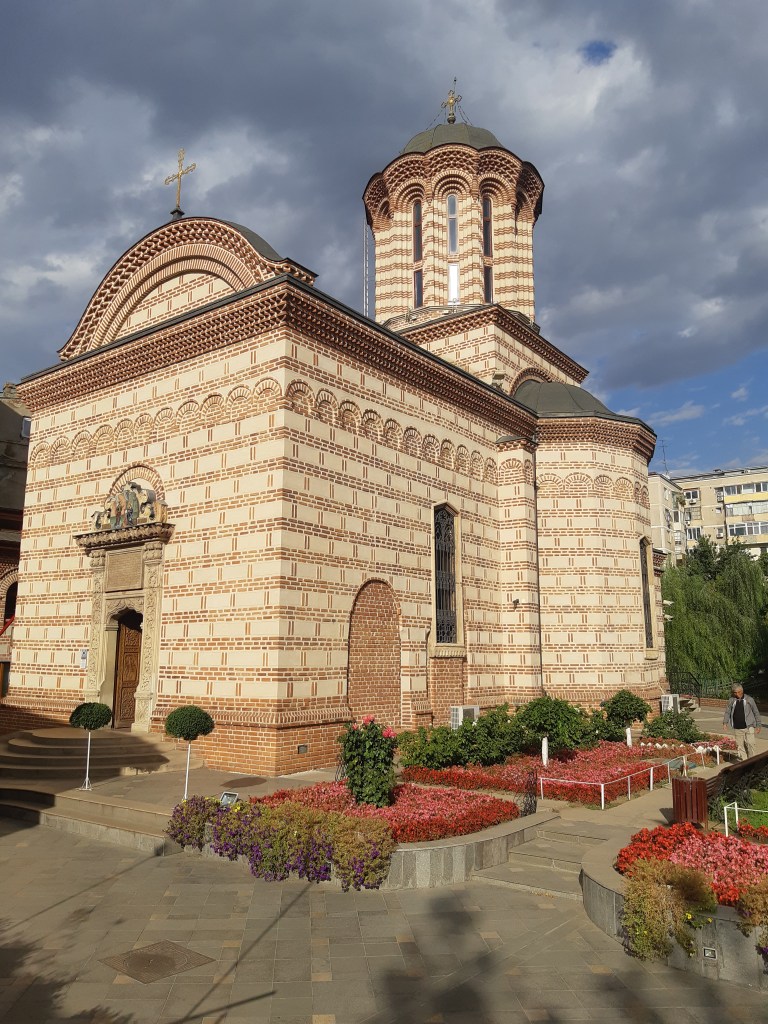
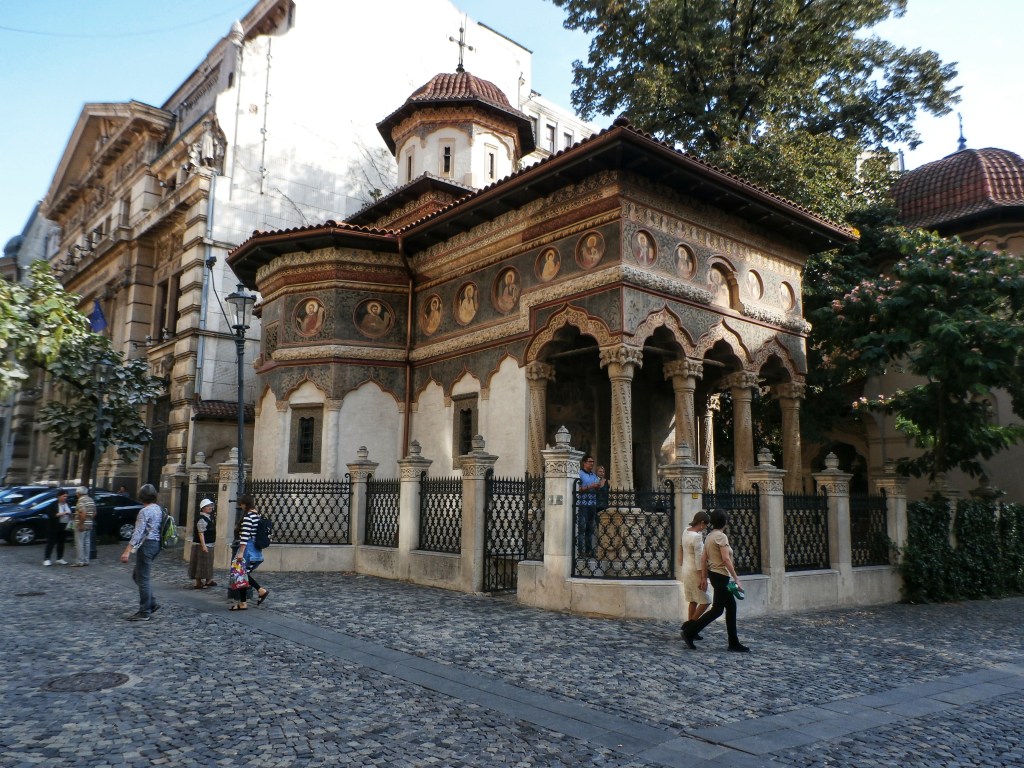
Oldest church in Bucharest – 1545. Given a facelift in 1917.
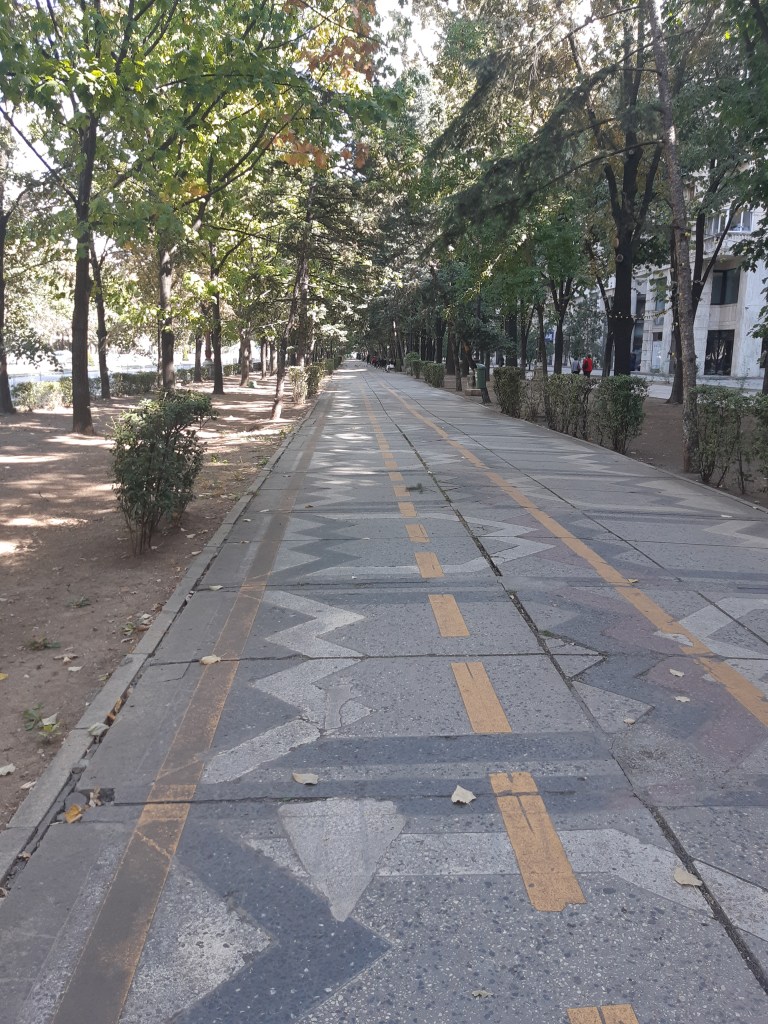
Bucharest bike lane – very few cyclists
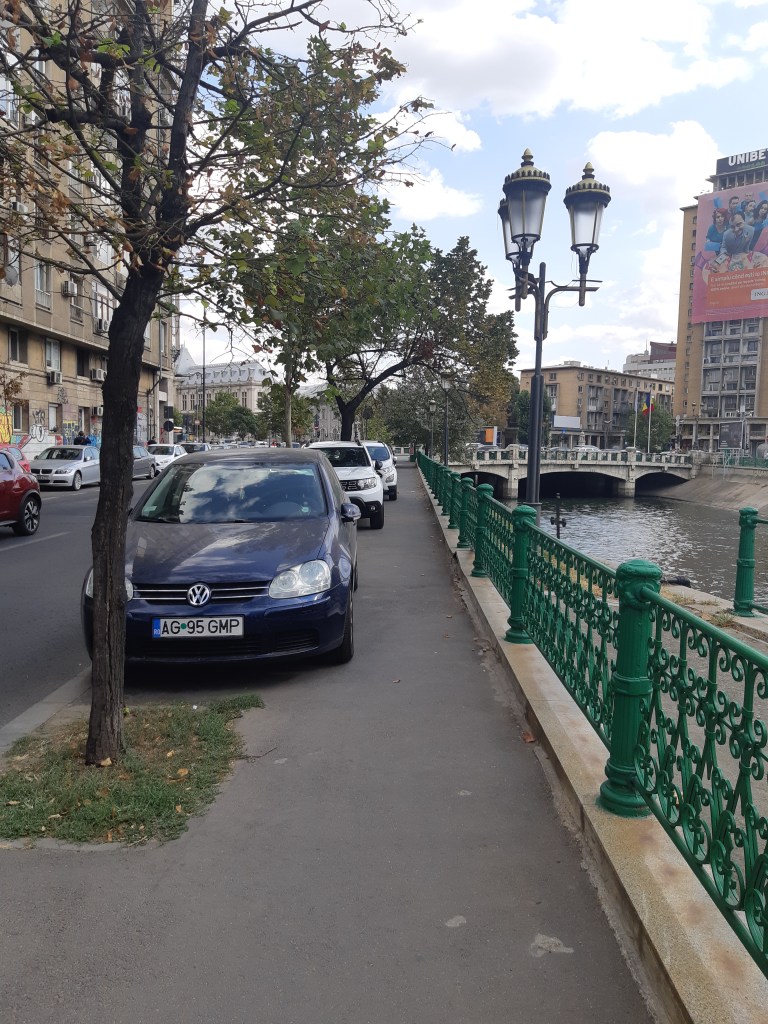
If you can’t find a place to park, park in the bike lane!
Streets and streets of apartment blocks
Church tucked away in a corner of the old town
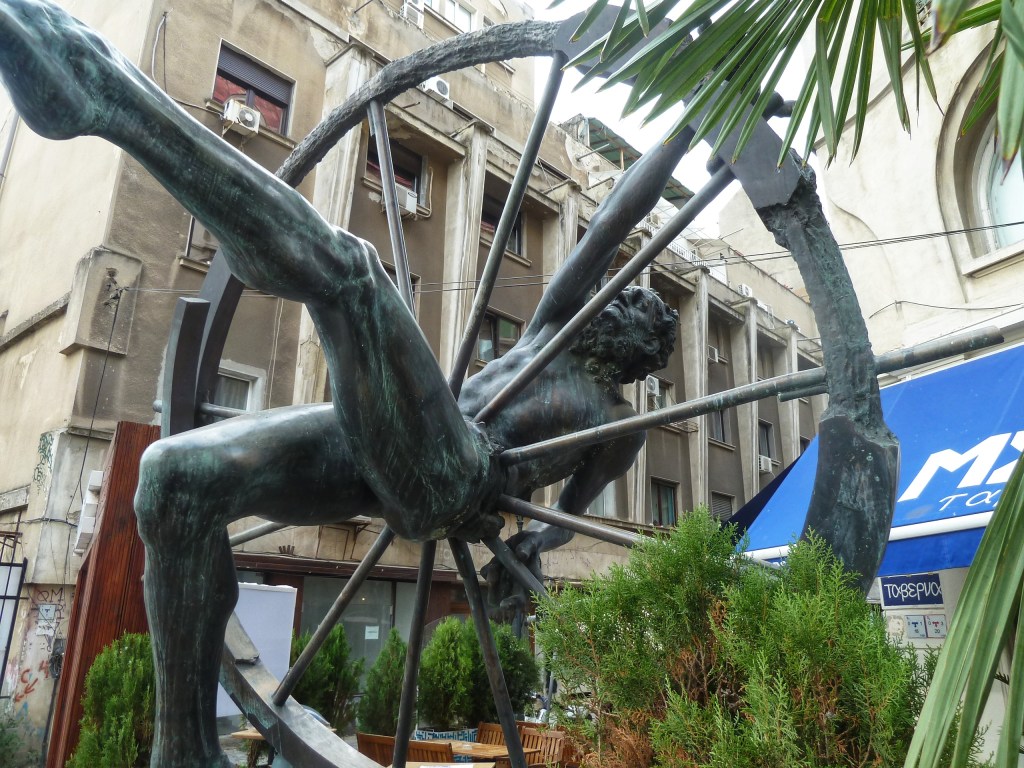
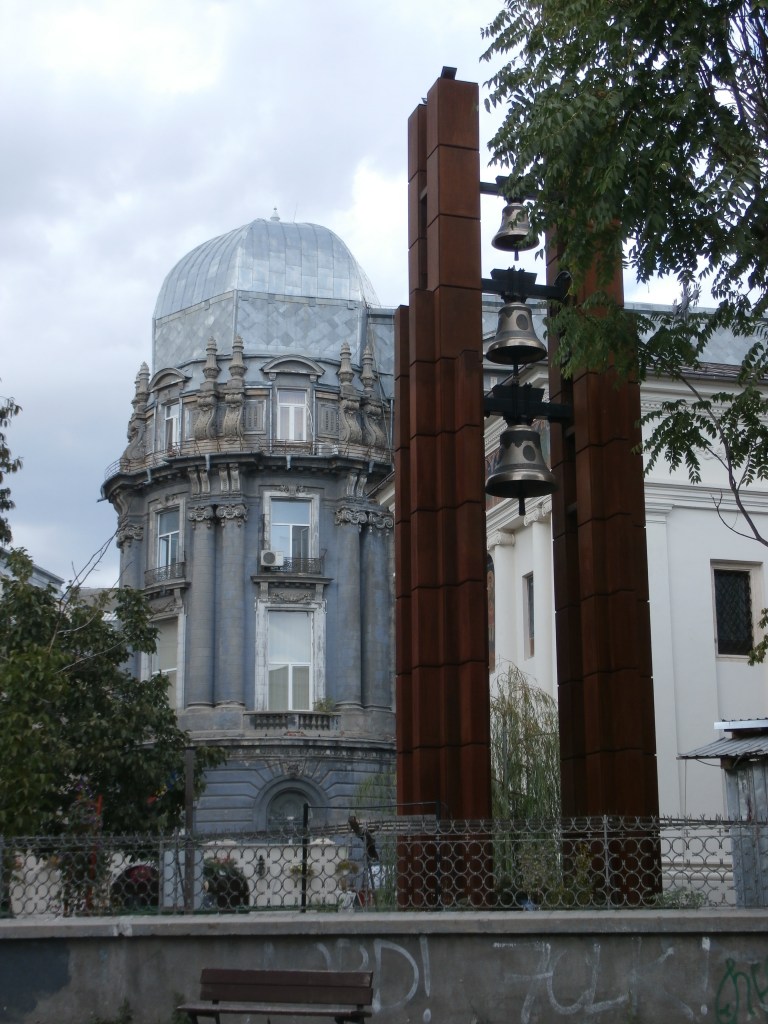
Ponder this sculpture. Any suggestions?
Just a couple of blocks away from the revamped old town
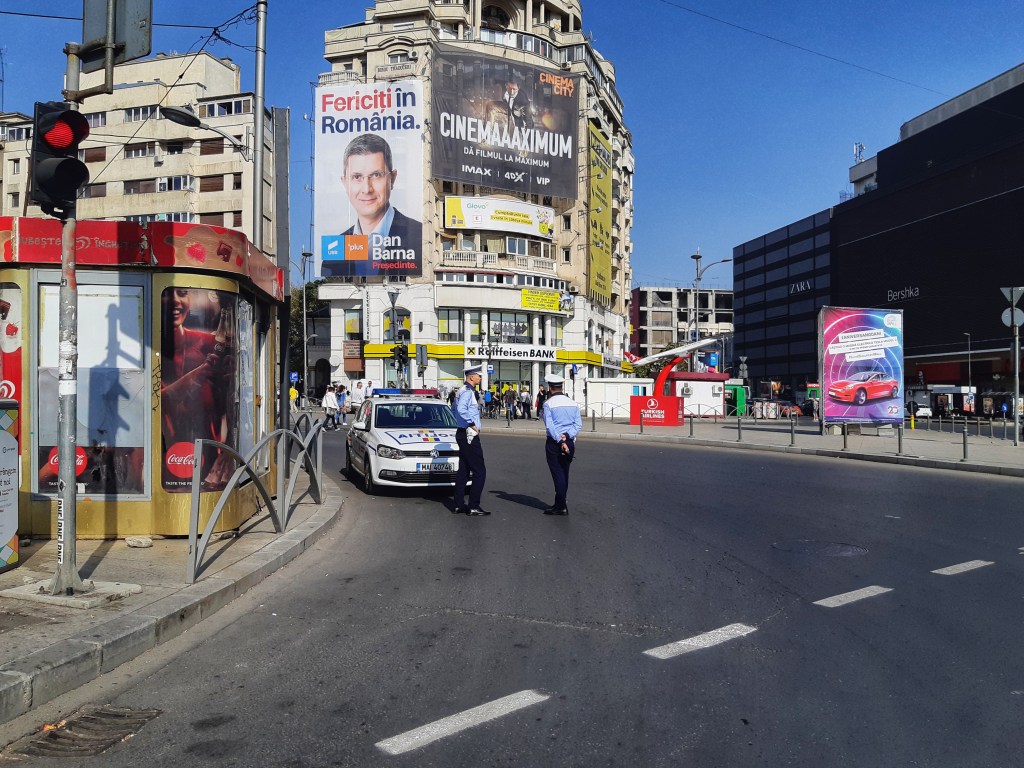
Election posters everywhere. There is a strong police presence in the central area.
Old and new
Friend of Dracula?
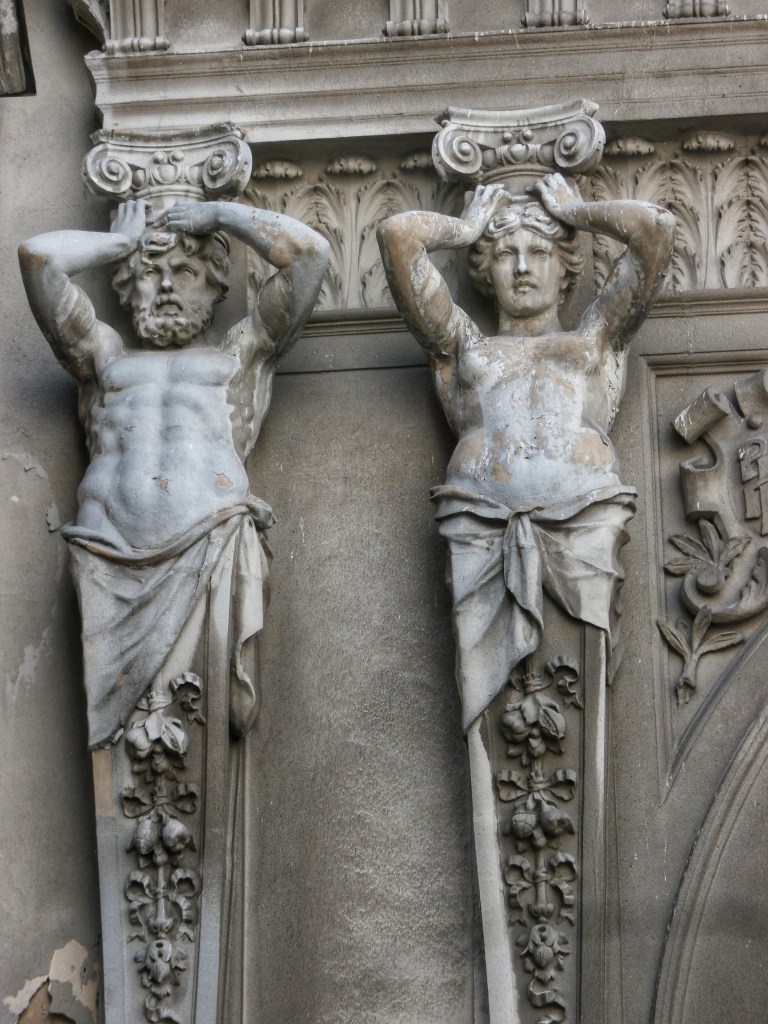
In Romania men and women share the load of holding up the building!
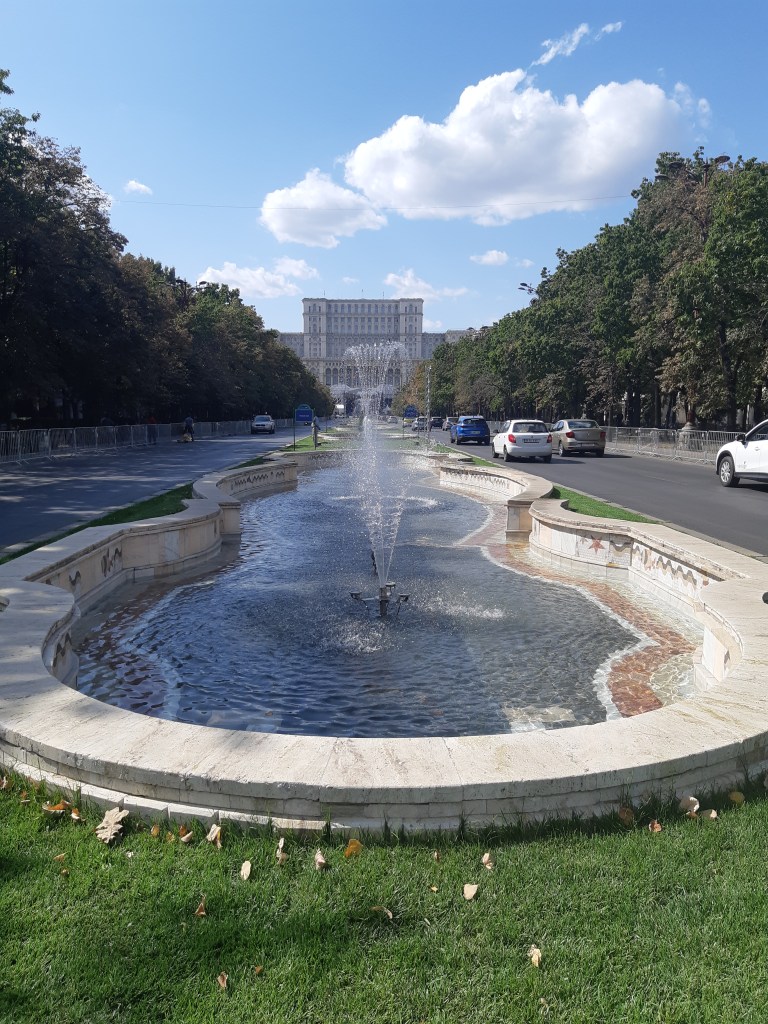
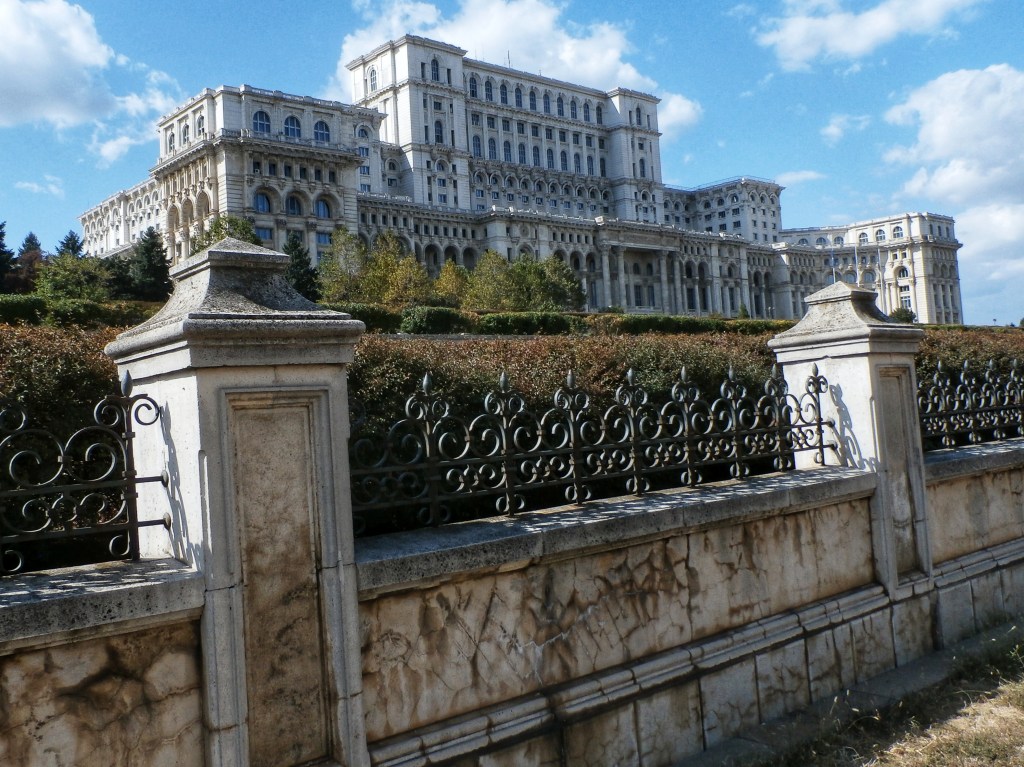
We are staying in an Airbnb on the side of this boulevard which stretches for 1km. It is super wide and lined with fountains the entire way. At the end is the seat of the Romanian government.
The administrative building is the world’s largest civilian administration building, the world’s most expensive administrative building valued at 30 billion Euros, and the world’s heaviest building – it is still sinking at a rate of 6mm per year. It’s architectural style is “totalitarian, neoclassical, with socialist realism in mind” i.e. communist.
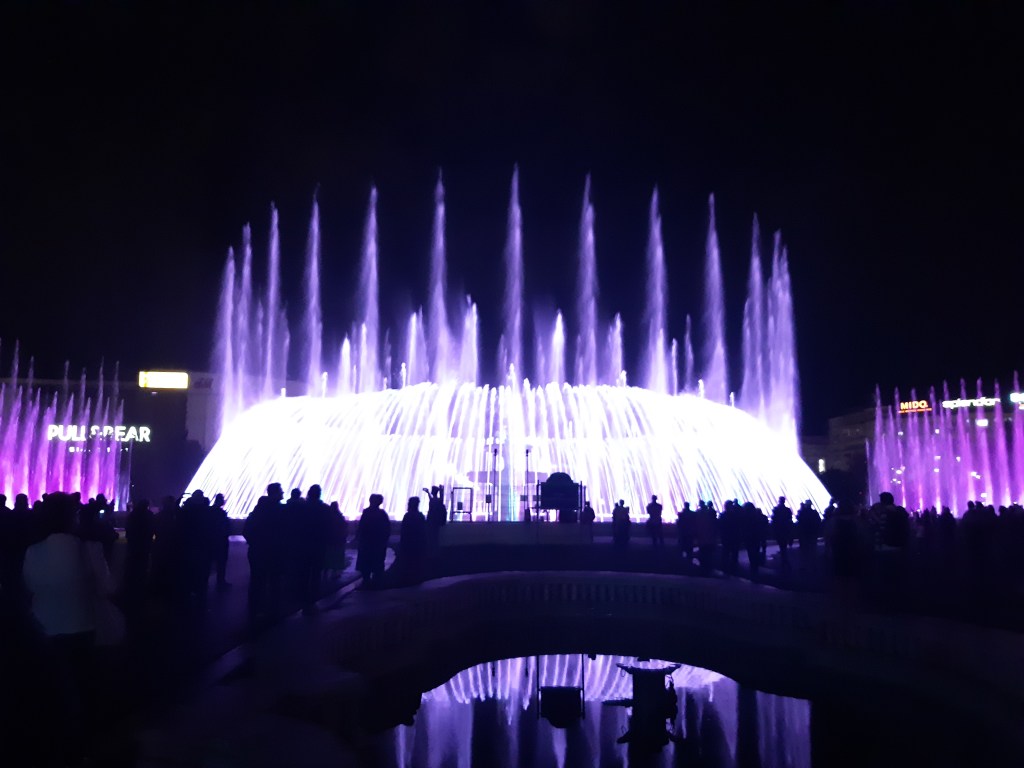
At the other end of the boulevard is a series of fountains that “dance” to music for an hour every night. Everything from rock, “Ke Sera”, and Swan Lake!
Design a site like this with WordPress.com
Get started