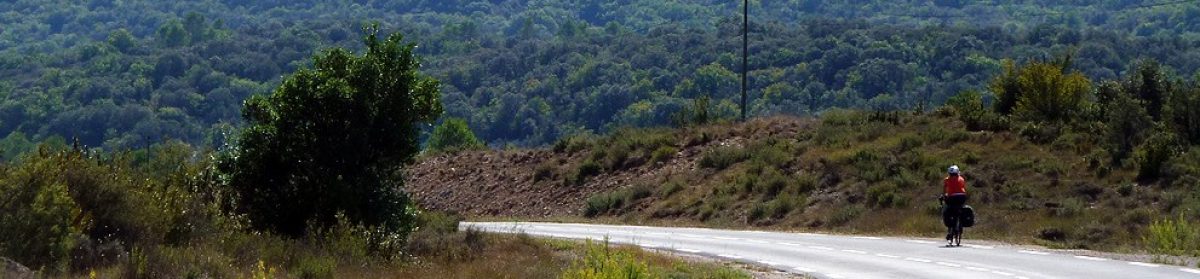
A fairly flat ride until the final 10k to the Hungarian border where a 3 km 10-15% climb was a challenge. The area near the border is popular with hikers as the elevation is about 500 metres with many hiking trails. And one crazy driver who forced me off the road while jumping the queue in a string of oncoming cars. Maybe he did not like the Canadian flag on my handlebar bag? But the final 25k into Sarospatak was a joy on a dedicated cycle path.
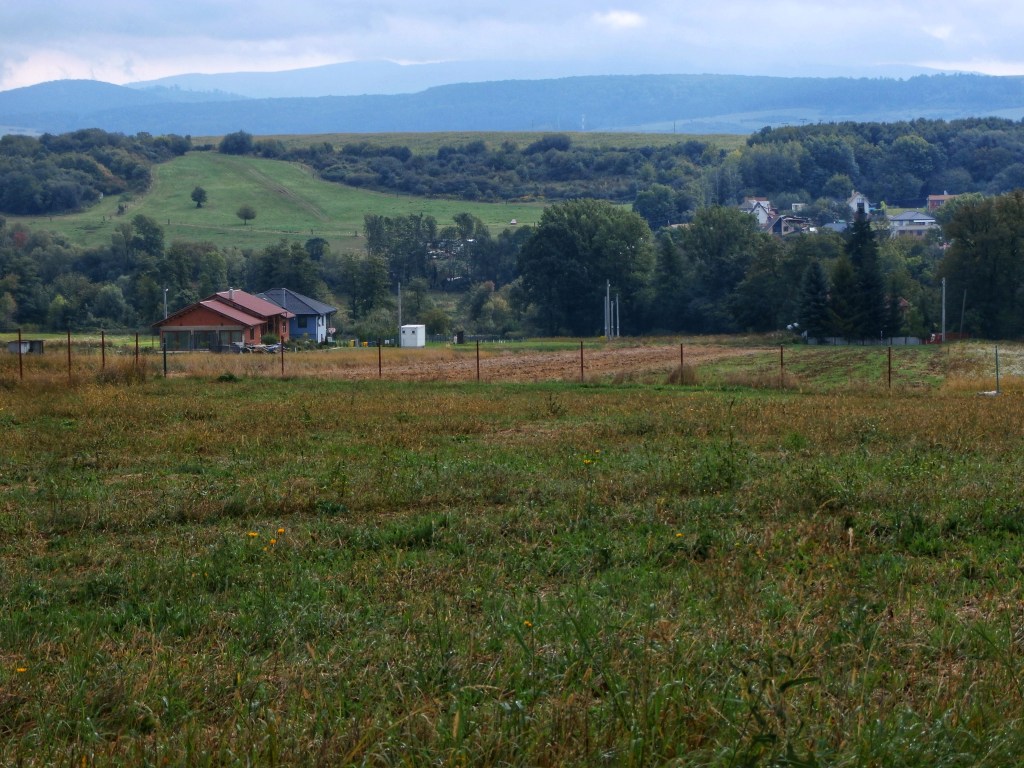
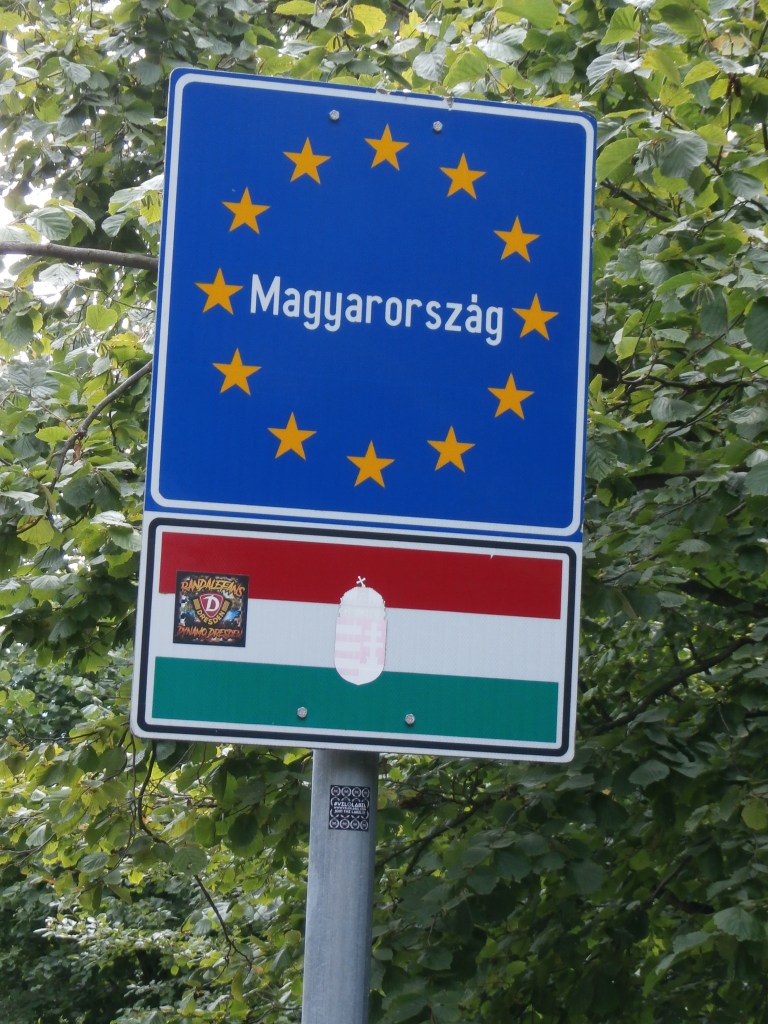
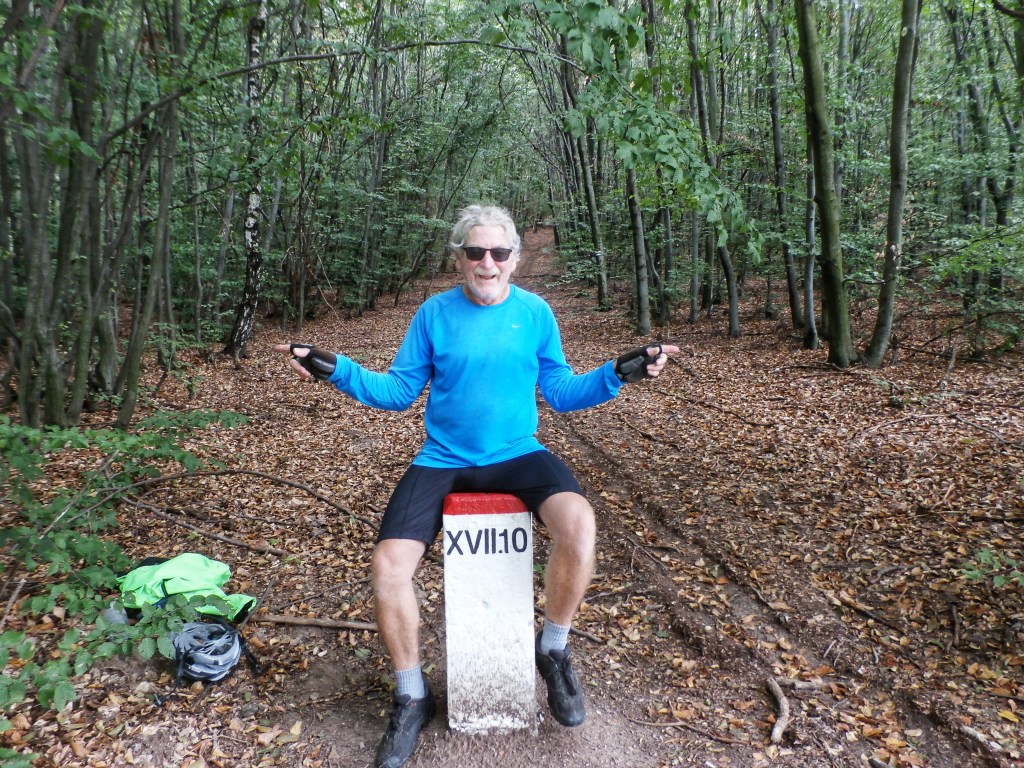
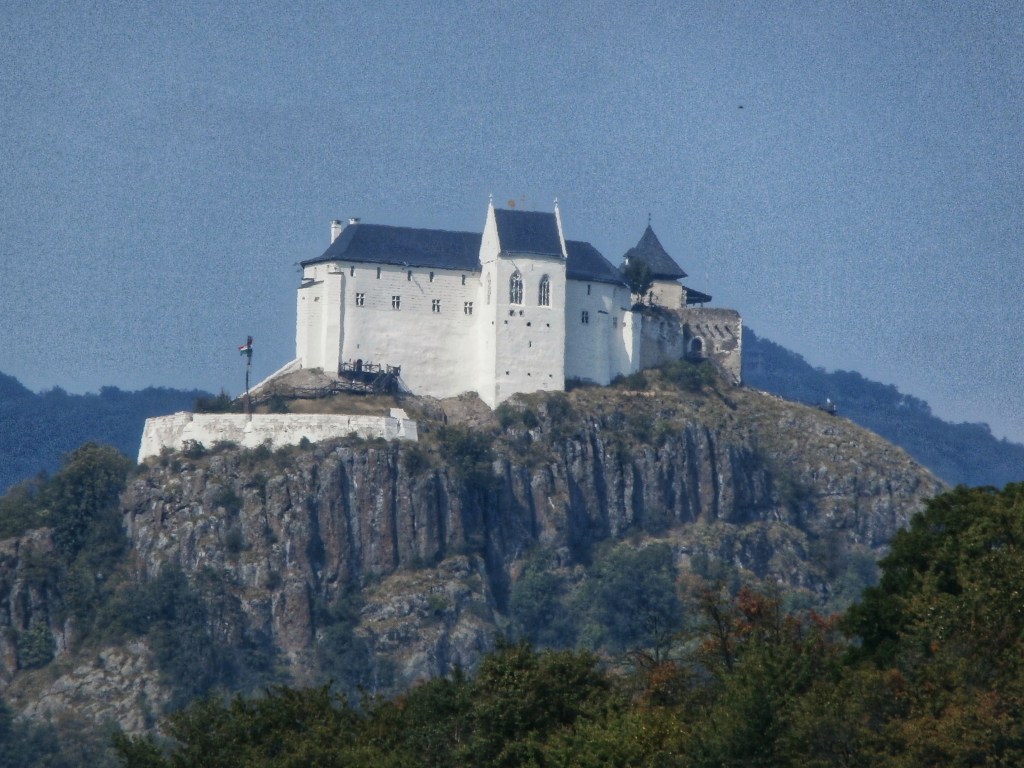
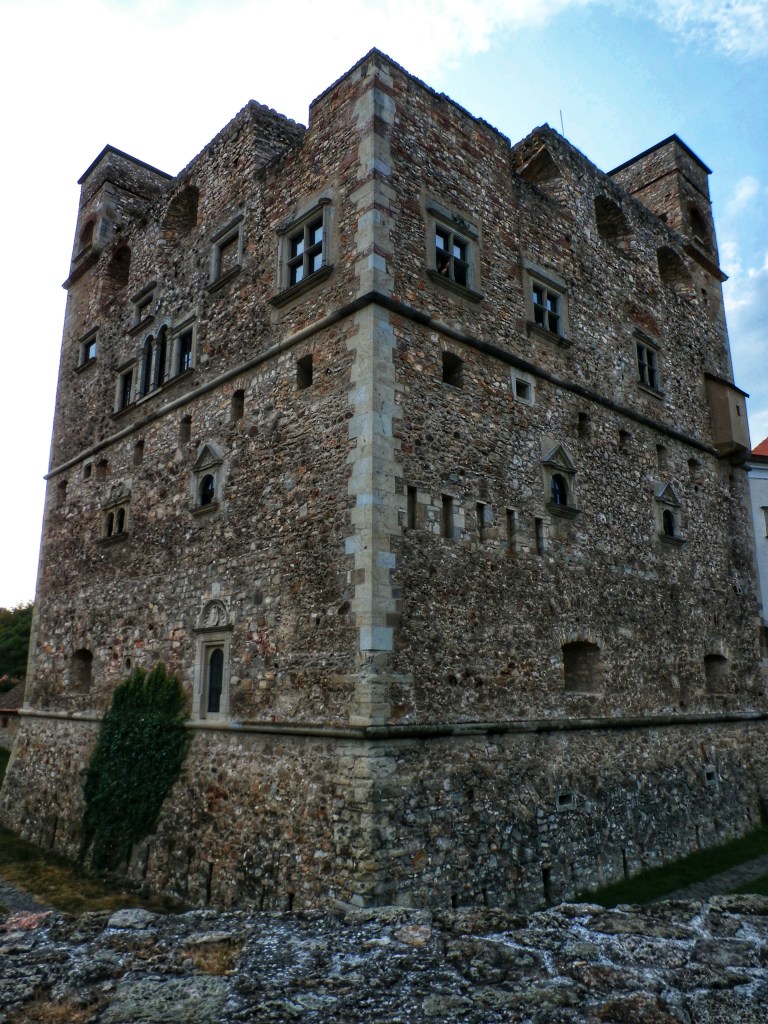
Slovakia countrysideWelcome to Hungary! One foot in Slovakia and one in HungaryHungary, like Slovakia, has a lot of castles
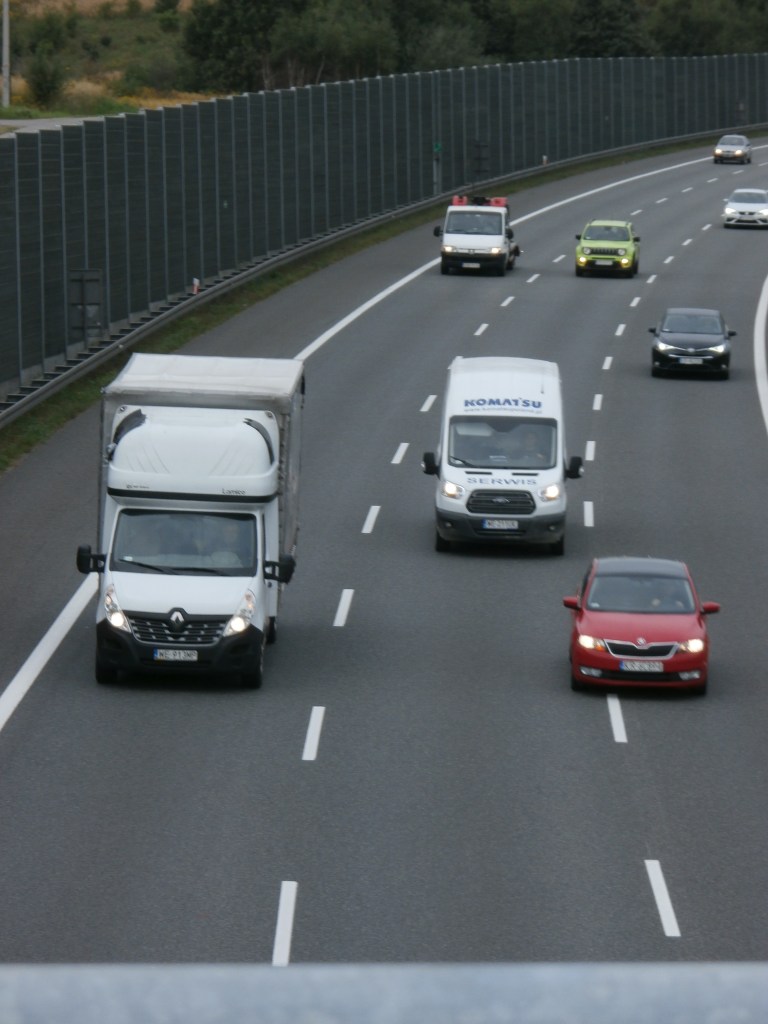
Is it still white line fever? Cycling out of Nyiregyhaza we ended up on a really busy road with no shoulder and no white line. And I mean really busy. And then it started to rain, as in buckets. Big trucks whizzing by throwing up water. At one point a semi was rushing up behind me and I was facing a stream of oncoming cars. I hit the gravel shoulder. After he passed I tried to climb the 3 inch edge to get back on the pavement. I failed. Me and the bike slid across the wet pavement toward the oncoming lane. Not good. Really not good.
And so? People stopped to ask if I was OK as I crawled off the road. At least that is what I thought they were saying in Hungarian. Of course they had to stop as I had done a yard sale and so what they could have been saying was “stupid tourist, what are you doing riding in this pissing rain on a busy highway with no shoulders. If you would have gotten killed it would have served you bloody right. Idiot.” We will never know, but we do know two things. One, we put a bit more blood on the saddle and two, they would have been right.
Hungarian Drivers
There is a word in Hungarian for the drivers here. Not a direct translation but the gist of it in English is ‘assholes’. Now not all of them are, of course, just most of them. It started within one kilometer of the border. Dennis was starting down a hill and one oncoming car decided to pass another and of course to do this he had to use Dennis’ lane. Nothing like someone coming straight at you at 120 km/hr. Dennis did the logical thing and got off the road. “Hungarian drivers are assholes”. “Now Dennis”, I replied, “it is a little early to say all Hungarian drivers are assholes.” Well we have cycled through the country now and I must say Dennis pretty well nailed it in the first few minutes. Very prescient.
There is logic to their driving, twisted though it may be. They work on the 4 second rule. If you are only going to slow them down for 4 seconds or less that is OK. But over 4 seconds and the amount of risk they are prepared to expose you to is equal to the amount of time delayed in seconds. So, for example, if they think you could slow them down by 5 seconds they are prepared to accept a 5% chance of killing you to avoid it. To avoid a potential 20 second delay they are prepared to accept a 20% chance of killing you. So what happens if they feel you could delay them by 100 seconds. Well then they will kill you by attempting to pass when blatantly unsafe to do so. Ha, you say, your just making this up, why aren’t there dead cyclists all over Hungary. Well, three reasons.
1. There are a lot of good cycle paths getting you in and out of the cities, some starting 20 km out. This is money spent by the government to avoid building up the body count.
2. There are not very many cyclists.
3. And this is the big one, cyclists quickly understand the risk and cycle accordingly. When a car comes up behind you, you know he is going to pass if there are no oncoming cars. If there is an oncoming car just going by he will slow down until that car has finished going by. In all other circumstances he is going to pass. If there is a semi truck coming at you carrying a big load and hogging more than his lane followed by a stream of other cars, the guy behind is going to pass you even though he doesn’t have the room. And he isn’t going to hit the semi. You get off the road.
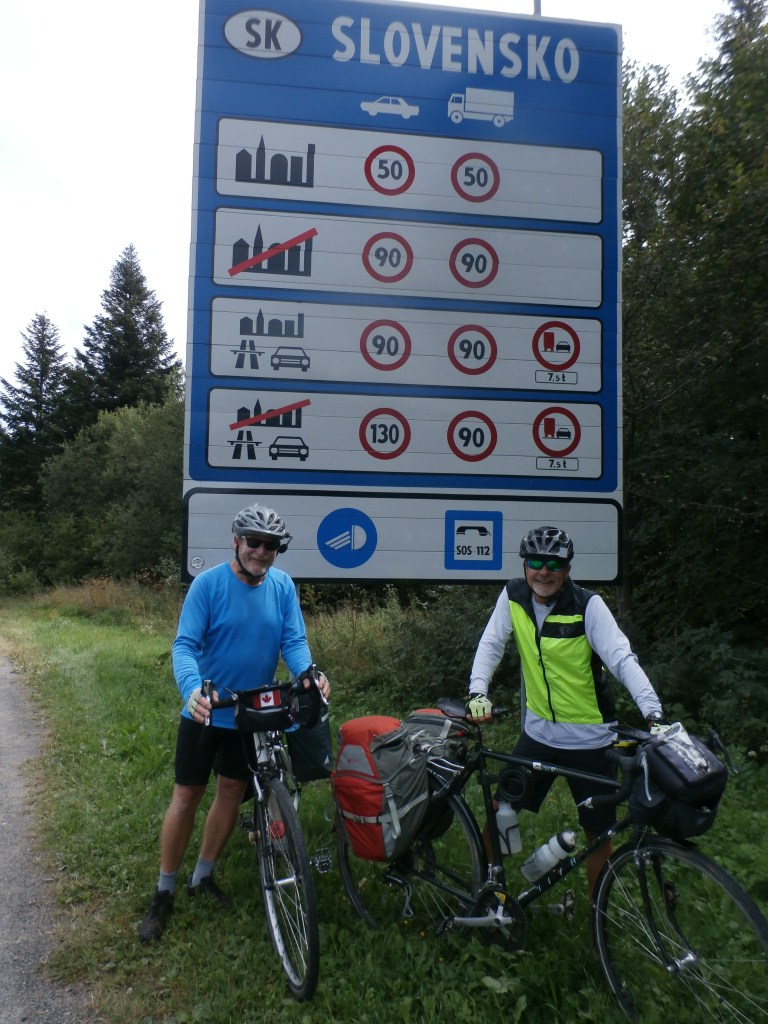
Today we left Poland and into Slovakia, but we will only be in Slovakia for one day crossing the eastern part of the country.
Slovakia is a small country with a population of 5.4 million and area of 49,000 sq km, compared to Poland with population of 38 million and area of 300,000 sq km. One thing we immediately noticed was the lack of houses – as soon as we crossed the border there was a distinct lack of houses and stores. Whereas in Poland it seemed to be town after town, in rural Slovakia we had to pedal 25km before we could find a town with a grocery store.
We arrived in Presov on a Saturday afternoon and were surprised to find almost everything closed except for a few bars and restaurants. It seems the Slovakians take their time off seriously, except for the big church on the town square which was packed.
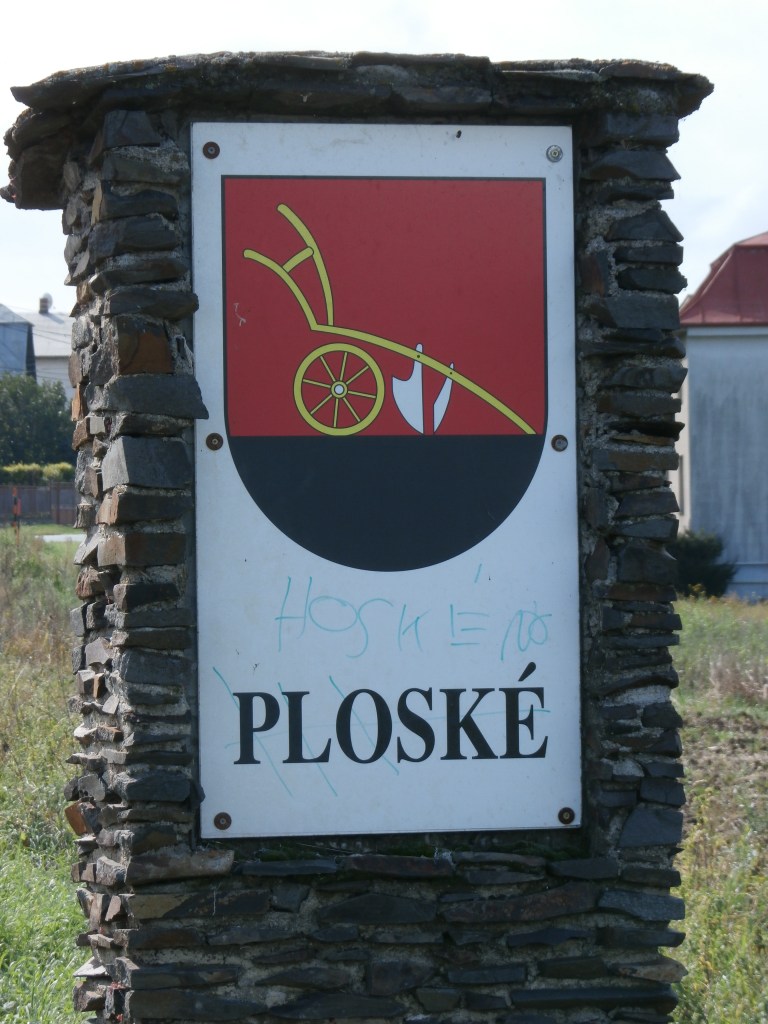
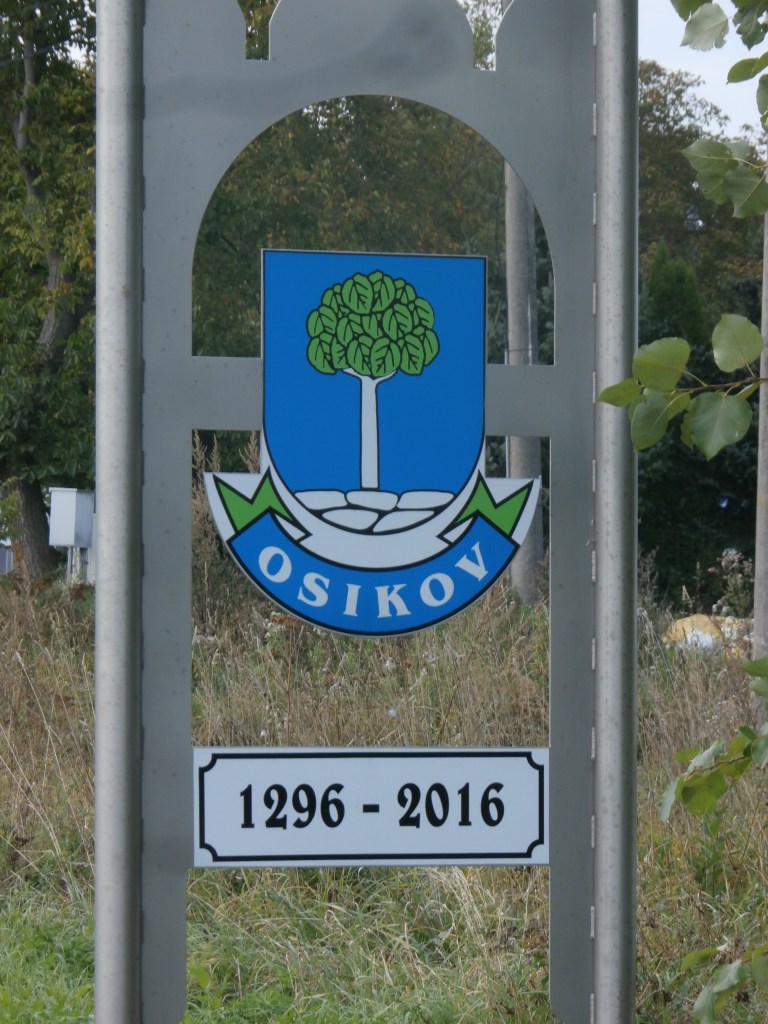
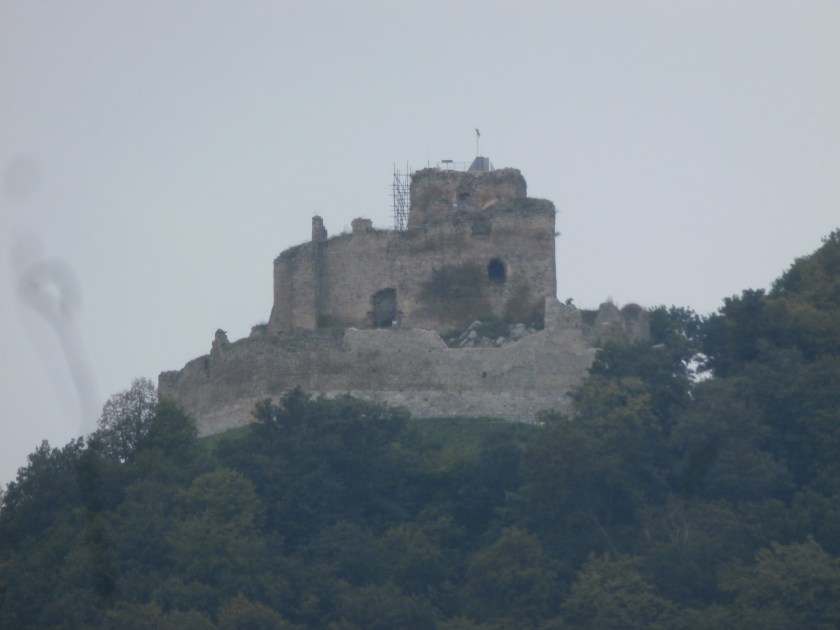
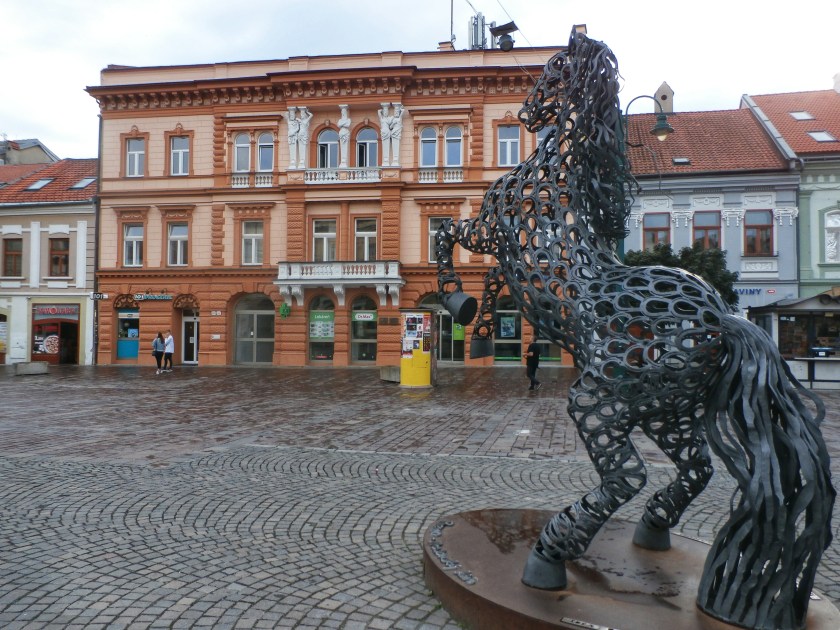
A local road cyclist took this picture for usEach town has its own coat of armsRemains of a 12th century castle. Slovakia has the highest number of castles per capita in the world.Presov on a Saturday afternoon
As we leave Poland it is time to reflect back. What is the essence of this country? Well… its Churches, Vodka and Green Acres. That about wraps it.
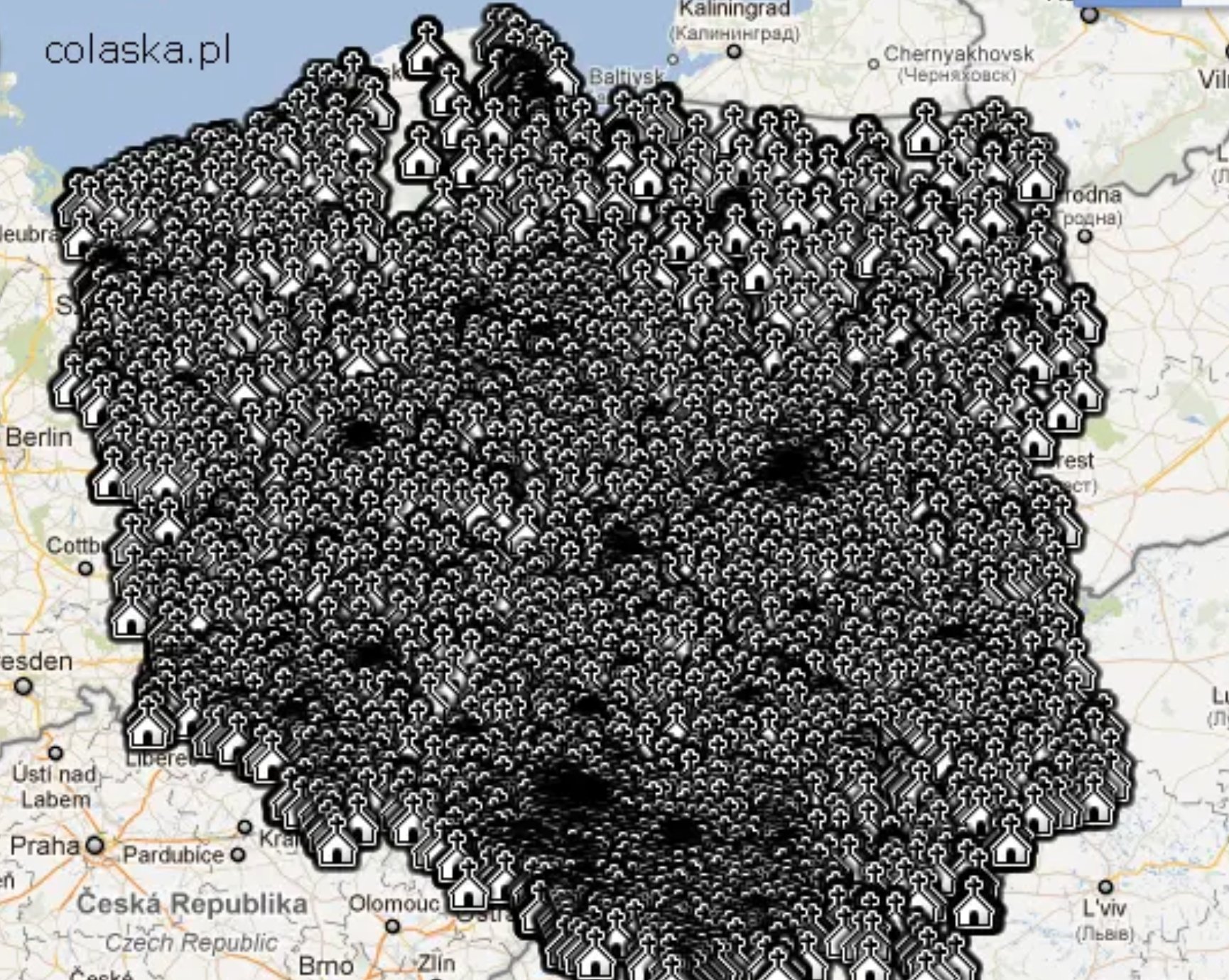
Parishes in Poland, but this map is missing 3,000
There are a lot of churches. In reality not sure if there are more than at home as close to 90% of Poles are Roman Catholic so not a big demand for churches of other denominations. But there are a lot of Catholic churches and they are substantial and impressive even in small towns. And this begets the question of how religious is Poland? Well of course this is relative, but relative to other western European countries the answer is ‘very’.
“Poland still remains one of the most devoutly religious countries in Europe. Polish Catholics participate in the sacraments more frequently than their counterparts in most Western European and North American countries. A 2009 study ….. revealed that 80% of Poles go to confession at least once a year, while 60% of the respondents say they do so more often than once a year. By contrast, a 2005 U.S. study ….. revealed that only 14% ofAmerican Catholics take part in the sacrament of penance once a year, with a mere 2% doing so more frequently.” So says Wikipedia.
This religiosity shows itself in the secular world. Abortion is illegal except in the case of…. well you know those cases. It is also illegal to ‘offend religious feelings’ as one lady found out when she said on TV “it is hard to believe in something written by people who drank too much wine and smoked herbal cigarettes” when explaining why she would rather believe in dinosaurs than the bible. Charged and convicted.
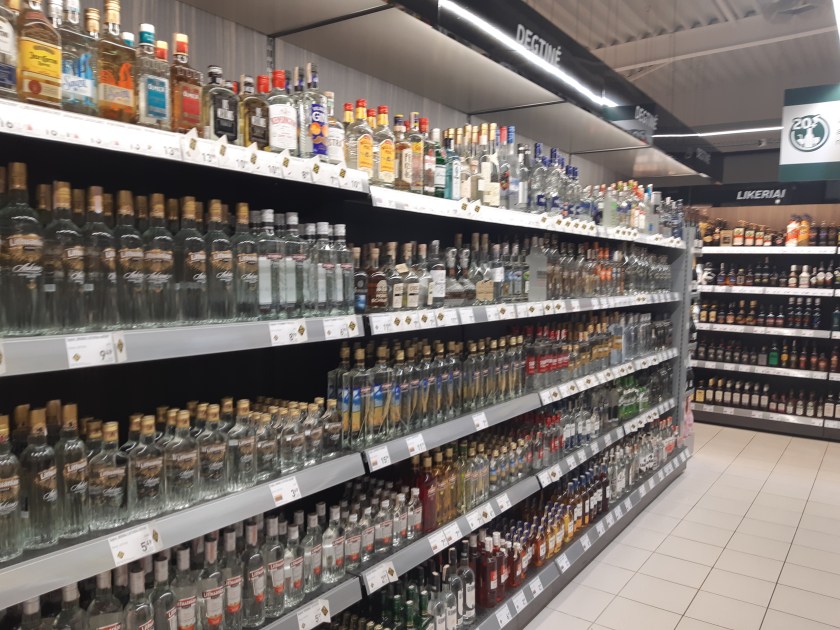
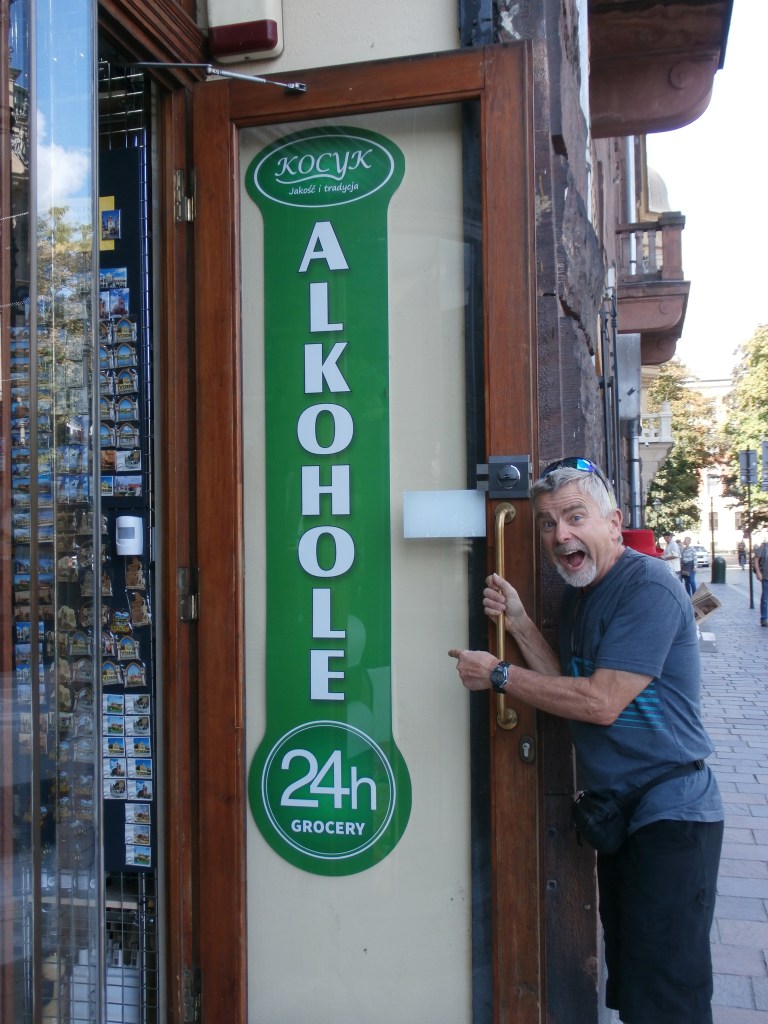
So now vodka. Well the story is vodka was first invented in Poland. That would be a Polish story. Of course there is a Russion story that says it was first invented in Russia. But there does seem to be agreement that it was in one of these two places and both countries act as if they own it. Russians consume the most vodka per capita and the Poles are number two, right behind them. It is stated that those that do drink Vodka in Poland have around 14 shots a month, the Russians have about 4 more. Doesn’t sound too bad, but they are not evenly spaced out. Apparently when you start drinking vodka go big or go home. In total alcohol consumption per capita, Poland is 14th. For perspective, Canada is 40th. As an aside, in the top 16 are Lithuania, Romania, Hungary, Slovakia, Latvia and Poland. What about Estonia? Wasn’t on the report but some say it is 3rd. Bulgaria is 23rd. Hmmmm, these are the countries we are going through, so it appears we are on the cycling equivalent of a booze cruise. So far, however, I’m thinking Dennis and I are not carrying our own weight. What is the implication? Well the Estonians say they are so high because of all the Finnish tourists not because of the locals. So we don’t want to skew the results one way or the other. Like, we don’t want the Poles saying “we’d knock those Russians out of the park if we didn’t have all these light weight cyclists coming through.”
So what do you know about Vodka? It is the most popular hard liquor sold in bars. Why? Because it is odorless and tasteless and can be mixed with anything. It is just pure alcohol and water. Now people argue that it matters whether it is from potatoes, rye, apples, or whatever. They argue that it matters how many times it was distilled in terms of purity (for the record Grey Goose is only distilled once).
You can have what ever, as long as its vodka
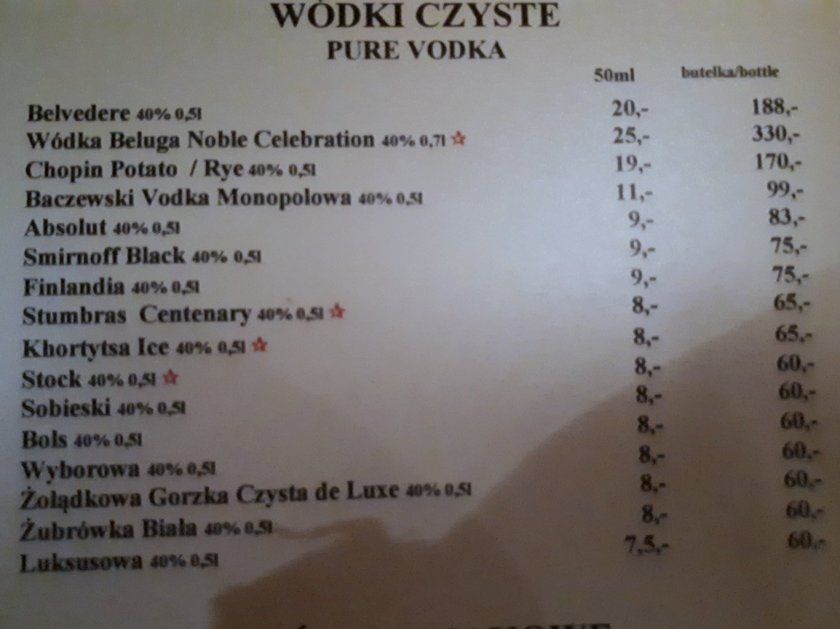
7.5 to 20 zlotys a shot
But the law in the U.S. says, Vodka “is neutral spirits so distilled, or so treated after distillation with charcoal or other materials, as to be without distinctive character, aroma, taste, or color.” So I ask you, if by definition Vodka has no character, aroma, taste or color, why are there so many different types of tasteless, aroma less vodkas in Poland? I’d guess there is a lot of profit margin in producing something clear, without character, taste or aroma. But why is there all this price differential? . You best ask the Poles as we don’t have the nerve. Or listen to Terry O’Reilly, I’m sure he can explain it. If you don’t believe me about all this Vodka stuff listen to this: Planet Money Podcast
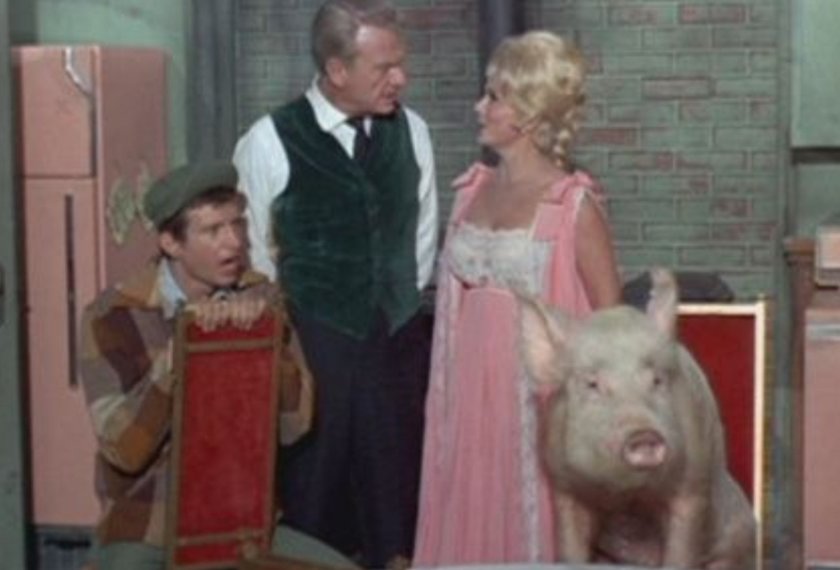
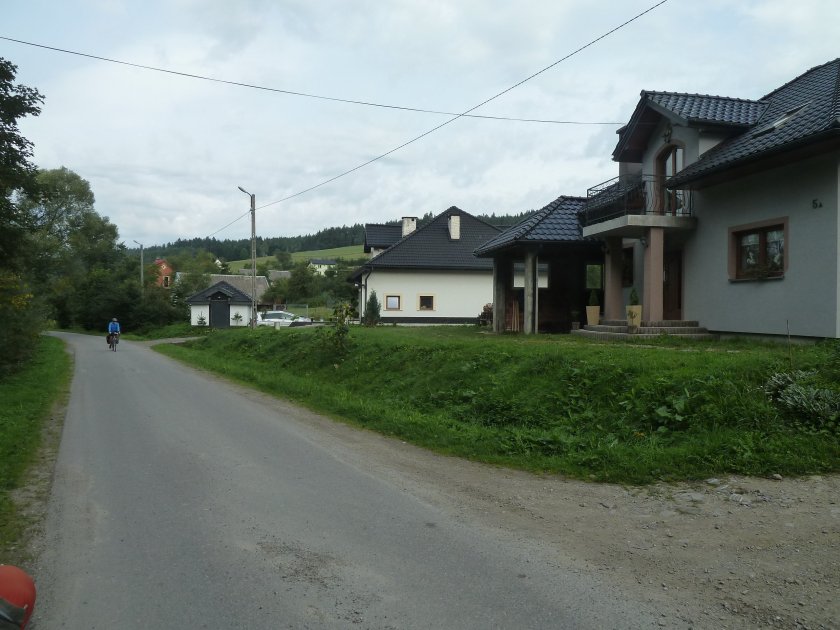
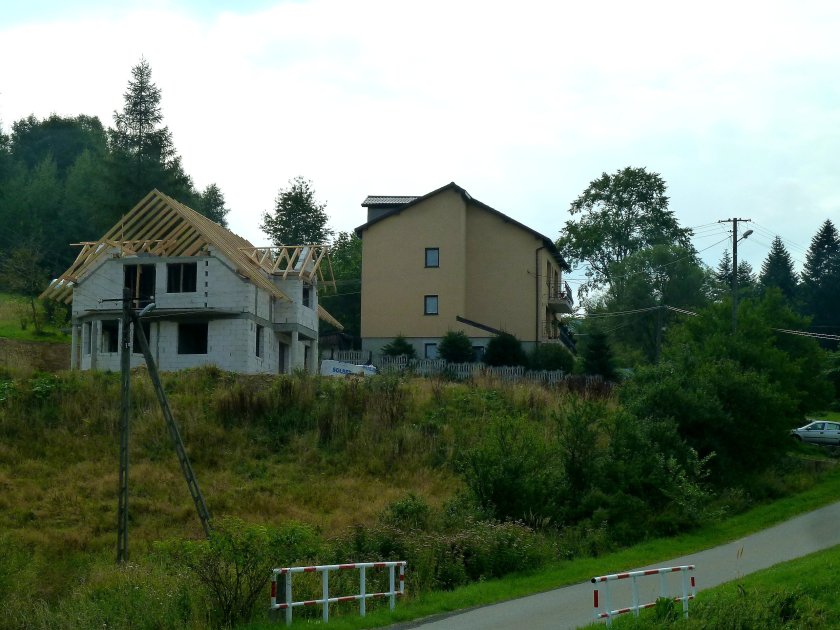
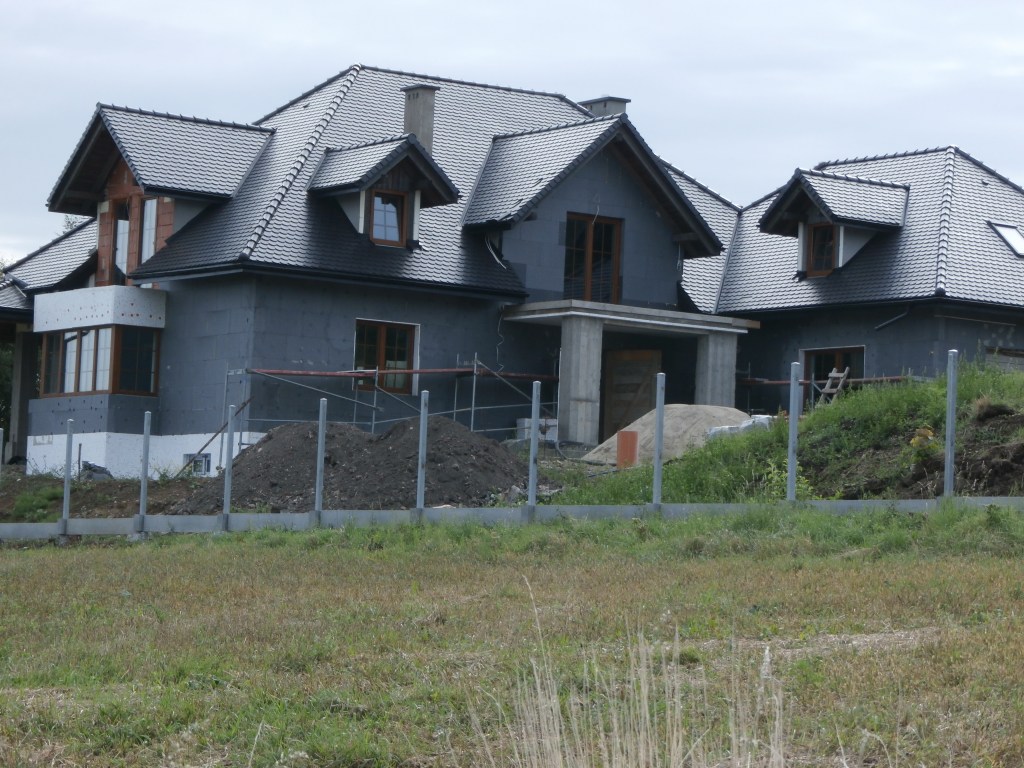
Alright, finally. Green Acres? No Eva Gabor was not Polish, she was Hungarian. When you travel across Poland on big or little roads you notice that there is an endless stream of houses on small to large acreages. And I do mean endless, there are so many you wonder if there is any room left for a real farm. You can go 100 km and it literally never ends. This was particularly evident south of Krakow but also in the north. And these are nice houses with lots more being built. Now what do you do 90 km from Krakow living on a small road in what many would consider Nowhere. And not just you but the thousands of other Poles living around you The answer is I have no bloody idea, but I have found out why. They all suffer from the Eddie Albert syndrome, or more accurately the Oliver Wendell Douglas syndrome. This is as opposed to Canadians with their Lisa Douglas syndrome. The Poles think it is cool to live in the country. So over 40% of Poles live in the countryside because… wait for it…… they want to, and this number is growing (the cities have been shrinking since 2002). I guess they like to watch green plants shooshting out of the ground. So 40% is a lot considering less that 10% make a living from agriculture and I’ll bet this number is going down. Of interest, when we crossed from Poland to Slovakia this phenomenon stopped. Instantly. Some tax thing perhaps?
So there you have it. All you need to know about Poland. Churches, Vodka and Green Acres. Now about those Slovacs.
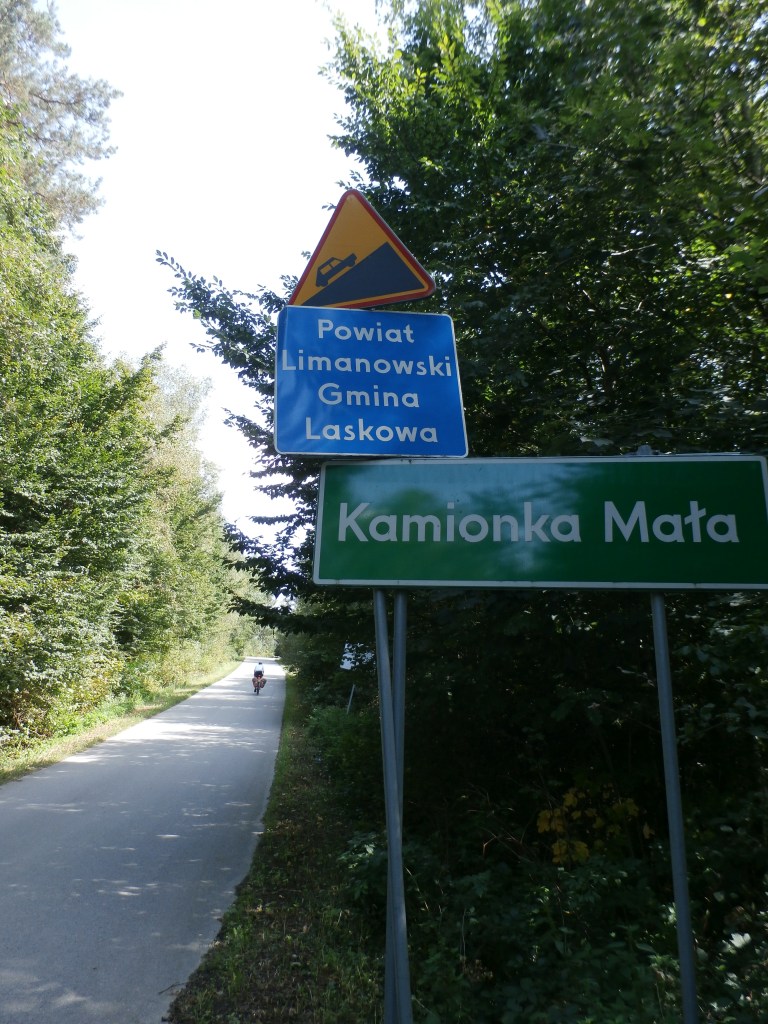
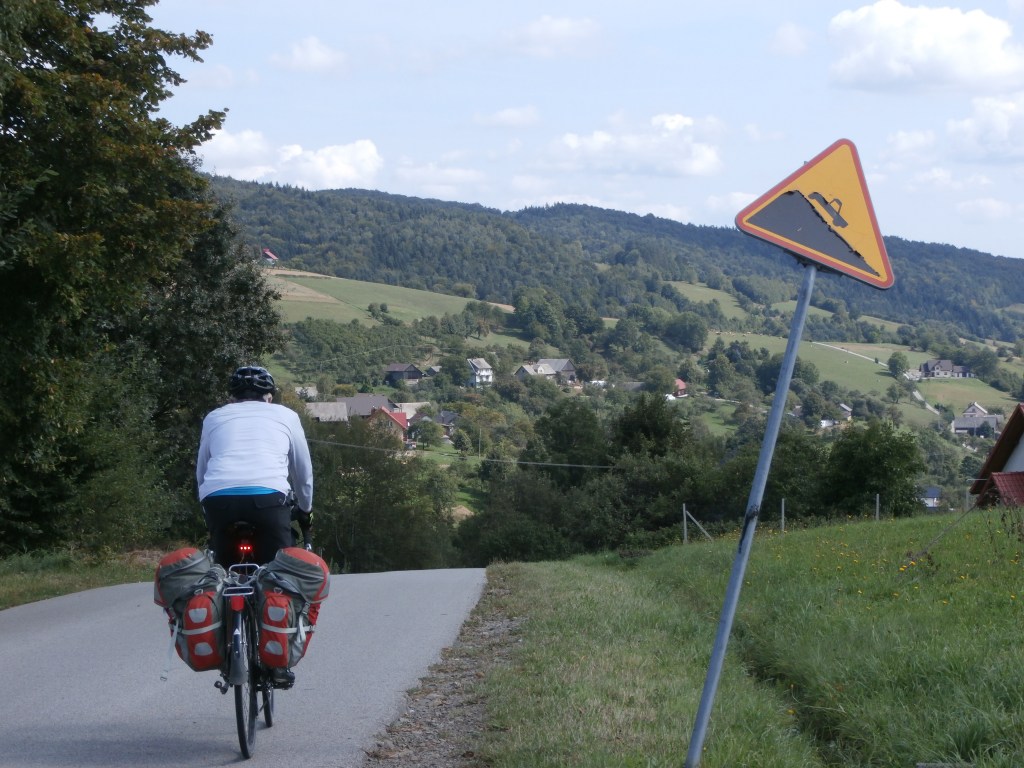
After 3 nights in Krakow we continued our southern journey. Getting out of Krakow was easy thanks to the bike paths, but once these ended we were into some serious hill climbing, as Krakow essentially sits at the base of the Carpathian mountains. But at least they were on quiet roads and it was not raining.
I mentioned in an earlier post we are each carrying about 35 pounds in the panniers, and today I really noticed it. I had to get off the bike and walk up a couple of the 15-16% grades. I need to stop eating perogies and lose about 5 pounds to lighten the load!
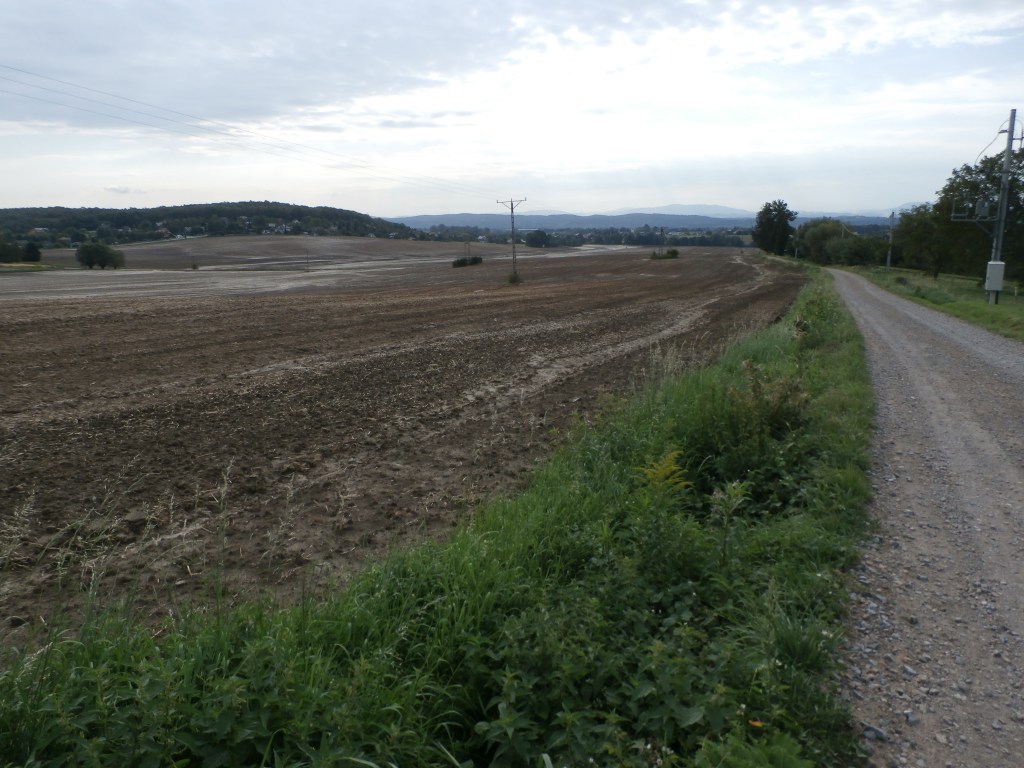
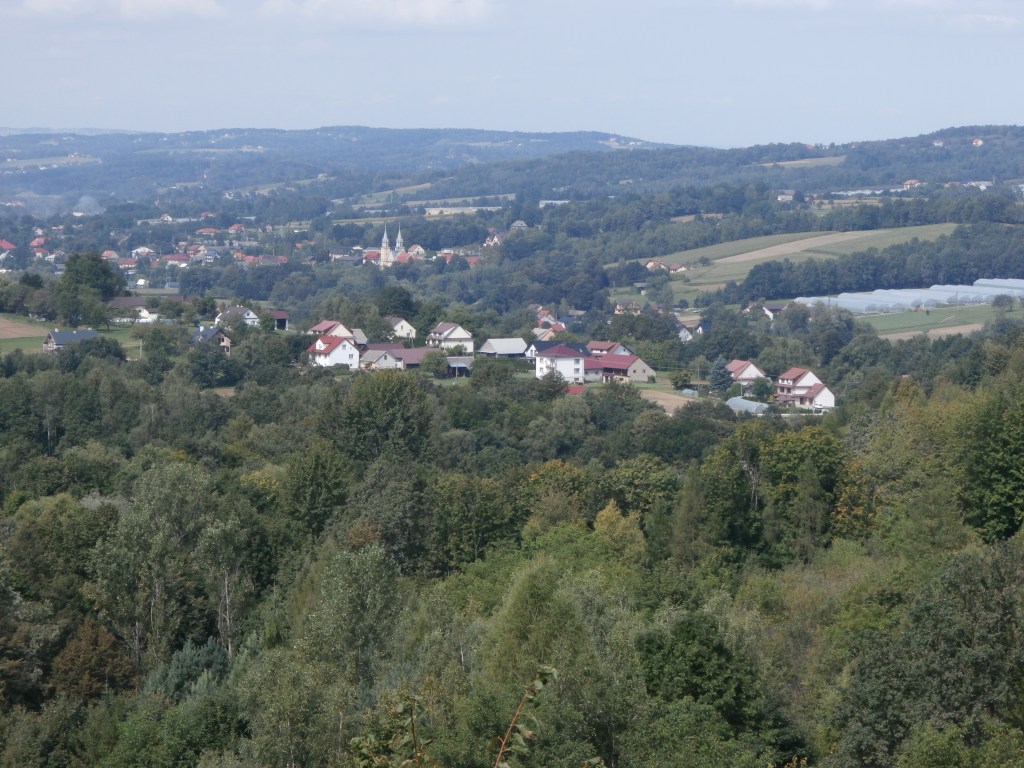
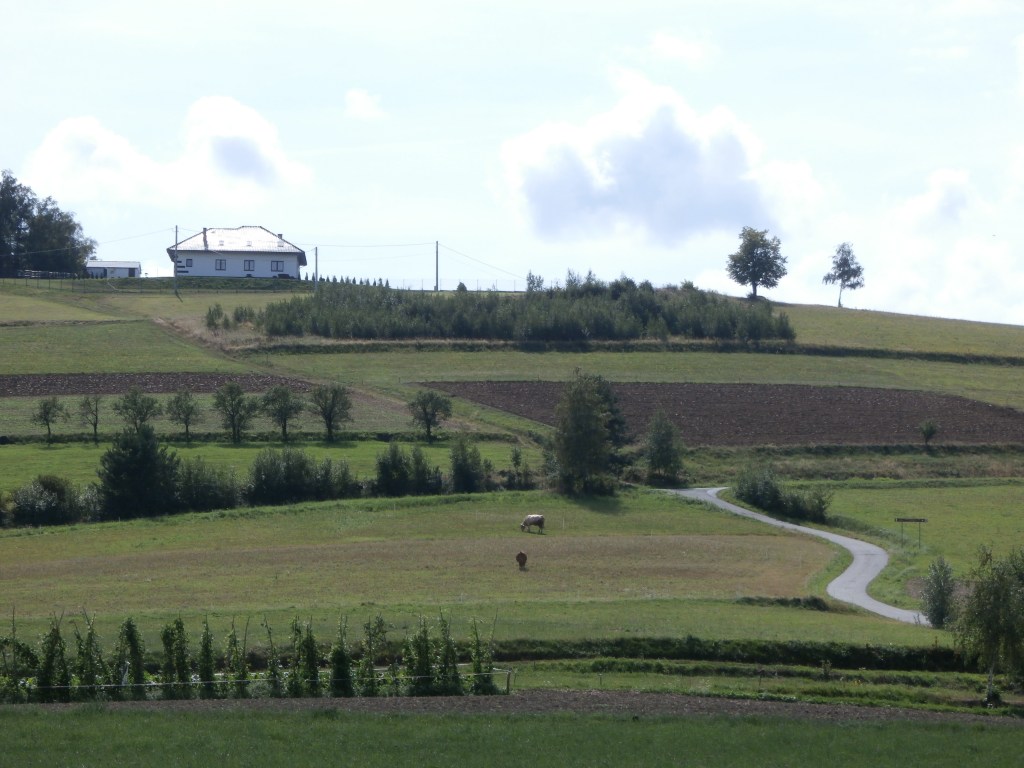
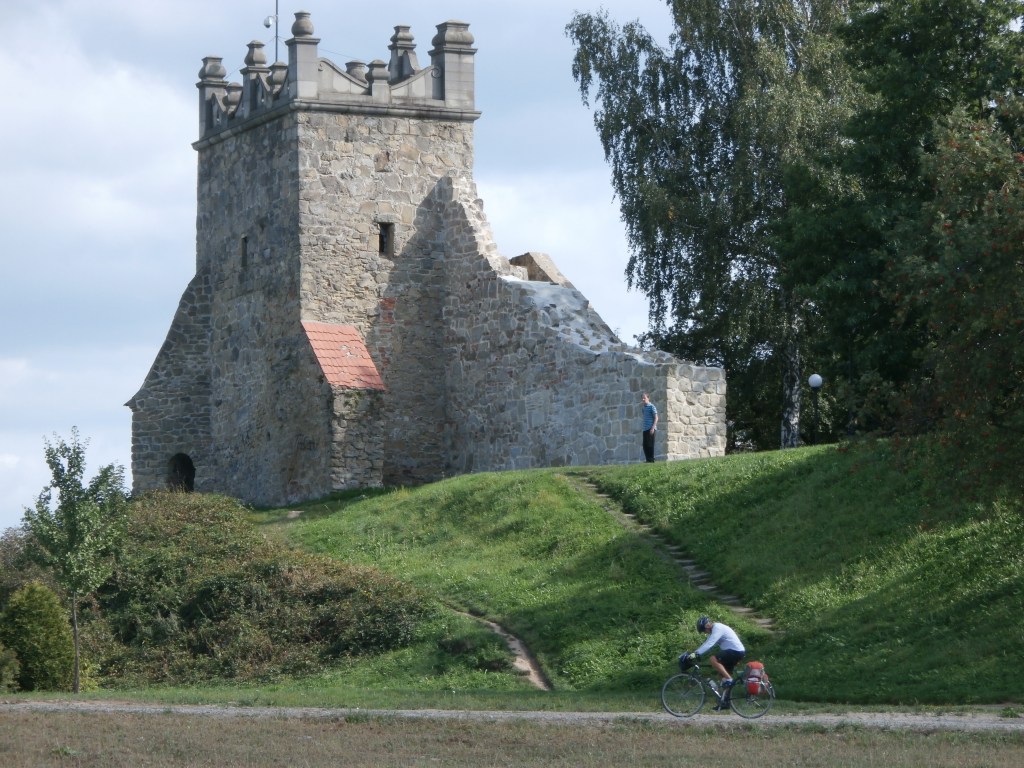
The busy highway we avoided by taking the side roads. Note this highway has shoulders, the first we have seen in Poland. It is a new highway.The harvest has finished and the land turned over for next yearI like the style of these roofs, but they must be a roofers nightmare!The foothills of the Carpathian Mountains. So different than the flat plains we have had so far all the way from Tallinn, Estonia.What goes up…Must go down…13th Century medieval castle outside Nowy Sacz
Krakow is Poland’s second largest city with a population of 760,000 and covers both banks of the Vistula river – the same river that flows through Warsaw, almost 400 km north.
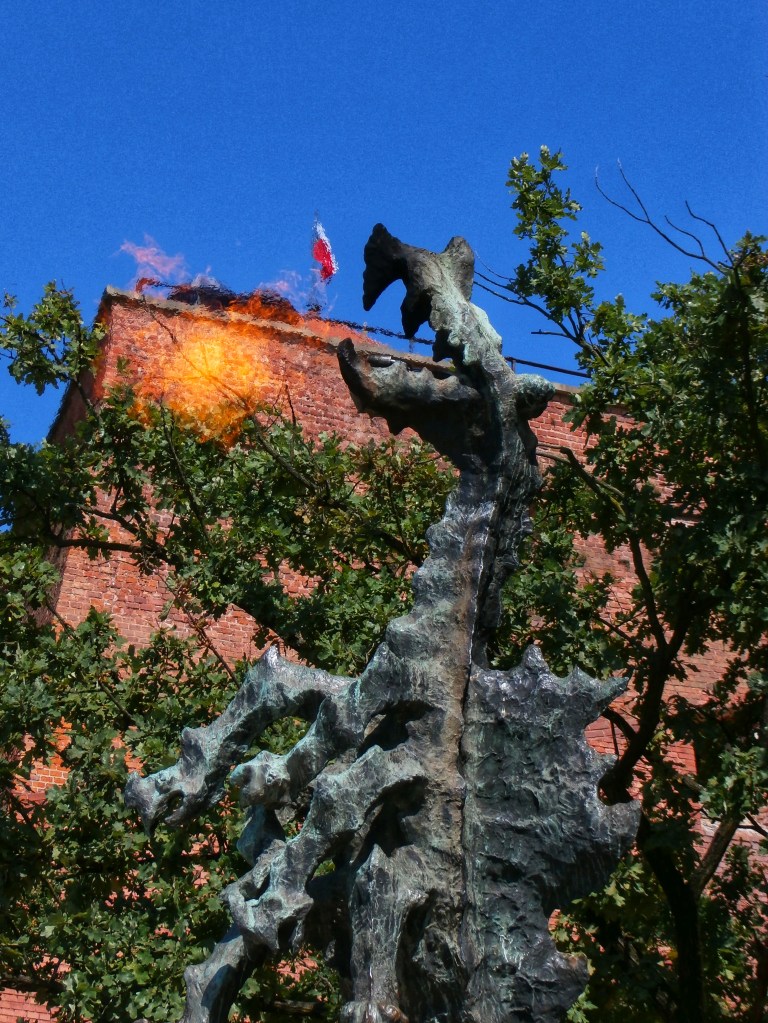
It is also one of the oldest cities in Poland with evidence of the first settlements dating back to 20,000 and a long succession of kings. Legend has it that it was built on the den of a dragon whom the mythical King Krak had slain.
In the Second World War, Germany and Russia partitioned the country with the German forces entering Krakow in 1939, killing many academics and destroying historic relics and monuments. Concentration camps were established, including the infamous Auschwitz. I decided not to visit Auschwitz as I had seen Dachau many years ago, and once in a lifetime is enough.
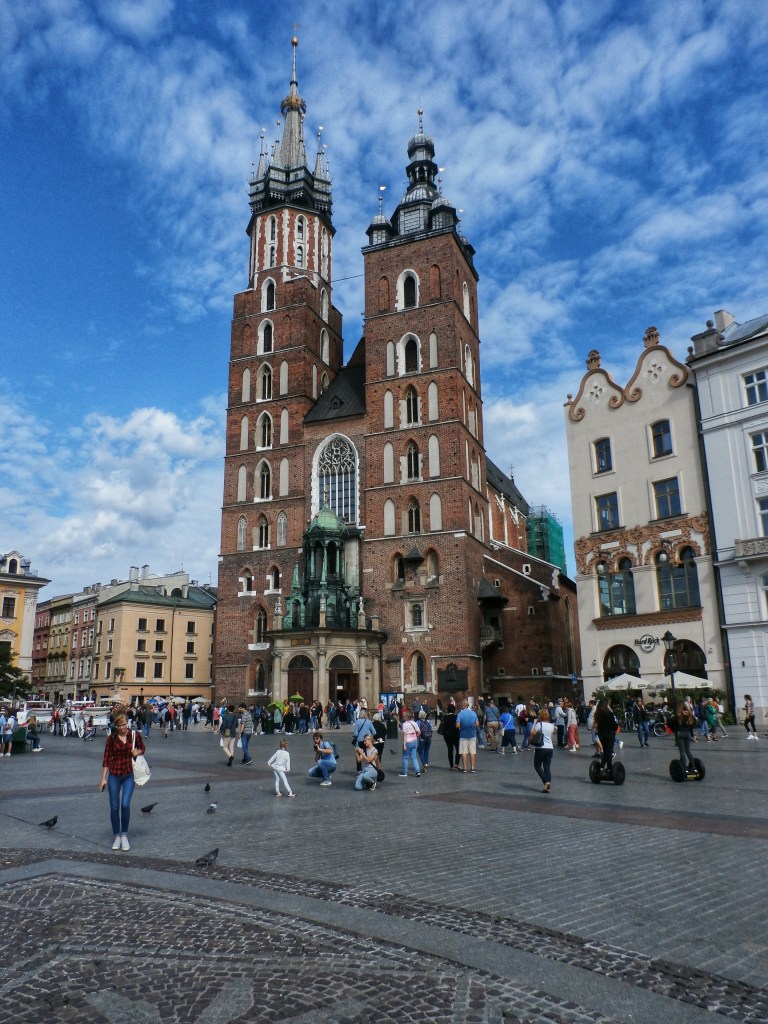
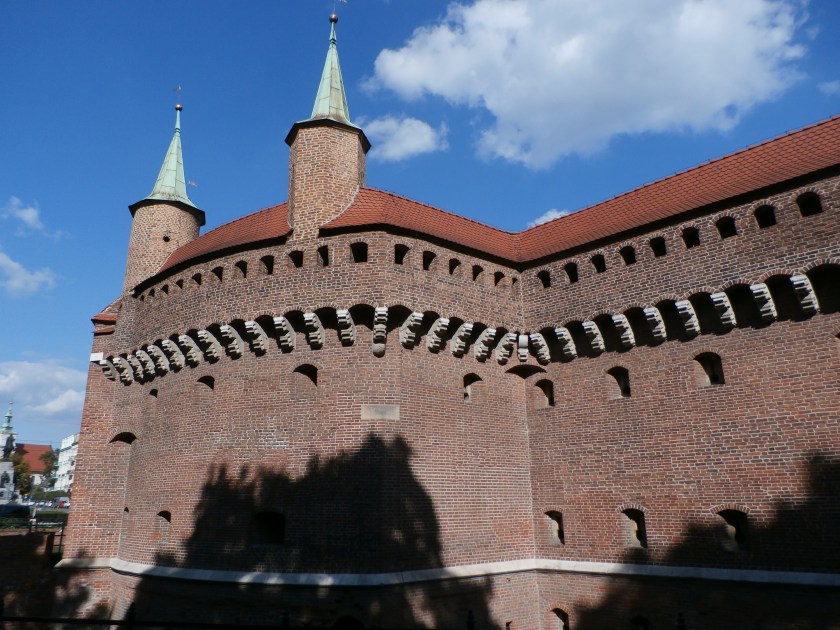
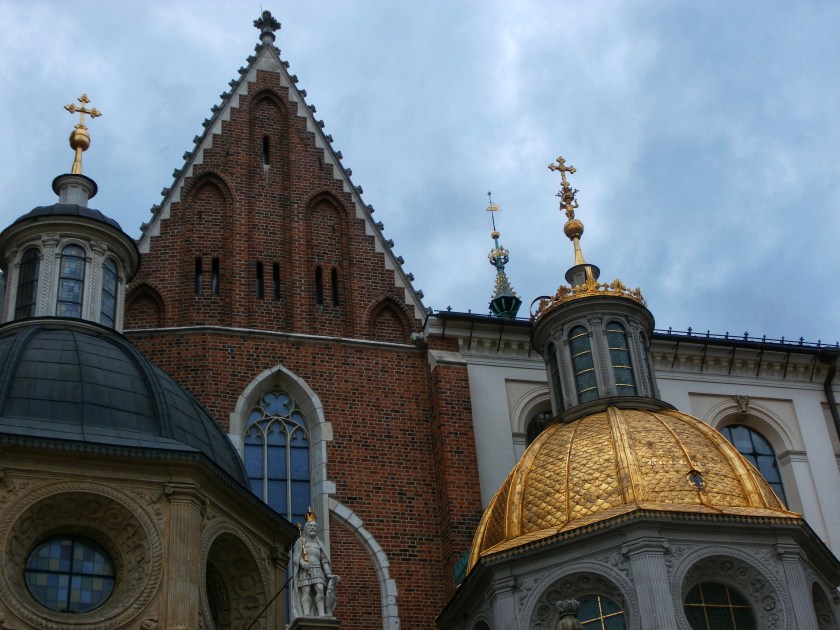
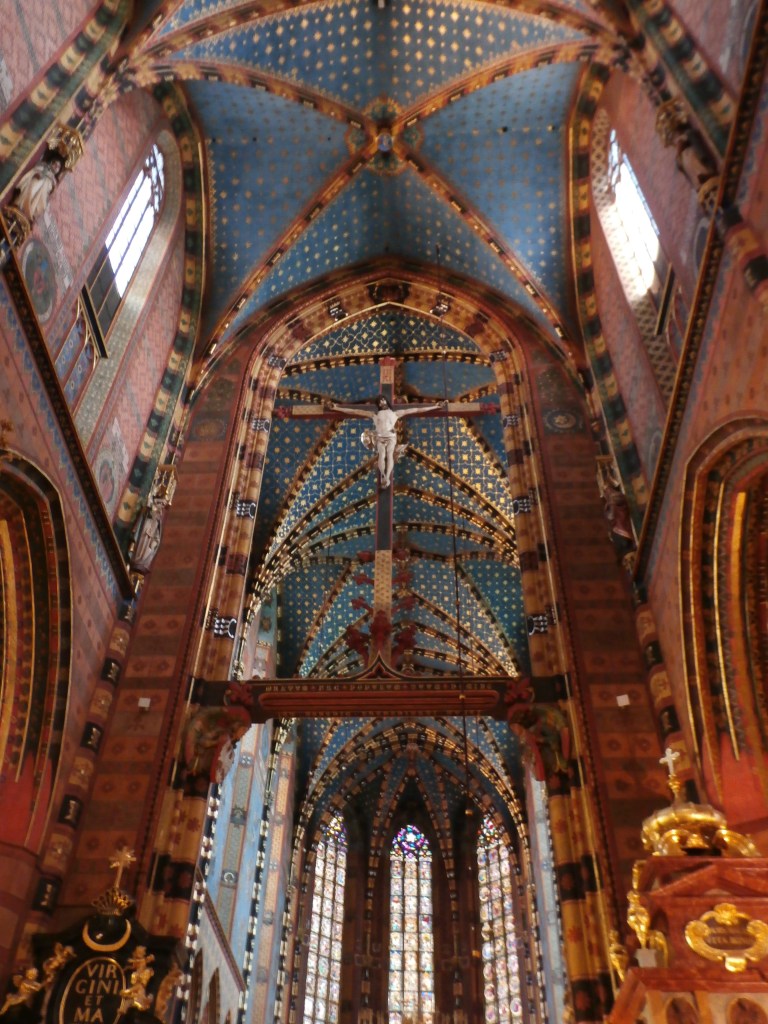
Unlike Warsaw, most of the buildings in Krakow survived WWII and the most popular attractions include Wawel Hill with the Royal Castle and Cathedral, the main square (largest in Poland) with St Mary’s Basilica, and a salt mine at Wieliczka where one can descend 800 steps to go 145 metres underground. I did this with 100’s of others (literally, 1,000,000 tourists a year visit it.)
Some pics Krakow…
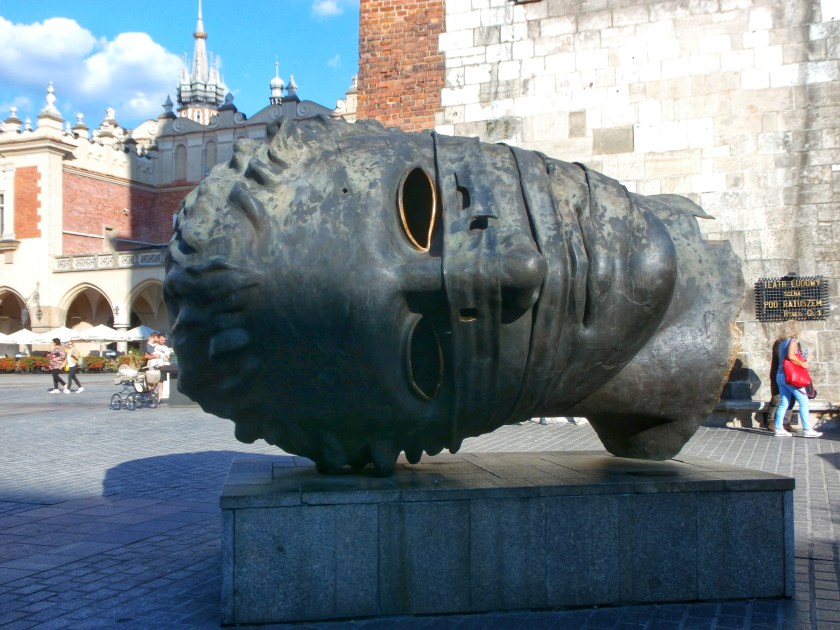
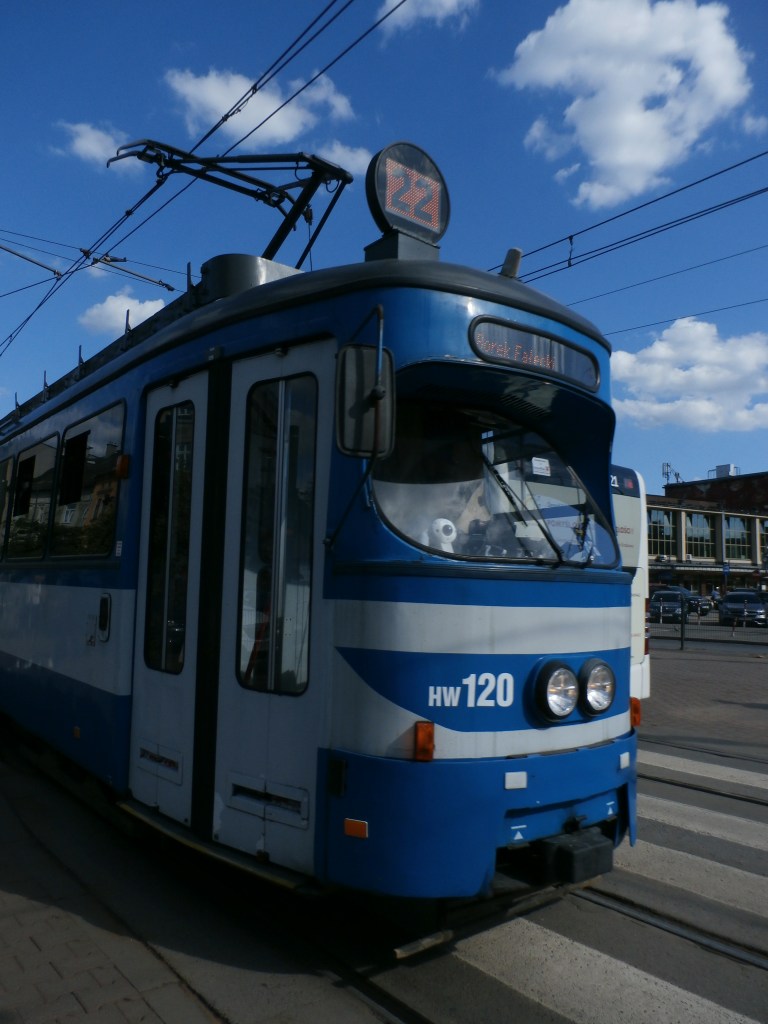
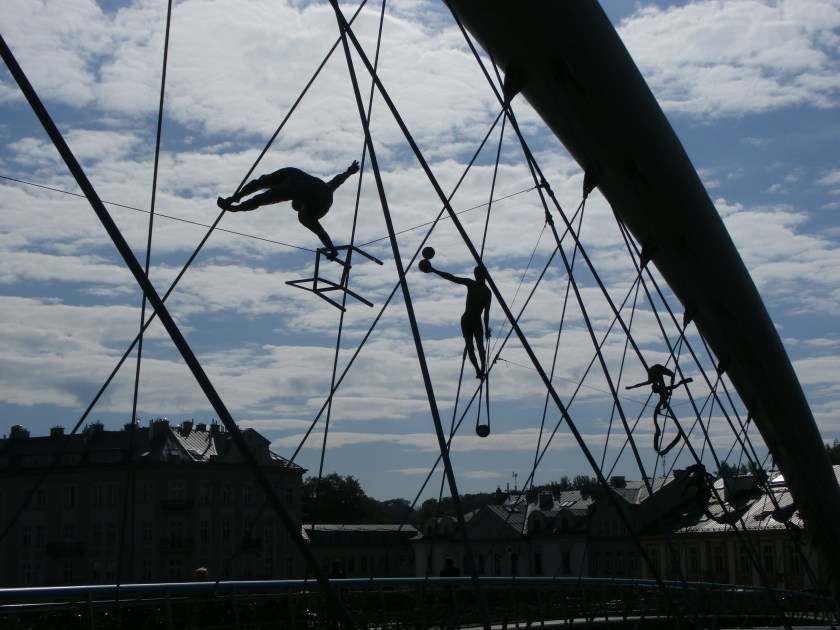
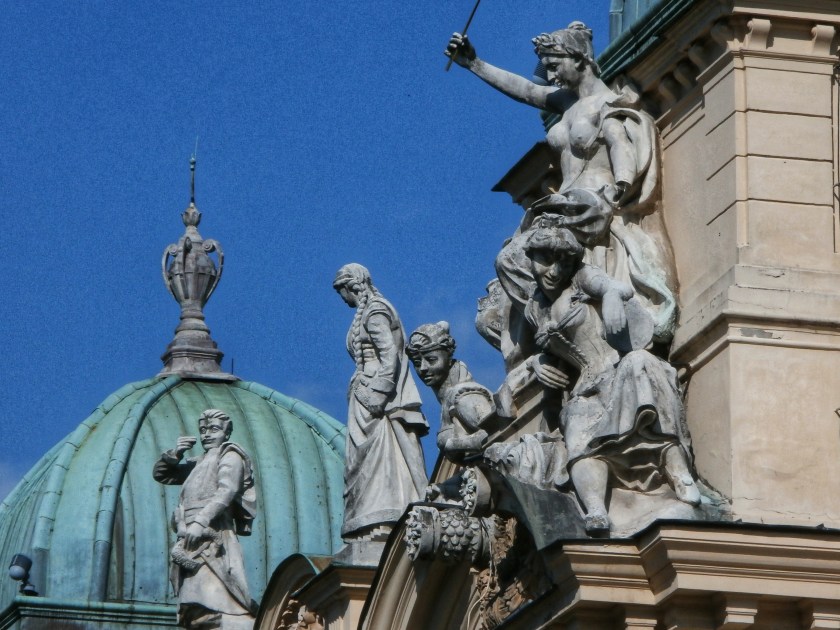
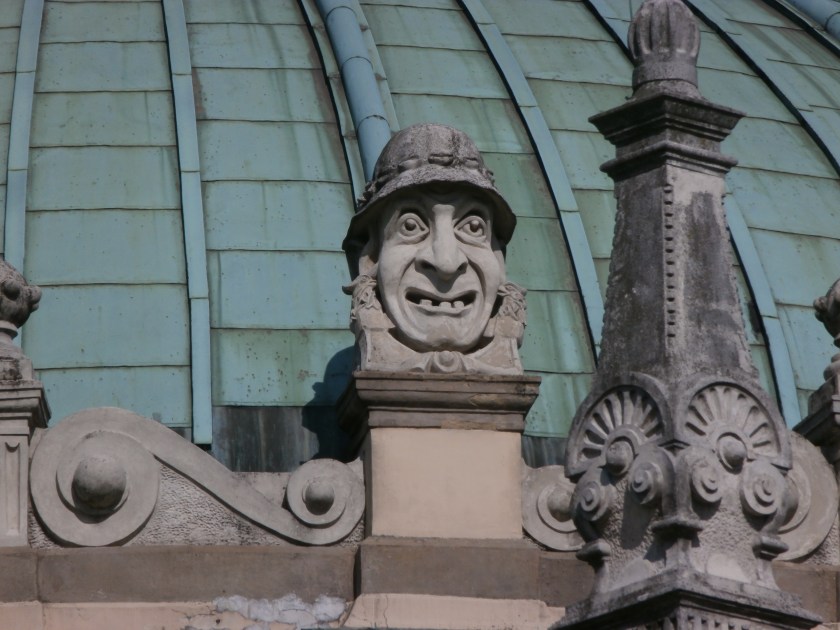
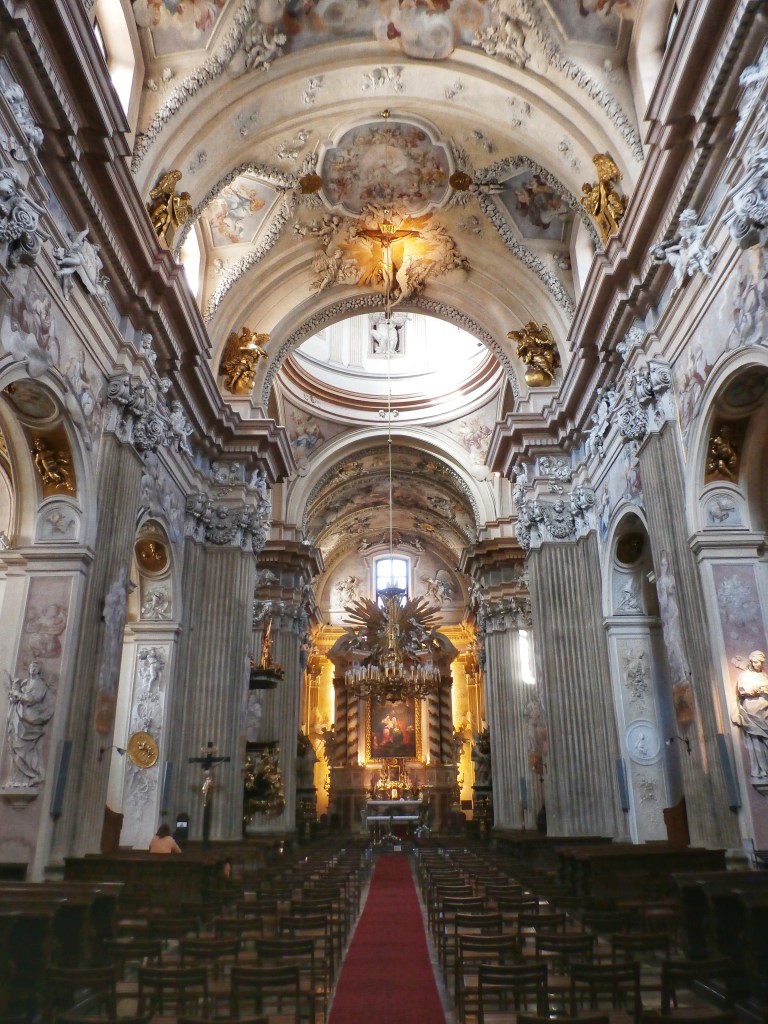
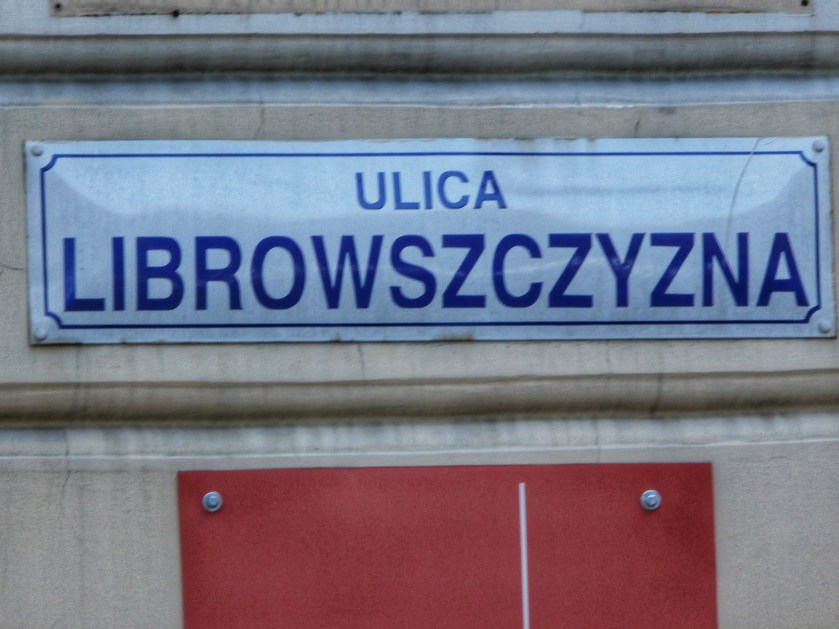
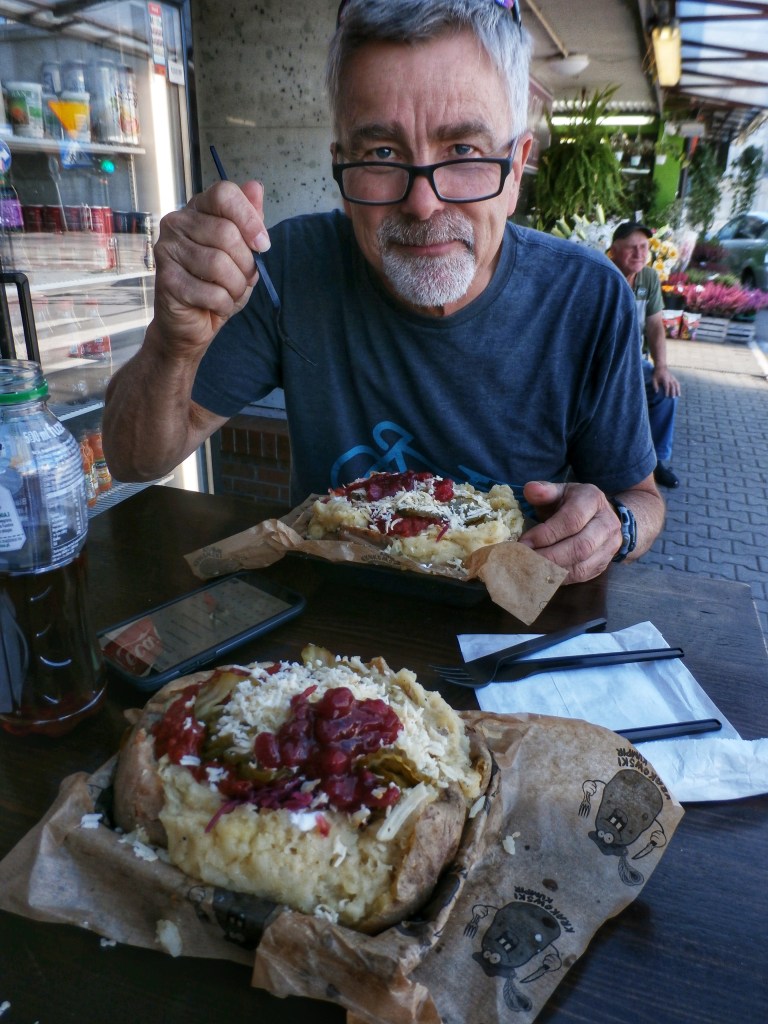
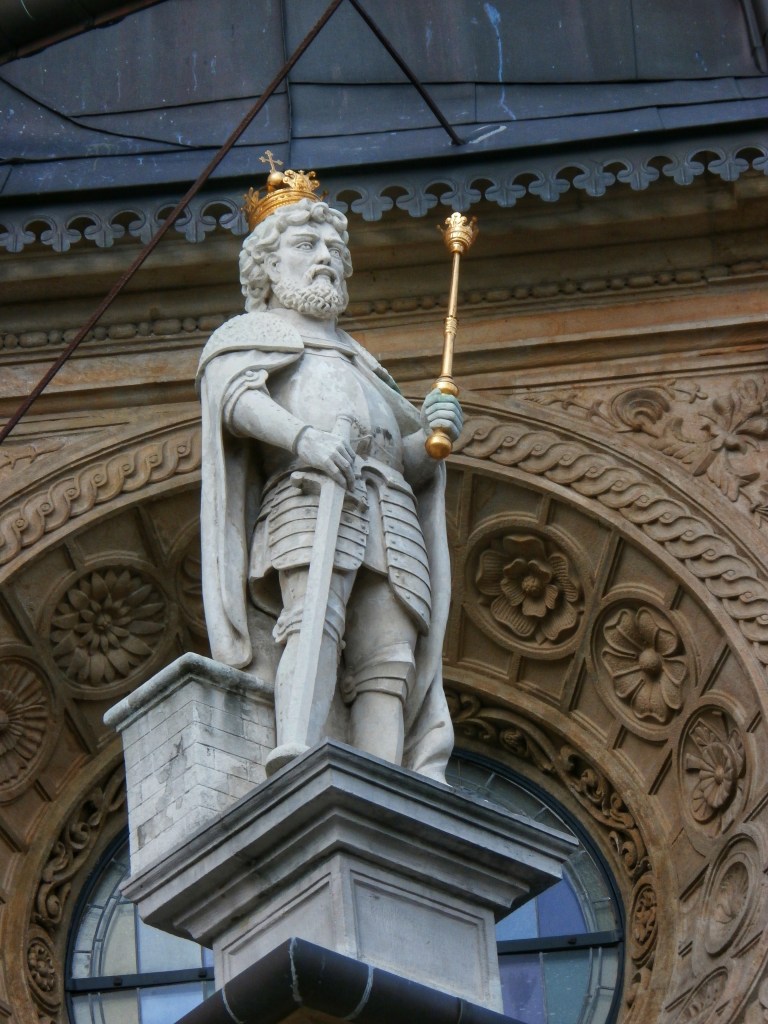
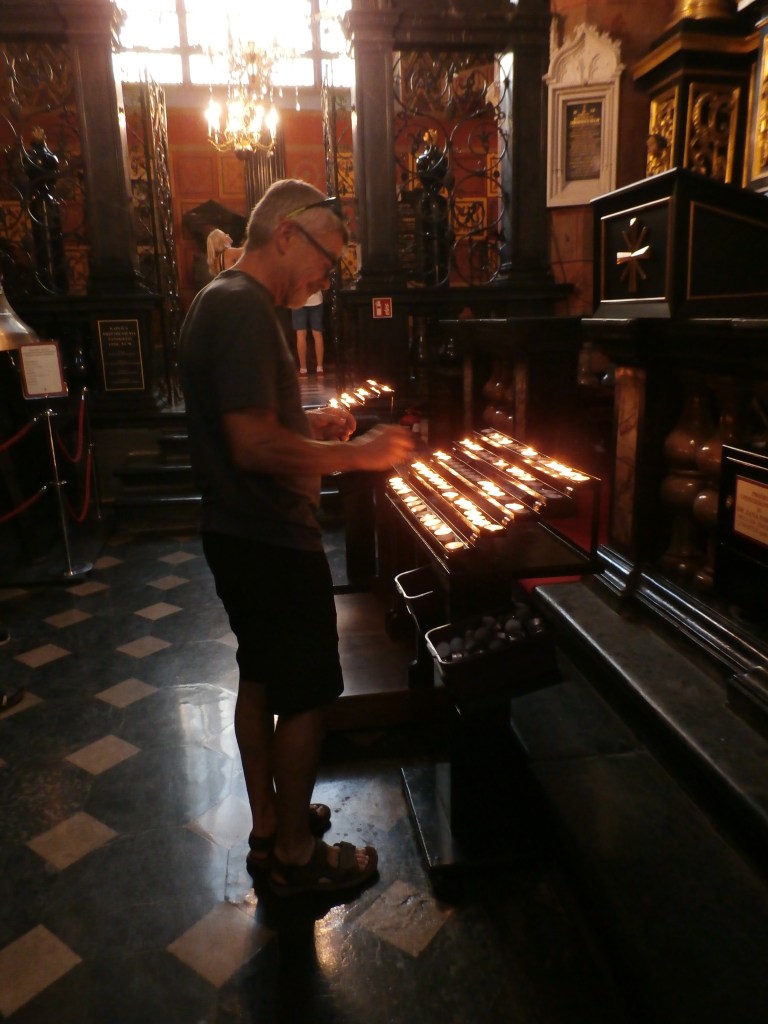
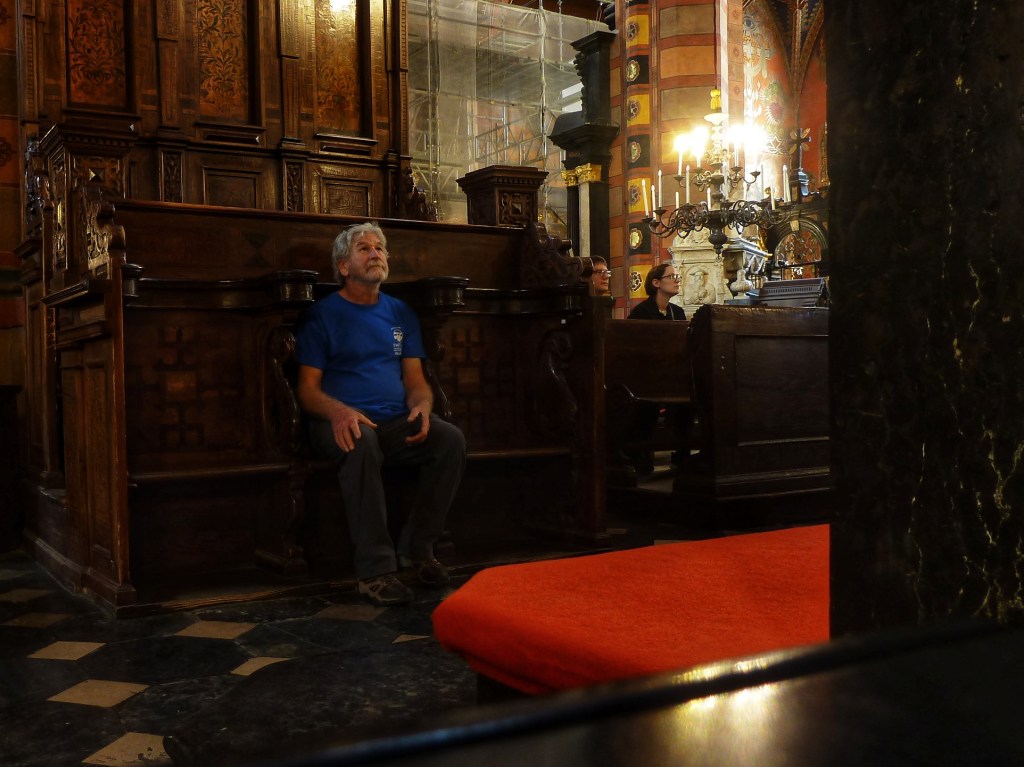
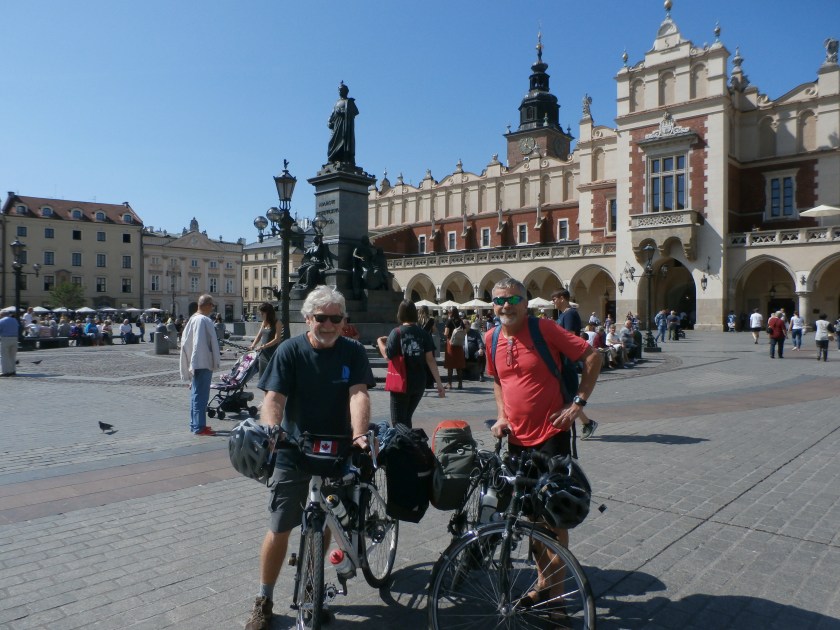
St Mary’s BasilicaSculpture in the main square“I brake for trams!”Wawel Castle said to be built on a dragon’s denFire breathing dragonBike and pedestrian bridge over the Vistula river. It would of been cool if they did something like this to the new Johnson Street bridge. Sculptures everywhereThis sculptor had a sense of humour! A church 3 blocks off the main square, essentially empty compared to St Mary’s but just as beautiful.Pronounce this street name!“I can’t believe ate the whole thing!”. Polish “kumpir”, a baked potato filled with sausage, sheep cheese, cranberries, pickles, red cabbage, sour cream and hot sauce. They come with various fillings but this one appealed to me. I ate all of mine but Don could not keep up!Wewel CathedralSt Mary’s ChurchKing KrakDon making an offering to the wind godsDennis backing him upMicronutrient replacement clinicWe are half way to Istanbul!
 Tallinn to Istanbul by Bike